Short-term CO2 laser hire for real production testing
The hire demo laser is a short-term CO2 cutting and engraving machine option for makers, sign shops, packaging teams, schools and production teams that need capacity for a limited period. It is suited to acrylic, wood, leather, rubber, paperboard and similar non-metal materials, with clean cut edges and fine detail for sample work or small batch runs.
In Johannesburg and surrounding areas, the hire option is often used for new product launches, seasonal peaks, exhibitions, training classes and recovery after a breakdown. It is also useful when you want to test a material before buying your own machine or you need extra throughput for a few weeks, not months.
Hire periods can be arranged around your project timeline and the machine can be set up for cutting, engraving or a mix of both. The unit is supplied with practical operating guidance, and if you are running batch jobs our team can help you plan the first setup so you waste less material and time.
Sizes, bed options and what each setup suits
Different job types call for different bed sizes and tube power levels, so we help match the hire machine to the work you are actually doing. Smaller beds are ideal for samples, labels, craft work and personalisation, while larger beds suit signage panels, templates, packaging components and longer production runs.
- Small format beds for sample cutting, short run engraving and tight workshop spaces.
- Mid-size beds for most sign and fabrication work, with room for standard sheet goods.
- Large format beds for wider panels, repeated nesting and higher output.
- Power options suitable for thin acrylic, plywood, leather and general purpose cutting.
If your work includes repeated cutting from full sheets, we will look at bed size, extraction layout and access for loading. In a shared workshop or retail site, a more compact machine can be easier to place, especially where floor space is limited and the building has load-shedding planning to consider.
Where hire works best in South African operations
Demo hire is a good fit for Johannesburg businesses in Wynberg, Sandton, Midrand, the East Rand and the West Rand, as well as Durban and Cape Town projects where temporary capacity is needed. It works well for craft markets, corporate gifting, school production rooms, prototyping spaces and light manufacturing bays.
Coastal humidity in Durban or Cape Town can affect stored materials, so the hire period should be planned with dry storage and stable extraction in mind. In Gauteng, dust and long operating hours are usually bigger concerns, so regular lens checks and a clean working area make a real difference to finish quality. The machine is practical for sites that need a controlled, repeatable process rather than hand cutting with variable results.
Because it is a hire arrangement, it also suits businesses that are waiting for a permanent machine decision. You can test speed, edge quality and material behaviour on your own jobs before committing, which helps reduce costly mistakes and rework.
Installation, power and site preparation
We handle delivery, installation and basic operator handover so the machine is ready for safe use. The unit needs a level floor, enough clearance for loading sheets and a dry indoor location with good ventilation. A stable electrical supply is needed, and where load-shedding is a concern we recommend proper backup planning so jobs do not stop halfway through a run.
Power requirements depend on the machine size and support equipment, but the site should be prepared for the laser unit, extraction, cooling and computer control in the same working area. In some workshops a dedicated circuit is the best option. If the site is on a small generator or inverter setup, tell us in advance so we can confirm whether the power supply will cope with the machine load and start-up demand.
- Allow space for machine access, material loading and safe operator movement.
- Provide extraction and airflow suited to the material being cut.
- Keep water cooling or chiller requirements within the recommended range.
- Make sure the operating area is clean, dry and free of loose dust.
Maintenance and care during the hire period
A hire machine should be treated like any production asset, because care on site has a direct effect on edge quality and uptime. We explain basic daily checks such as lens cleaning, mirror inspection, bed cleaning and coolant checks where required. On longer hire periods, preventive maintenance can be arranged so the machine stays in good working order.
If the machine is cutting slower than expected or the beam looks off centre, it is better to stop and check alignment early rather than burn through material. Our technical team can support beam alignment, optics cleaning, extraction issues and cooling checks as part of the hire arrangement. This keeps the machine performing properly, and helps avoid hidden wear that can shorten the useful life of the unit.
Good housekeeping matters too. Keep oily materials, scraps and offcuts cleared away, and avoid overloading the bed. That kind of care keeps the job neat and reduces smoke staining on acrylic, which is common when extraction is weak or the sheet is badly supported.
What to confirm before you place a hire order
Before placing an order, it helps to confirm the material list, sheet sizes, daily output target and whether you need cutting, engraving or both. You should also check the thickness range, the finish you expect on the edges and whether your material needs extra masking, slower speeds or multiple passes.
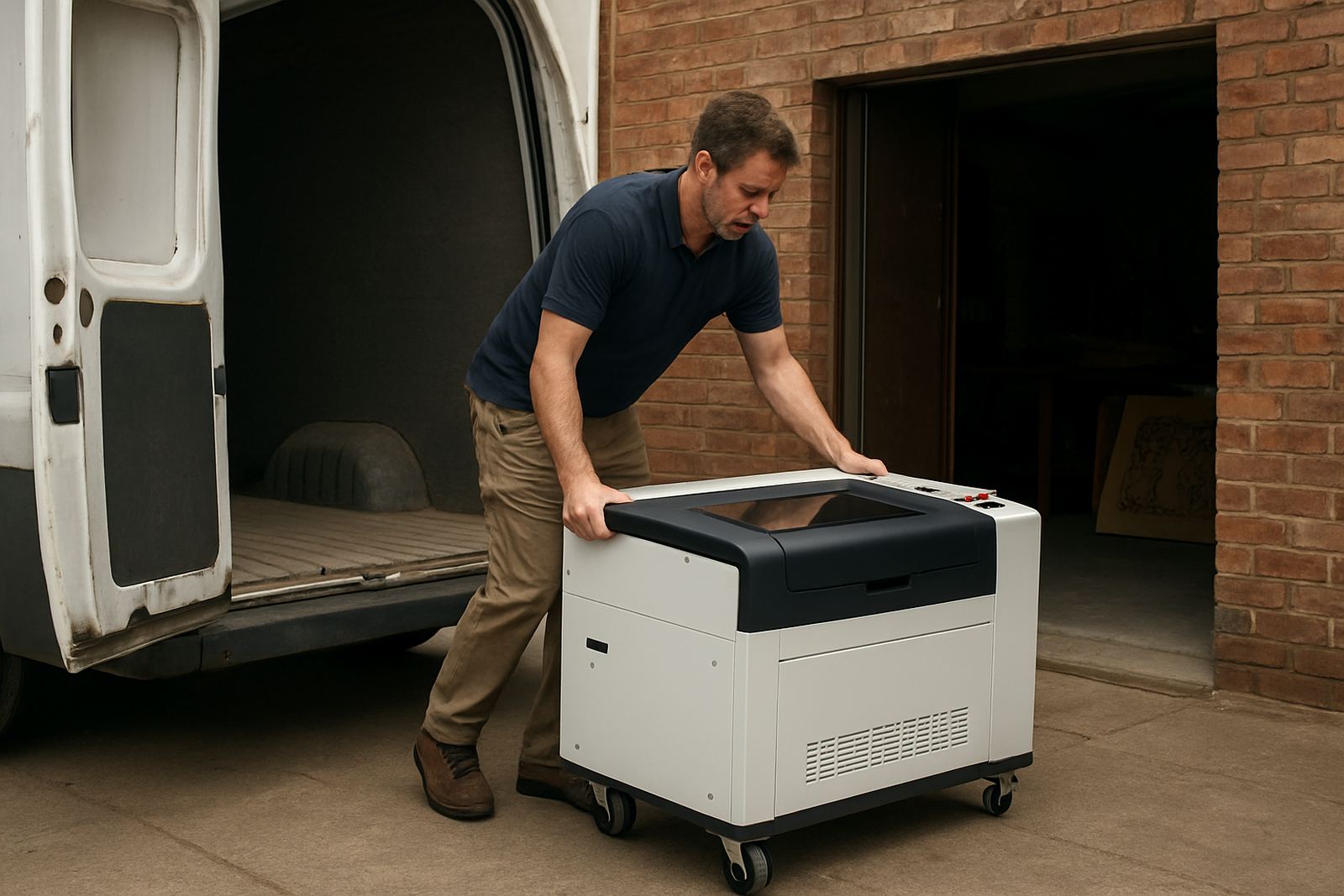
Tell us if the job site has limited access, stairs, narrow doors or after-hours delivery requirements. If the machine is going into a workshop that already has compressors, extraction and other equipment running, we will also look at space and electrical load. That detail makes setup easier and saves time on the day.
- Material type and thickness, including any reflective or coated sheets.
- Approximate quantity, size of each job and turnaround time needed.
- Site location, access restrictions and available power supply.
- Whether you need operator training, standby support or remote assistance.
Key facts
| Machine type | CO2 laser cutting and engraving unit for non-metal materials |
|---|---|
| Typical materials | Acrylic, wood, leather, rubber, paperboard and similar substrates |
| Format options | Small, mid-size and large format bed configurations |
| Hire use cases | Trials, launches, seasonal demand, prototyping and temporary production |
| Support included | Installation, operator training, remote support and breakdown response |
| Service area | Wynberg, Johannesburg base with support nationwide |