What a deep bed laser is used for
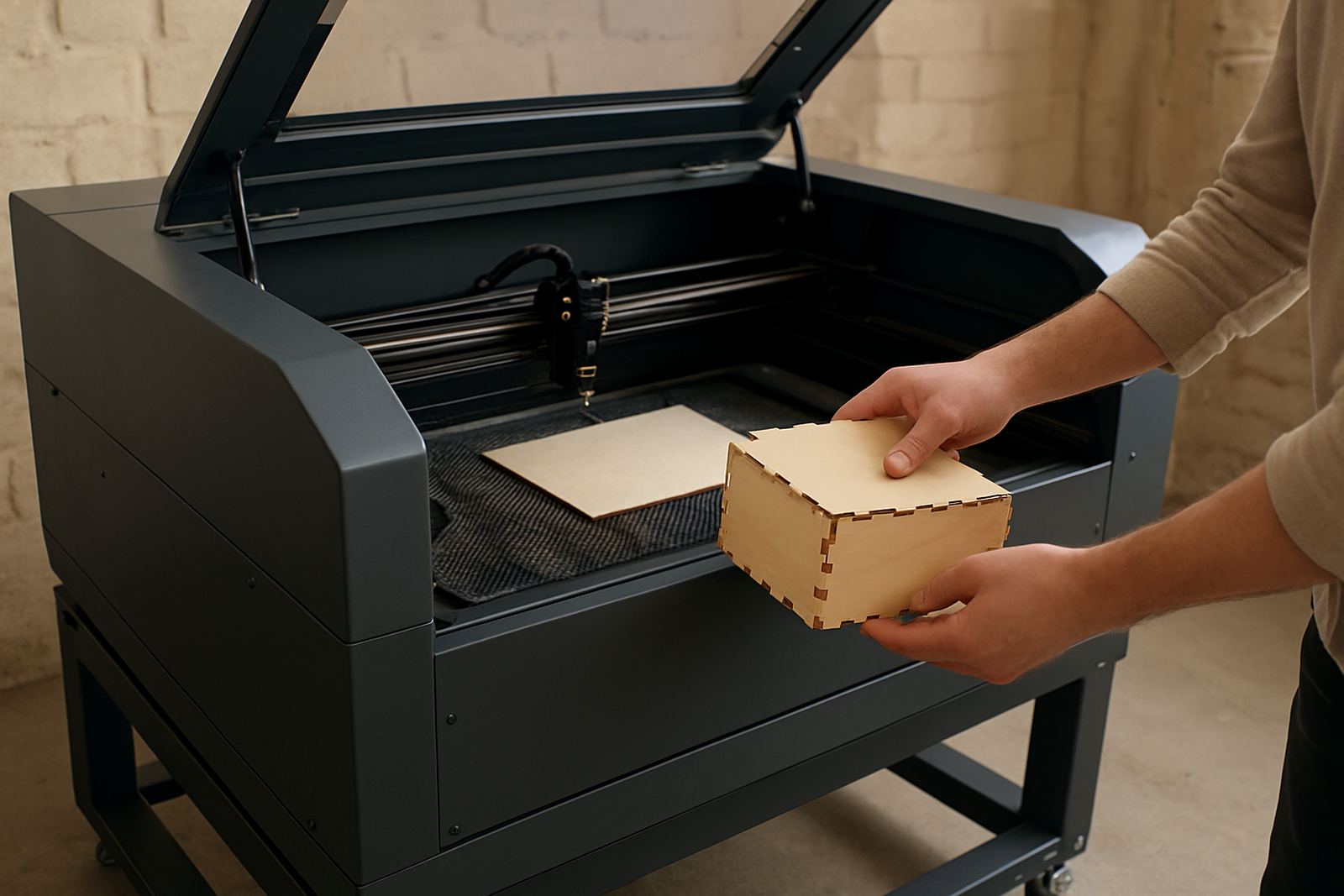
A deep bed laser is a CO2 laser cutter with extended vertical clearance inside the cutting chamber, so you can process taller items without forcing them flat. It is useful for thicker acrylic sheets, layered timber parts, leather panels, display boxes, product packaging, jigs and shaped components that need more space under the head.
For makers in Wynberg, Sandton and Midrand, the extra bed depth helps when jobs change from flat sheet work to boxed goods or raised fixtures. You get more room to set up the material properly, which can improve cut consistency and reduce wasted material.
These machines are commonly chosen by sign shops, product makers, prototype rooms and small factories that need one unit to handle both standard sheet cutting and taller set-ups. If your work changes often, the deeper chamber can save time on re-clamping and re-positioning.
Sizes and configuration options
Deep bed machines are usually specified by working area, bed depth and laser power. The right setup depends on the size of your material, the thickness you cut most often and the level of detail you need. A machine with more power can cut faster on thicker material, but beam control and cooling are just as important for neat edges.
- Working areas commonly include 900 x 600 mm, 1300 x 900 mm and 1600 x 1000 mm
- Bed depth can range from around 200 mm to 400 mm or more, depending on frame design
- Typical power options include 100 W, 130 W, 150 W and higher for heavier workloads
- Choice of manual table, motorised lift table or honeycomb bed depending on the material mix
In workshops with mixed jobs, an adjustable bed is a practical choice. It lets you set the focus height more accurately, especially when material thickness changes from one order to the next. That is important where a job has both engraved sections and through-cuts, because focus tolerance is tighter than people expect.
Where deep bed cutting makes sense
This product suits operations that need more than flat sheet cutting. A deeper chamber is especially useful when you are working with assembled parts, boxed products, moulded pieces or custom fixtures that cannot be moved into a standard low bed unit.
- Signage and display work with boxed letter forms or raised mounting parts
- Woodworking and cabinet components, especially thicker ply and veneer boards
- Leather goods, templates and sample production with layered pieces
- Prototype shops making enclosures, housings and presentation boxes
- Educational and maker spaces that handle different projects each week
For coastal areas such as Durban or Cape Town support zones, the machine enclosure should be kept clean and dry because humidity can affect optics, electrics and stored material. In Gauteng, dust control matters more, especially where a workshop has open doors and heavy traffic coming in from the yard.
Installation, power and extraction needs
Before installation, check the floor space, door access and ceiling height. A deep bed unit may need more clearance for loading, and the room should allow enough space around the machine for maintenance access, ventilation and safe operator movement. If the machine is going upstairs or into a narrow unit in an industrial park, plan the route before delivery day.
Most installations need a stable single-phase or three-phase supply depending on power rating, plus proper earthing and surge protection. Because load-shedding still affects many sites, it is wise to use a suitable backup plan or controlled shutdown procedure. Sudden power loss can affect tube life, alignment and job recovery.
- Clean power with correct earthing and voltage stability
- Extraction system sized for smoke, fumes and fine dust
- Cooling setup that can hold stable water temperature
- Air assist to help with edge quality and reduce flare-ups
If you cut acrylic, wood or leather, fume extraction is not optional. A proper extraction path keeps the cutting chamber cleaner and helps protect staff and optics. In some municipal or sectional title premises, you may also need to check noise and vent outlet rules before drilling any external opening.
Care and servicing for reliable output
Like any precision machine, a deep bed laser needs regular care. The cutting path, mirrors, lens and rails should be checked often because dust, residue and misalignment can build up quickly. If the machine is used daily, optical cleaning and beam checks should be part of the weekly routine, not only when a problem appears.
Preventive maintenance is especially important on larger units because longer travel and heavier fixtures place more demand on motors and guide systems. The water cooling circuit should be checked for temperature, flow and cleanliness, while the extraction system should be cleared of build-up so the fan does not strain.
A planned service programme can reduce downtime and help keep cut quality consistent across busy production periods. For shops with more than one shift or multiple operators, training is also important because small changes in focus, bed height or material setting can affect the finished edge.
What to confirm before you order
Before placing an order, ask for the exact working size, bed depth, power rating and cooling requirement so the machine matches your actual jobs. It helps to compare your largest sheet size with the usable cutting area, not just the outer cabinet dimensions.
- Largest material size you need to load through the machine opening
- Maximum item height and whether the bed must lift or drop
- Material types, thicknesses and expected daily workload
- Whether you need engraving only, cutting only, or both
- Power supply on site and any backup arrangement for outages
- Extraction route, floor space and access for installation
It is also worth checking if you need operator training, relocation help or an annual service plan from the start. A machine that is set up correctly on day one usually gives fewer problems later, and that saves time when orders are tight.
Key facts
| Machine type | CO2 deep bed laser cutter |
|---|---|
| Working area | 900 x 600 mm to 1600 x 1000 mm options |
| Bed clearance | Approximately 200 mm to 400 mm+ depending on model |
| Laser power | 100 W to 150 W+ available |
| Supported materials | Acrylic, wood, leather and similar non-metal materials |
| Typical services | Installation, training, maintenance, alignment and support nationwide |