Purpose-Built For Retail Displays And POS Parts
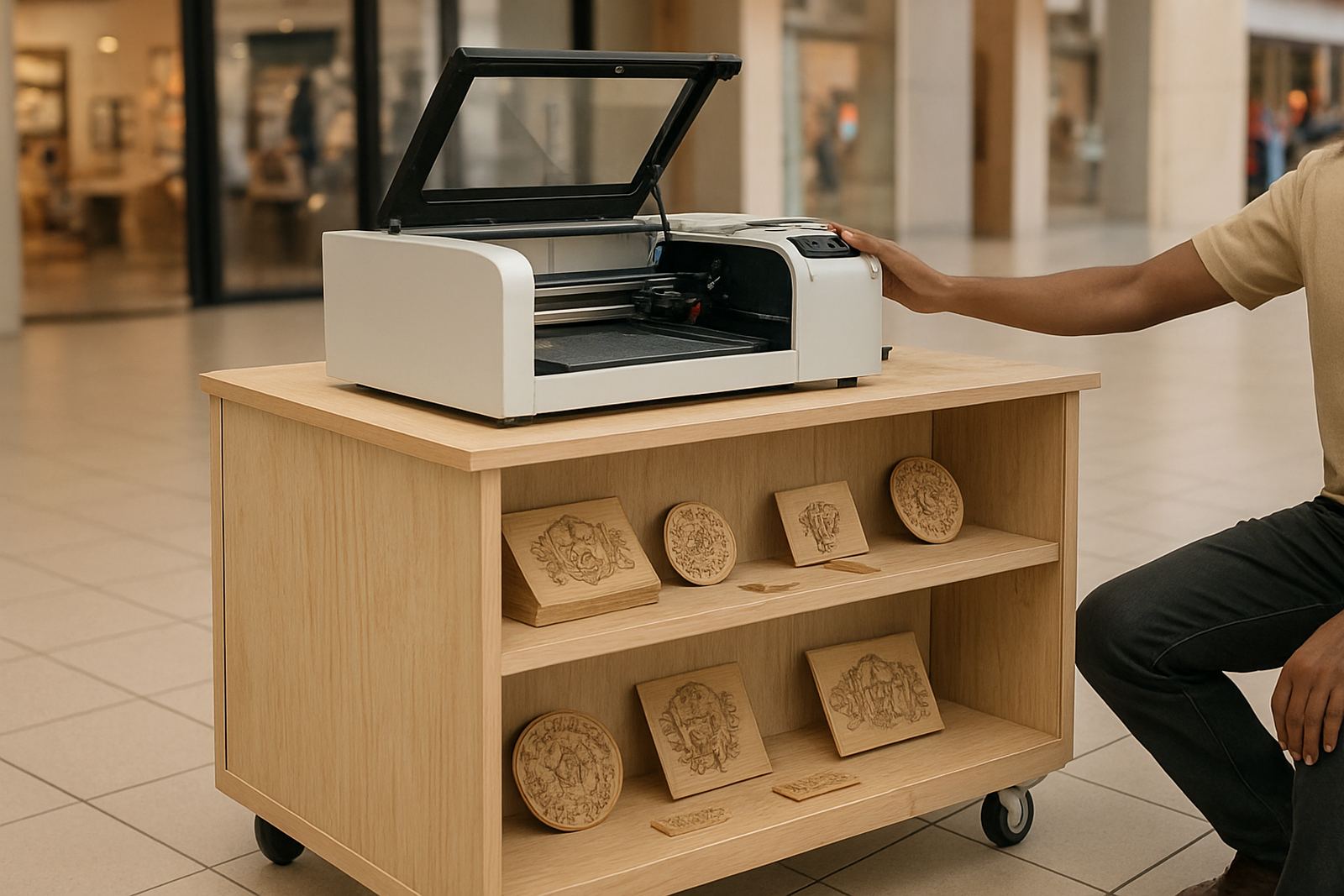
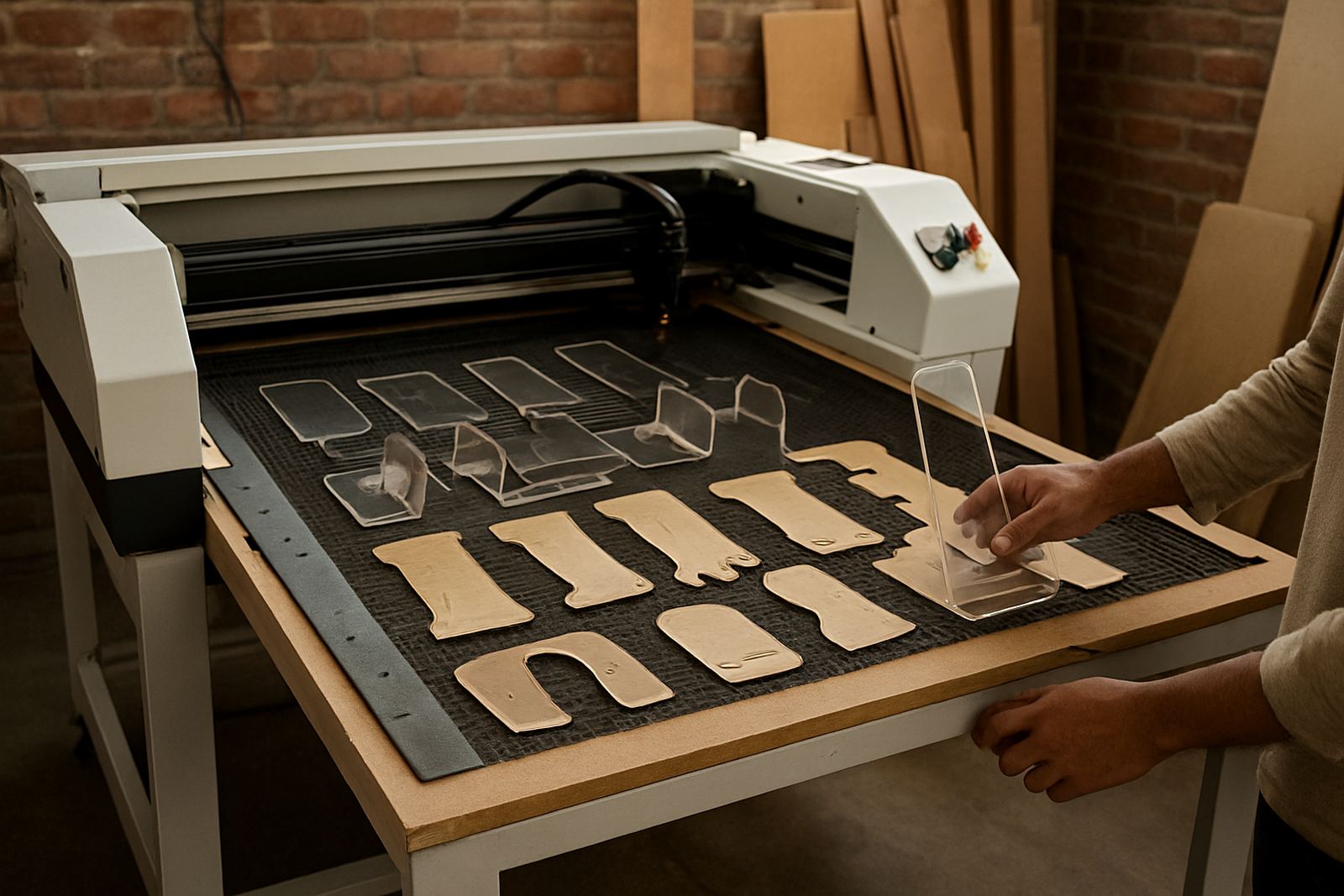
The Display Stand Laser range is used for making parts that need to look neat on the shelf and stay consistent from one batch to the next. It suits folded acrylic components, tabbed inserts, sign holders, product risers, menu stands, brochure holders and small retail display kits. If you are producing for stores, exhibitions, showrooms or promotional campaigns, this type of laser work helps you keep edges clean and details sharp without extra finishing on most jobs.
It is a practical choice for makers who need short runs and repeat orders. A small production team can cut individual parts for prototypes, then move straight into a production batch once the design is approved. Because the cut is driven by artwork and digital settings, changes to slot sizes, fold lines or logo cut-outs can be made quickly. That is useful when a client wants a display unit adjusted for a new product size or a different shelf width.
- Suitable materials include acrylic, MDF, plywood, veneer board and selected leather grades.
- Common uses include point of sale trays, product stands, counter displays and branded inserts.
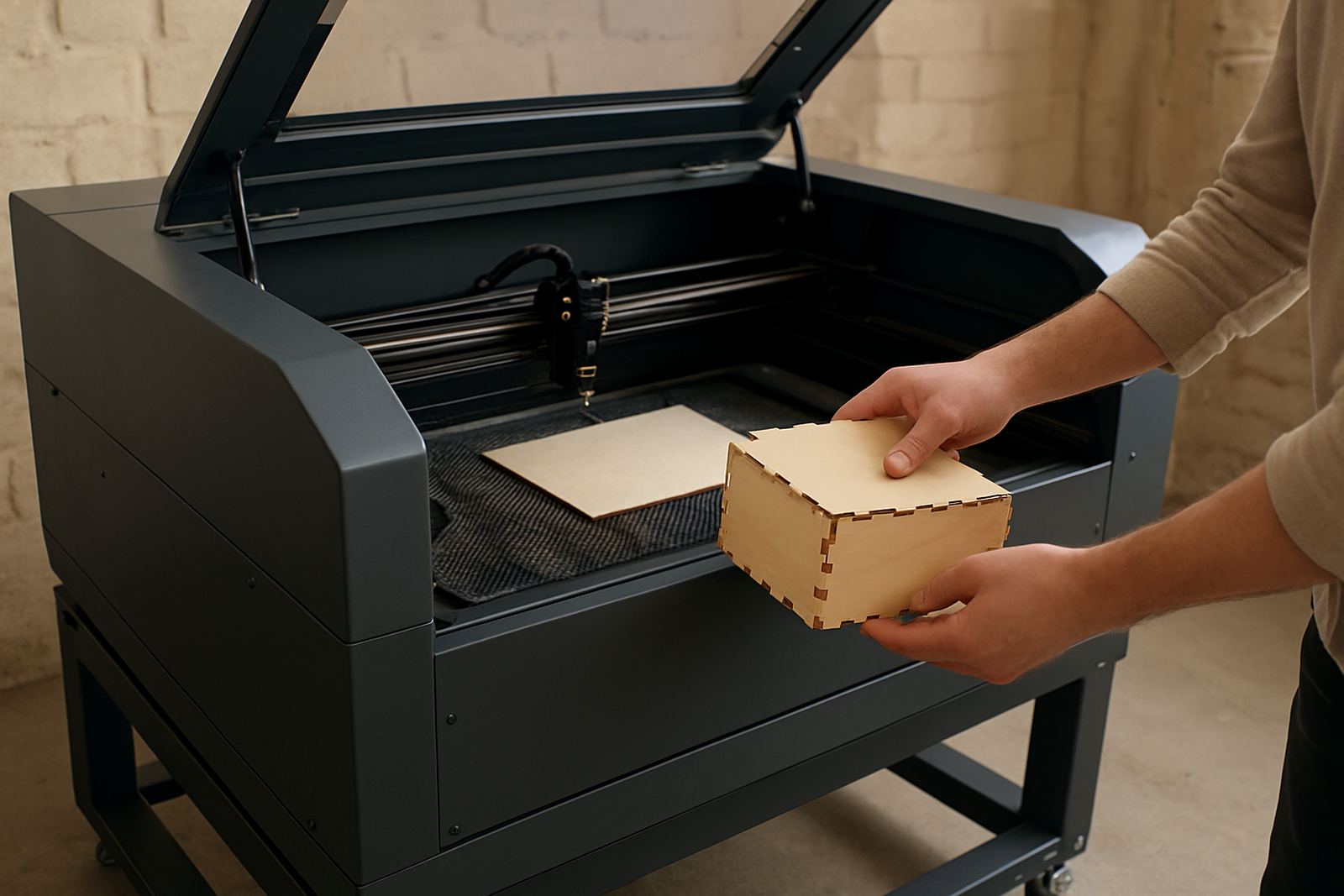
- Works well for flat parts that need folding, slotting, engraving or cut-through detail.
Sizes, Power Levels And Format Options
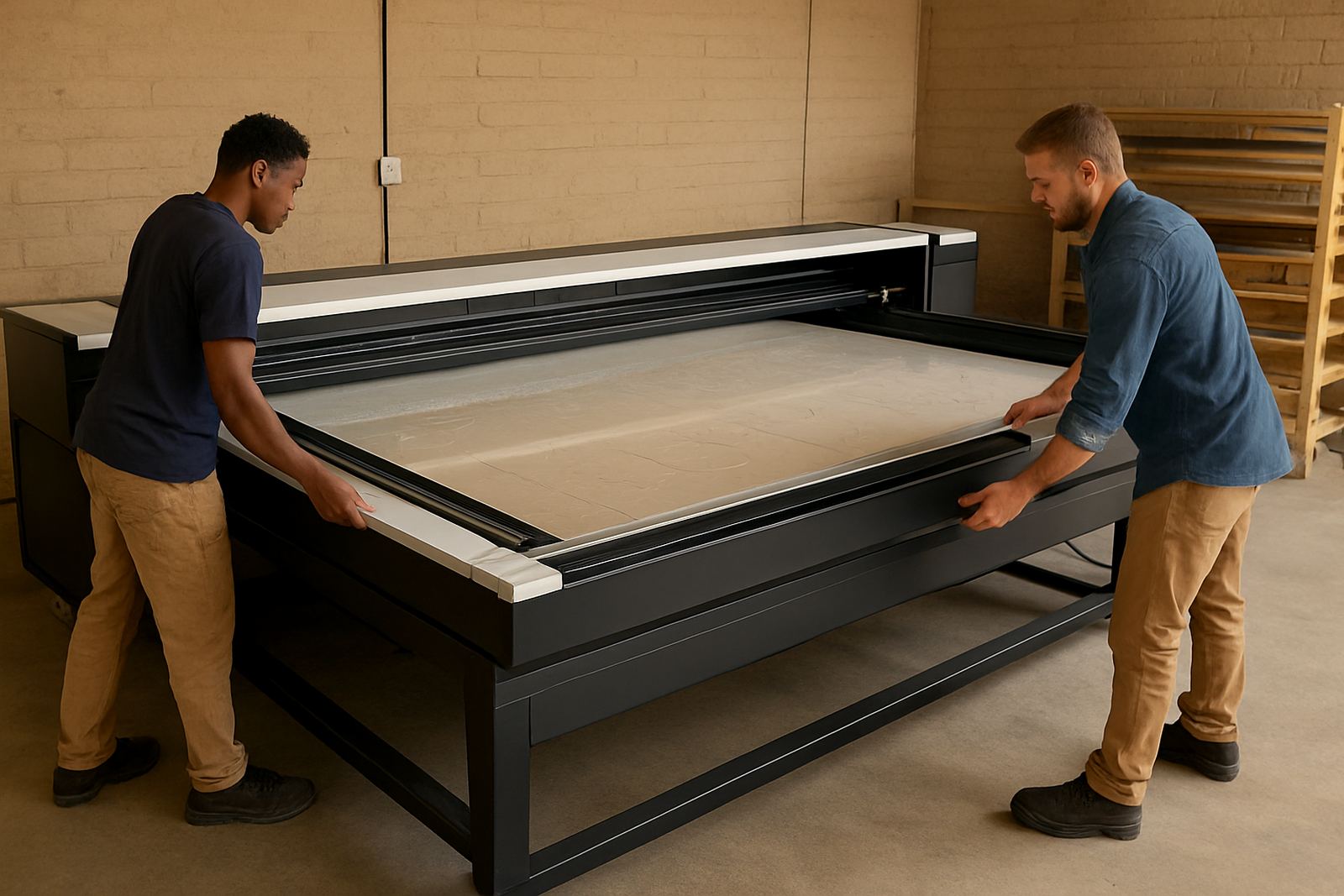
Display stand work is usually ordered in sheet sizes that match the material supply and the job size. For smaller retail parts, a compact bed is often enough, while wider signage and display components may need a larger format to reduce waste and cut full sheets in fewer passes. The right choice depends on the board size, the part geometry and how often you plan to repeat the same item.
Power selection matters too. Lower power units can handle thin acrylic and lighter board work, while higher power machines give better speed on thicker acrylic, dense wood sheets and longer production runs. For display kits, the goal is not only speed, but also control. You want corners that stay crisp, slots that fit properly and engraving that remains clear on a branded stand. On thicker stock, a slower pass often gives a cleaner edge than forcing the cut.
- Sheet sizes can be matched to common acrylic and board formats used in retail fabrication.
- Options are available for engraving, cutting and score marking on the same job.
- Finer nozzle control helps with small text, tight corners and internal cut-outs.
Where This Product Fits Best
This product suits businesses that make display items for shops, pharmacies, salons, exhibitions, hospitality counters and corporate reception areas. It also works for promotional product makers who need short turnaround times and accurate repeat sets. In Johannesburg and across Gauteng, many customers use display stand cutting for retail launches, trade show packs and custom shelf solutions. Coastal buyers in Durban or Cape Town often ask for acrylic parts that can handle humidity better than untreated board, so material choice is important from the start.
It is also useful for in-house production where staff want to replace outsourced items with a faster local process. If you are working through seasonal campaigns or changing stock lines, it helps to have display parts cut to order instead of carrying large amounts of finished stock. For small workshops, this can free up space and reduce the risk of holding the wrong sizes. The machine is also suited to sample work when a client needs to see a stand before approving a full batch.
Installation, Extraction And Power Requirements
Installation should be planned with proper ventilation, clear floor space and a stable power supply. Laser work produces fumes and fine particles, so extraction is not optional. For acrylic, wood and leather, a correctly sized extraction system helps keep the working area cleaner and improves cut quality by moving fumes away from the beam path. In enclosed retail workshops or back-of-house spaces, this makes a big difference to both safety and finish.
Most setups also need attention to power stability. In South Africa, load-shedding and voltage dips can interrupt production, so many users add surge protection and backup power for controls and computers. Water-cooled units need reliable cooling and regular checks, especially in hotter months or in areas where ambient temperatures rise through the day. If you are operating in a humid coastal area, give extra attention to optics, fittings and stored materials. Corrosion and moisture can shorten service intervals if the machine is not kept in good condition.
- Allow space for machine access, extraction ducting and material loading.
- Plan for stable mains power, surge protection and cooling water where needed.
- Keep the area dry, clean and free of loose dust around the cutting bed.
Care, Servicing And Daily Use
Good care keeps cut quality consistent and reduces downtime. Daily work should include a quick clean of the bed, lens area and visible dust paths. Optics need regular checking because smoke residue can affect beam strength and edge quality. Cooling water must stay within the right range, and the extraction system should be checked for airflow blockages or leaks. If the machine is used heavily for retail batches, a scheduled service plan is worth having, especially before busy periods.
Preventive maintenance is usually cheaper than waiting for a breakdown. A machine that cuts display kits all day can drift out of alignment over time, and small issues like a loose mirror mount or dirty lens can show up as burnt edges or inconsistent cuts. In our experience, many problems start small and grow once the machine is pushed through long shifts. A monthly or quarterly check can catch this early. It is also worth training operators to spot changes in sound, cut depth and smoke behaviour.
- Clean optics, rails and the cutting bed on a regular schedule.
- Check beam alignment, water flow and extraction performance.
- Keep spare consumables on hand for busy production periods.
What To Check Before You Order
Before ordering a Display Stand Laser setup or a display job, check the final part size, sheet thickness and the material type. Acrylic can cut differently depending on colour and thickness, while wood and leather each need their own settings. If the display piece includes folded sections, make sure the fold allowance, slot width and assembly tabs are confirmed in millimetres. Even a small change in kerf can alter how the parts fit together.
You should also confirm the finish you want. Some jobs need polished acrylic edges, while others are fine with a clean cut edge straight off the machine. If branding is involved, ask about engraving depth and whether the logo must sit inside a cut frame or on a separate panel. For retail kits, it helps to know whether the parts will be couriered flat or assembled on site. That affects packaging, edge protection and the way the set is nested for transport.
- Confirm material type, thickness and final panel sizes.
- Check fold lines, tabs, slots and any engraved text or logos.
- Decide whether the kit is delivered flat or pre-assembled.
Local Support For Demo, Setup And Training
LaserCutter CO2 supports customers from Wynberg, Johannesburg with demo cuts, installation help and operator training nationwide. That matters when a display business needs to get running quickly or when a team wants help with setup after relocation. Support is also available for servicing, breakdown response, spares supply and remote troubleshooting when a machine needs attention but production cannot stop for long.
For display work, good training is just as important as the machine itself. Operators need to understand material handling, safe startup, lens care and the settings that suit each job. With the right training, a small team can produce reliable display parts for local clients in Sandton, Midrand, Pretoria, the East Rand, the West Rand and further afield. The goal is practical output, not guesswork, so the machine can keep turning out neat retail components with less waste and fewer re-cuts.
Key facts
| Product type | CO2 laser cutting setup for display stands and retail parts |
|---|---|
| Material range | Acrylic, wood, leather and selected board materials |
| Typical applications | POS parts, brochure holders, sign stands, product risers and retail kits |
| Cut features | Cut-through, engraving, scoring and folded component preparation |
| Installation needs | Stable power, extraction, cooling and adequate floor space |
| Support coverage | Demo cuts, installs, operator training and maintenance support nationwide |