What the Retail Kiosk Laser is used for
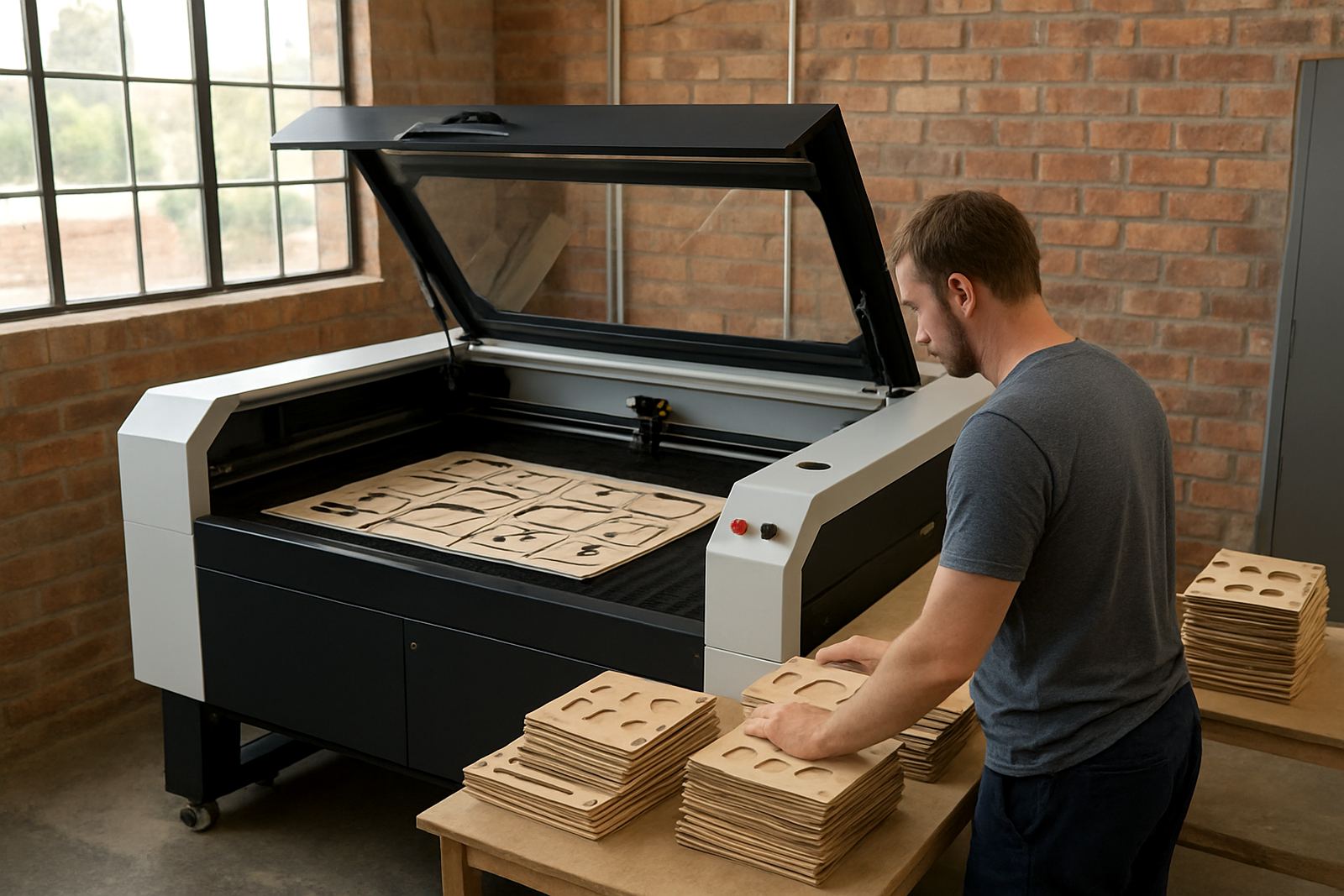
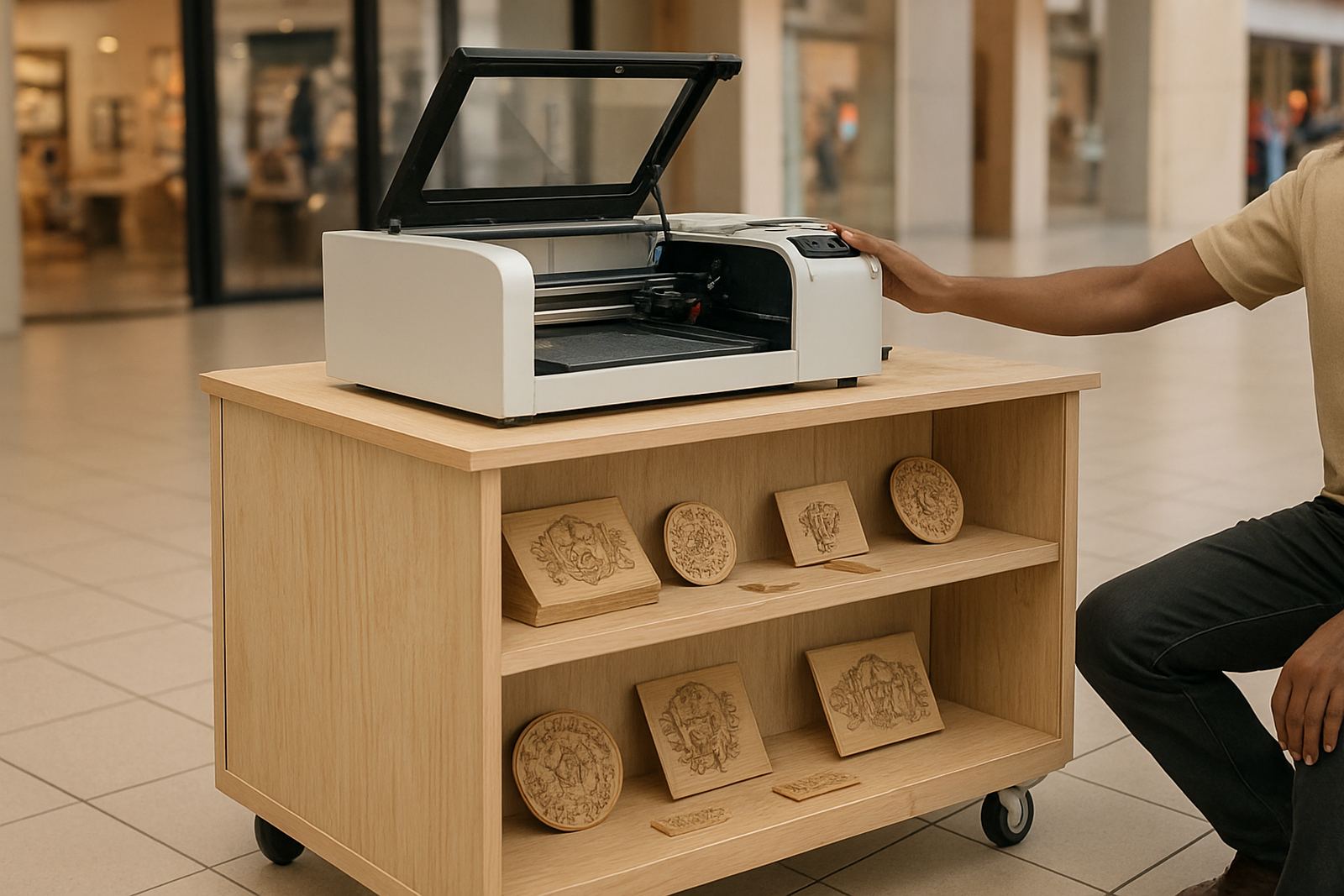
This compact CO2 laser system is suited to small production runs where speed, neat edges and repeatable size matter. It is commonly used for name tags, keyrings, earrings, small signs, personalised gift boxes, leather accessories and point-of-sale items that customers can collect the same day.
For retail counters, mall kiosks, market stalls and maker studios, the main advantage is that you can produce personalised items on site instead of waiting on outside suppliers. That helps with walk-in sales, event sales and last minute orders, especially when customers want a single item or a short run.
- Personalised gifts and accessories
- Small signage and display inserts
- Craft production and custom branding
- Short-run retail manufacturing
Size options and working area choices
Retail kiosk spaces vary a lot, from a narrow counter in Sandton to a shared trading bay in Durban or a compact showroom in Pretoria. That is why the system can be matched to the footprint you actually have, rather than forcing a large machine into a small shop floor.
When choosing the working area, allow room for material loading, extraction ducting and safe access around the machine. A smaller footprint helps in tight spaces, but you still need enough room for the operator to move freely and keep finished items nearby.
- Compact format for tight retail floorspace
- Mid-size option for higher daily output
- Choice of enclosed cabinet or table style setup
- Front access for easier loading and cleaning
Materials it handles cleanly
This system is intended for acrylic, wood and leather, with the best results on clean, flat sheet material that is suitable for laser processing. It can be used for both cutting and engraving, depending on the item, material thickness and finish required.
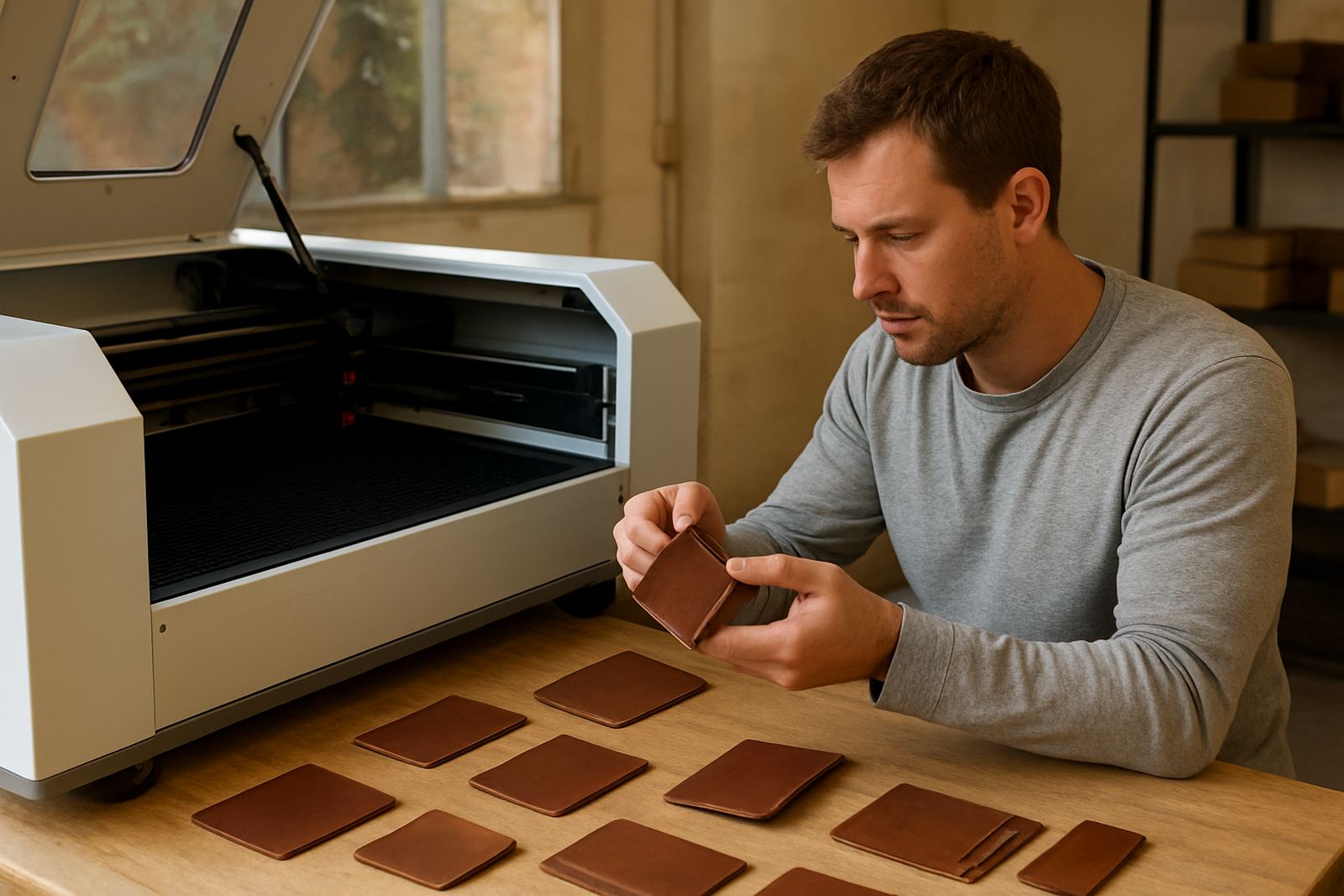
For acrylic, the result is a neat edge and accurate detail on letters, inserts and shaped pieces. On wood, it works well for custom tags, ornaments and layered items. Leather suits accessories and branded goods, but the material should be properly prepared because inconsistent thickness can cause marks or uneven cuts.
- Acrylic sheet for signs, tags and display parts
- Wood for ornaments, branding pieces and gifts
- Leather for accessories and personalised items
- Paperboard and select craft materials, if approved for your setup
Installation, power and extraction requirements
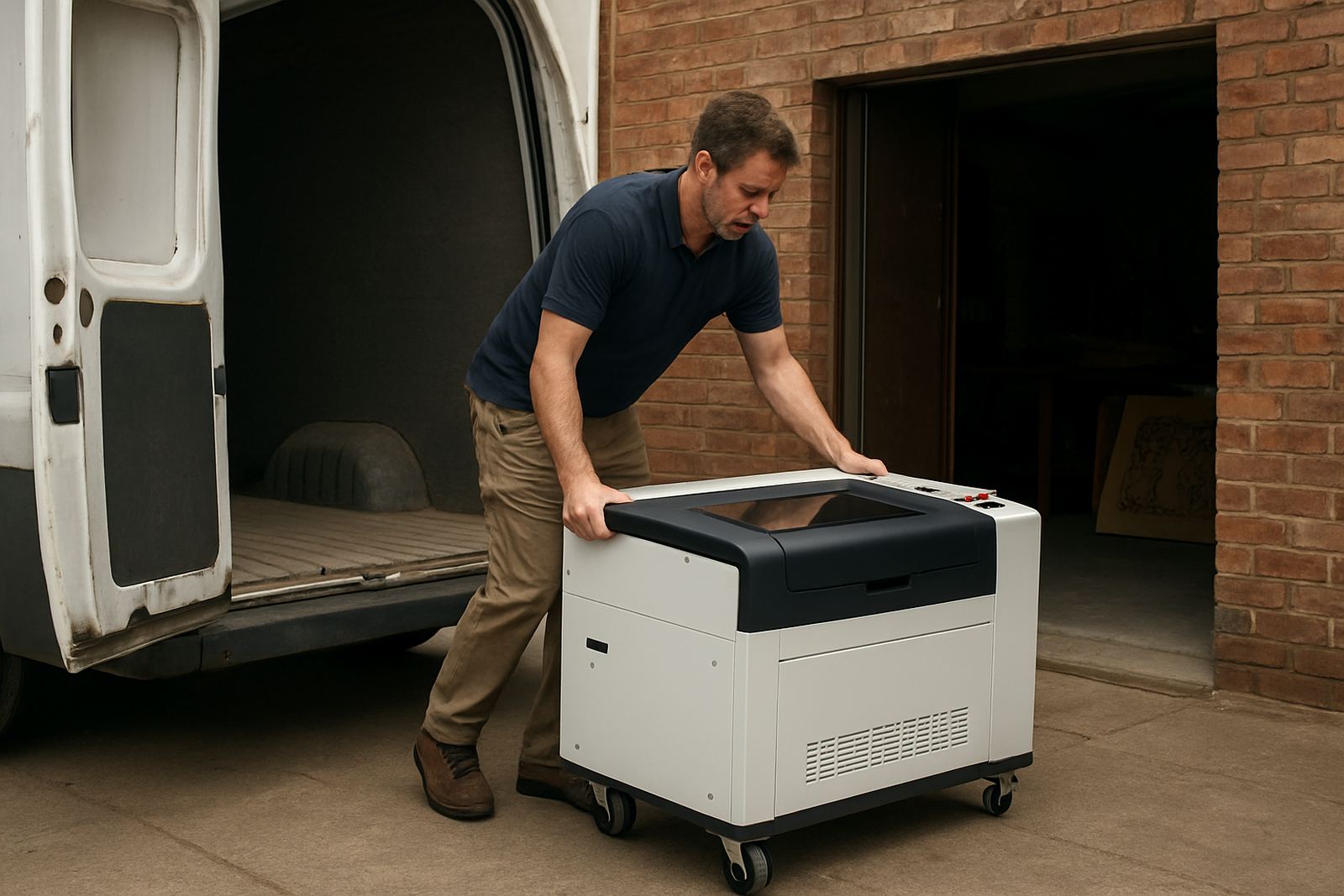
Installation is handled in Wynberg, Johannesburg and support can be arranged nationwide, including Pretoria, Midrand, the East Rand, the West Rand, Cape Town and Durban. A proper site check matters because the machine needs stable power, correct extraction and enough space for safe operation.
Most retail locations use standard single-phase power, but the exact supply must be confirmed before delivery. Where load-shedding is part of daily trading, you should plan for backup power or a controlled shutdown routine so that work is not interrupted mid-cut. Extraction is also important, especially in enclosed retail spaces, because smoke and fine dust must be removed properly.
- Stable mains power with verified supply rating
- Extraction ducting to remove fumes and dust
- Level floor and dry indoor placement
- Allowance for backup power during load-shedding
Care, cleaning and routine servicing
CO2 laser machines perform best when optics are kept clean, cooling is checked and the beam path is aligned properly. In a retail setting, that routine is even more important because the machine may run in short bursts all day, which can lead to build-up on lenses and mirrors if it is not maintained.
Regular care keeps the cut quality consistent and reduces downtime. A preventive maintenance plan can include beam alignment, optics cleaning, cooling checks, extraction servicing and a full inspection of moving parts. If you are running the machine in a coastal area, humidity control also matters because moisture can affect stored material and some components over time.
- Clean optics on a scheduled basis
- Check water cooling and circulation
- Inspect extraction and filters regularly
- Keep the machine in a dry, dust controlled area
Pre-Order Checks For A 900x600 Laser
Before ordering, it helps to define what you want to produce, how many items you expect per day and how much space is available. That makes it easier to match the machine size, power setup and accessories to your actual retail operation. If you are planning to move the machine later, tell us early so relocation can be factored in.
You should also confirm the material thickness you plan to cut, whether you need engraving as well as cutting, and whether the unit will sit in a shopping centre, factory retail bay or standalone workshop. A clear brief avoids paying for features you will not use and helps with a cleaner install on site, no fuss.
- Product type and expected daily output
- Available floor space and ceiling height
- Power supply and backup power plan
- Extraction route and indoor ventilation
- Need for operator training or remote support
Key facts
| Machine type | CO2 laser cutter for compact retail production |
|---|---|
| Typical materials | Acrylic, wood, leather and selected craft materials |
| Use case | Personalised gifts, accessories, signage inserts and short runs |
| Installation support | Available nationwide from Wynberg, Johannesburg |
| Power requirement | Stable mains supply, confirmed to suit the chosen configuration |
| Support options | Operator training, preventive maintenance, breakdown response and remote support |