Pattern cutting for leather goods that need neat edges
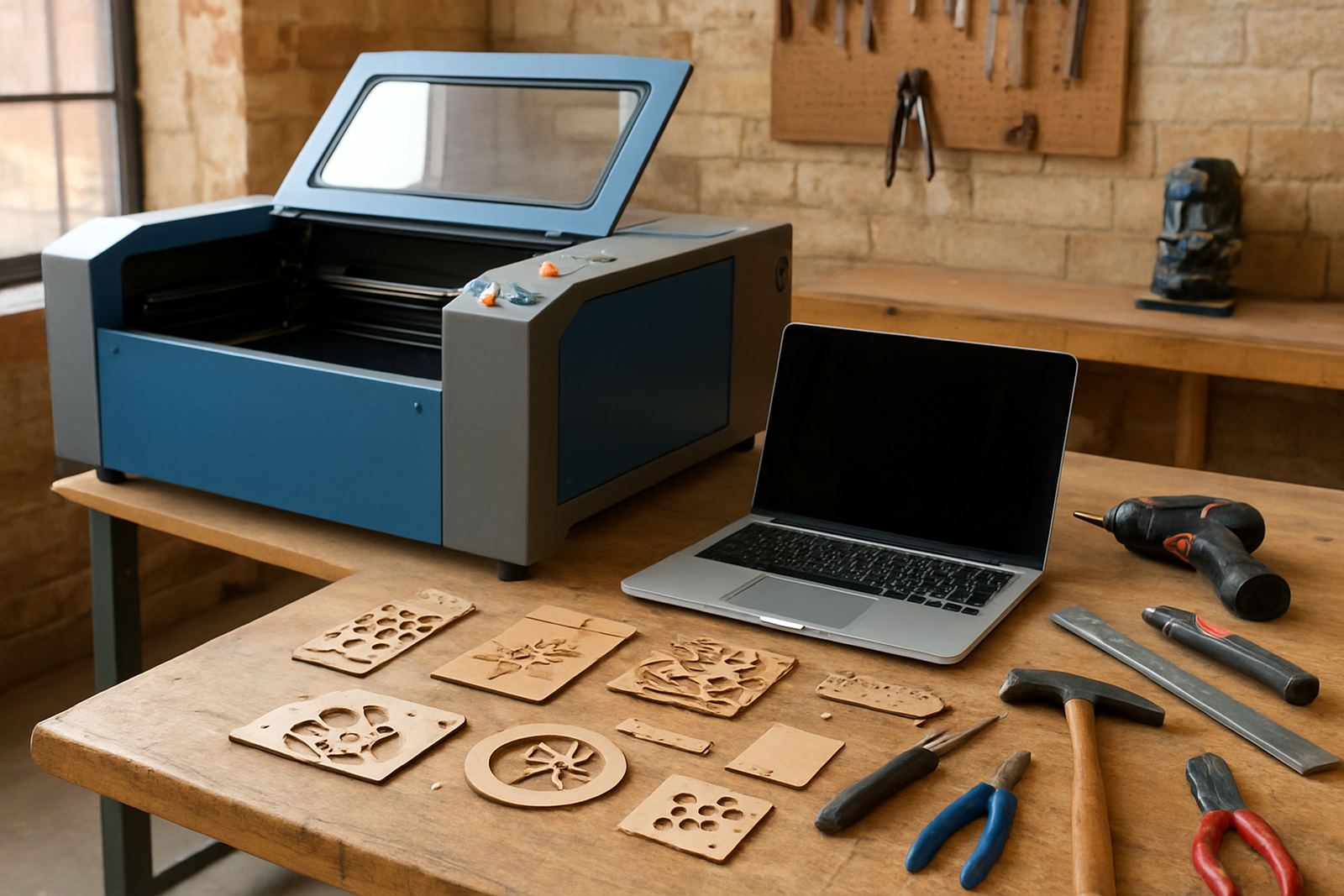
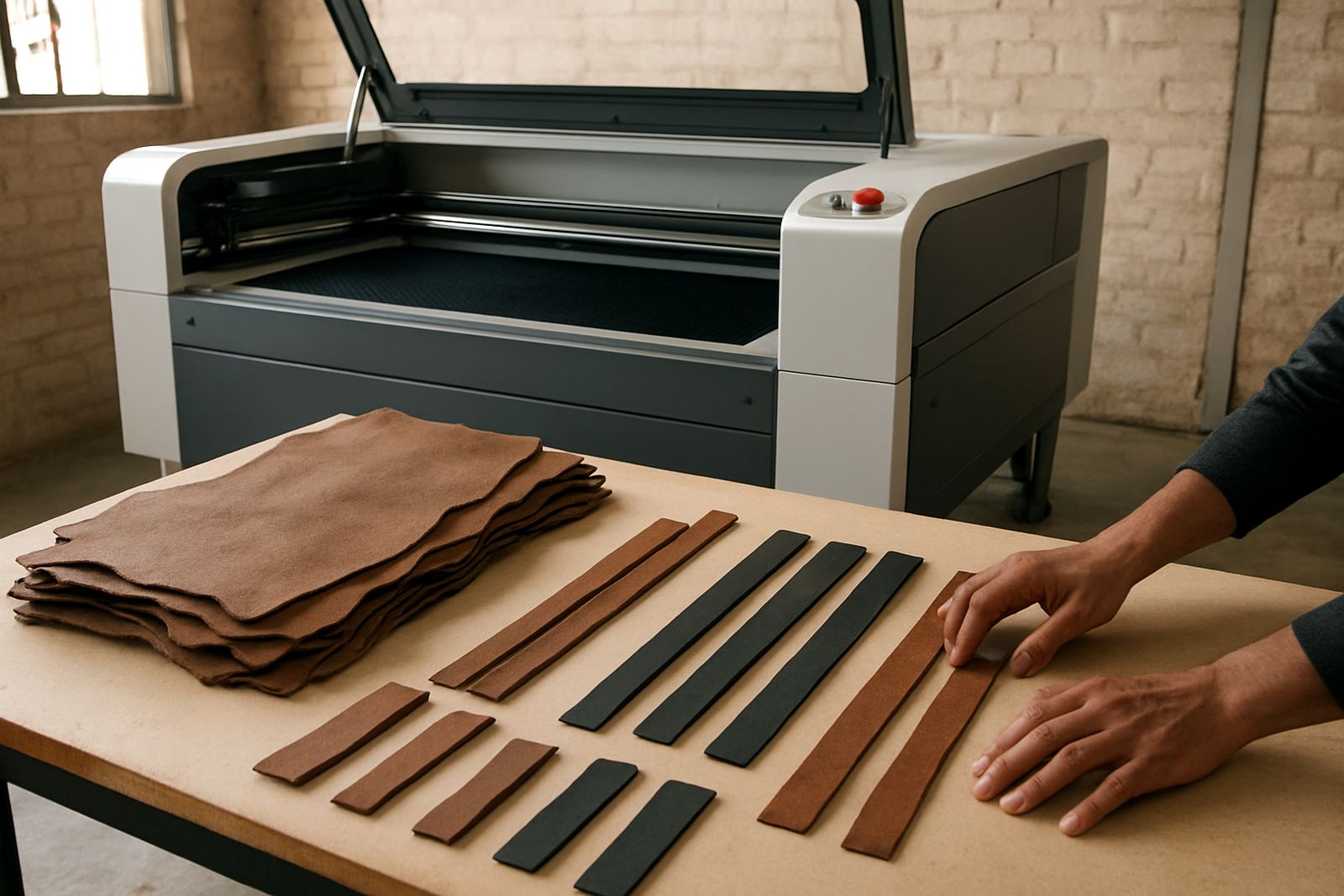
A CO2 laser cutter is a practical tool for leather goods work because it cuts and marks shaped parts with good repeatability. It is commonly used for belts, wallet panels, watch straps, key fobs, card holders, labels and stitched accessory lines where the cut line must stay true from piece to piece.
With the right settings, the beam produces a fine edge and reduces the need for manual trimming. That helps when you are cutting short runs, custom orders or small production batches for retail, corporate gifting, fashion work and artisan ranges. Natural leather, bonded leather and many synthetic leather types can all be tested for suitability, since materials do vary a lot in thickness and finish.
Common sizes and build options for workshop use
Leather work often starts with a compact machine, then grows into a wider bed once order volume picks up. We help clients choose a working area that matches the largest pattern pieces, nesting layout and loading space in the workshop. A larger bed is useful for belts and bag parts, while a smaller format can suit label work and tighter production rooms.
- Working areas commonly supplied: 600 x 400 mm, 900 x 600 mm, 1300 x 900 mm and 1600 x 1000 mm
- Laser power options: 80W, 100W, 130W and 150W depending on material thickness and output needs
- Bed types: fixed table, drop-through bed or honeycomb style support for smaller cut parts
- Options: red dot pointer, autofocus, rotary attachment for curved items, and extraction upgrade
For belt blanks and larger wallet panels, a 900 x 600 mm or larger bed usually gives better layout control. For finer goods and label work, a smaller machine can be enough and it takes less floor space too.
Where this laser suits best in leather production
This product suits businesses that want precise cutting without relying on hand knives for every shape. It is a good fit for craft studios, leather workshops, promotional product makers, fashion accessories suppliers, shoe component makers and contract cutting services. It also helps teams that need repeat orders with the same hole positions, stitch line allowances and tab sizes.
In Johannesburg and across South Africa, many workshops have to work around load-shedding, limited floor space and mixed material jobs. A laser cutter can slot into that kind of setup if the machine, extraction and power backup are planned properly from the start. It is especially useful where time matters and the same pattern has to be made again and again without drift.
Installation, extraction and power planning
Installation is normally done on site, with the machine positioned, tested and set up for local conditions. For leather cutting, proper extraction is very important because fumes and fine residue must be pulled away from the cutting area. In a closed workshop, poor extraction can leave odour on goods and put extra strain on the machine.
- Power supply: stable 220V single phase is common for smaller systems, while higher power machines may need more careful circuit planning
- Water cooling: a chiller or equivalent cooling unit is required to protect the tube and keep performance steady
- Extraction: ducted extraction or a suitable fume removal system is strongly recommended
- Backup power: UPS or generator support should be considered for load-shedding and voltage drops
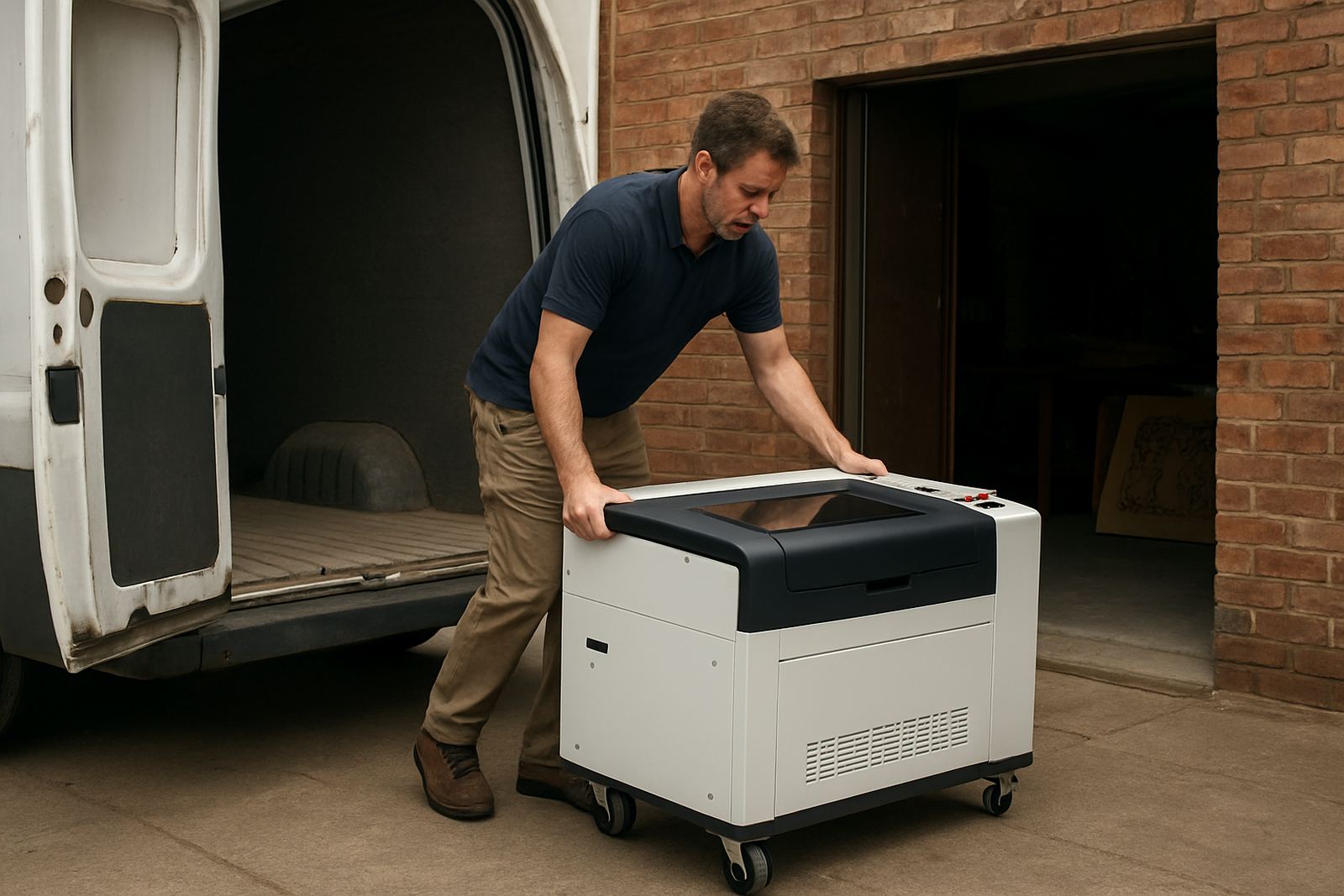
We also check the room layout, access doors, and whether the client needs relocation help, especially when the machine is being moved between Wynberg, Sandton, Pretoria, Midrand or coastal sites where humidity can affect storage and optics.
How to keep leather cutting clean and consistent
Leather machines need regular care if you want consistent cuts, less scorching and fewer stoppages. The optics should stay clean, the beam alignment must be checked and the cooling water needs routine monitoring. Dust, leather fibres and adhesive residue can build up quickly, so the working area should be cleaned often rather than left for the end of the week.
For workshops near the coast, extra attention should be paid to corrosion, stored spares and machine covers because humidity can creep in. In Gauteng, dust from the shop floor is often the bigger issue. Either way, preventive maintenance makes a real difference and avoids the kind of breakdown that interrupts a run of orders. A service plan helps keep things on track and saves a lot of headaches later on.
What to check before placing an order
Before ordering, it helps to know exactly what leather you will cut, how many pieces you produce in a day and whether you need just cutting or also light engraving. The wrong bed size or power rating can slow production or waste material, so it is worth checking the basics first.
- Leather type: genuine, bonded or synthetic
- Typical thickness: for example 1 mm, 1.5 mm, 2 mm or thicker panels
- Largest part size and sheet size used in your workshop
- Daily output target and whether you run short or long batches
- Need for marking, perforation or clean cut only
- Available space, power supply and extraction route
It also helps to know if you need operator training for more than one person, since staff changes are common in production rooms. We can train new operators on safe use, basic settings and day to day checks so the machine is used properly from the start.
Support for demo cuts, installs and training nationwide
LaserCutter CO2 is based in Wynberg, Johannesburg and supports demo cuts, installs and operator training nationwide. That includes customers in Sandton, Pretoria, Midrand, the East Rand, the West Rand, Durban and Cape Town, with service help arranged through the enquiry form on our contact page.
For leather goods businesses, support matters because settings are never identical from one material batch to the next. Our team assists with machine installation, beam alignment, remote support, optics cleaning, cooling checks, extraction service, breakdown response and spare parts supply. If you are setting up a new line or replacing an older unit, we can help you match the machine to the work, not the other way around.
Key facts
| Laser type | CO2 laser cutting system |
|---|---|
| Typical working areas | 600 x 400 mm to 1600 x 1000 mm |
| Power options | 80W to 150W |
| Suitable materials | Natural leather, bonded leather and selected synthetic leather |
| Cooling | Water cooling with chiller support |
| Support | Installation, training, maintenance and nationwide service |