Built for first-time leather cutting work
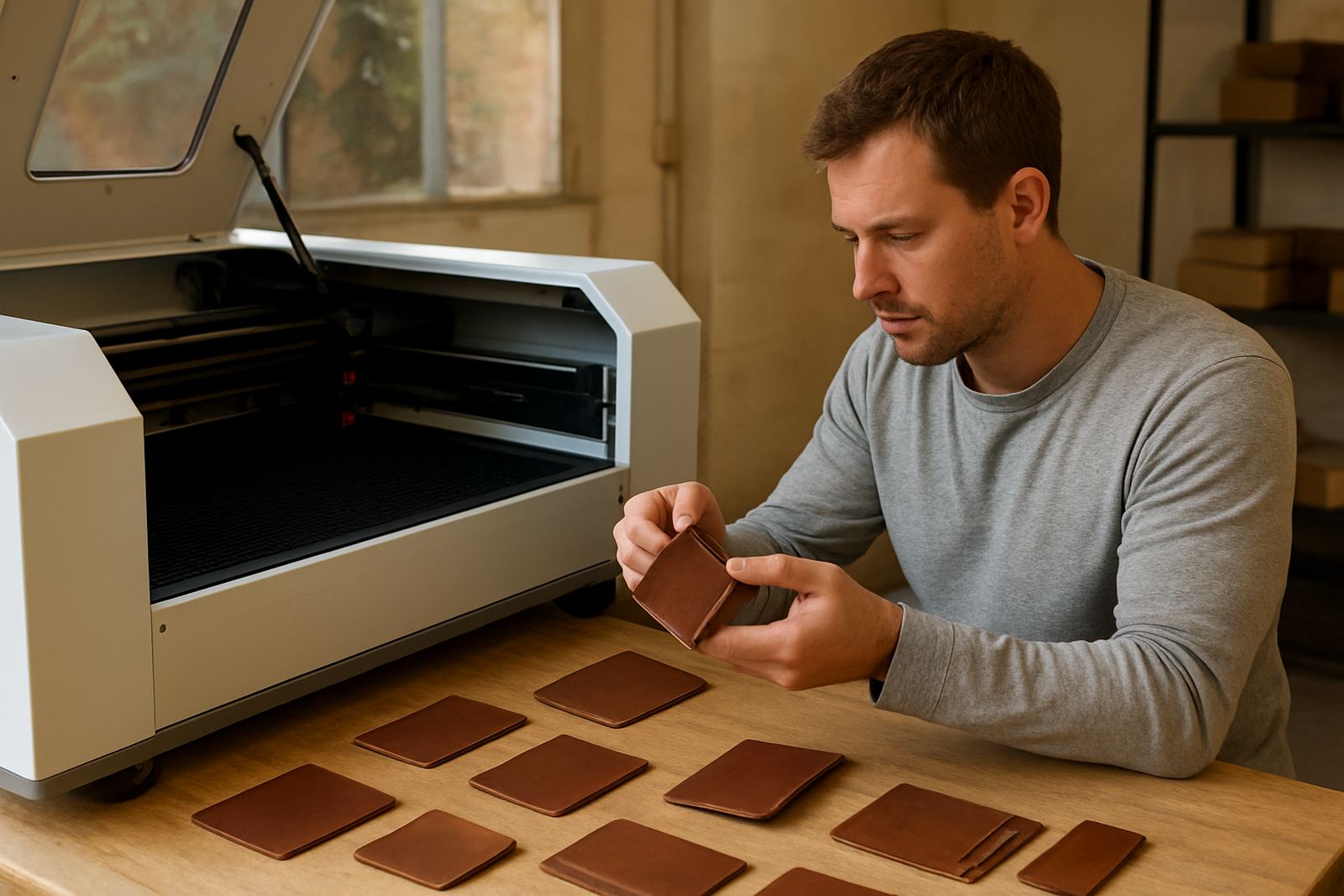
This starter model is aimed at users who want dependable cutting on vegetable tanned leather, chrome tan offcuts and bonded leather components. It gives you a practical way to cut repeat parts for wallets, watch straps, key tabs, tags and small promotional items, with clean edges and less hand finishing.
For a new workshop, that matters. You get controlled output without needing large floor space or industrial level power. The machine is also suitable for craft studios in Johannesburg, Pretoria, Durban or Cape Town that need a steady entry point into laser work, not a machine that sits idle because it is too complex to run.
Sizes and options that suit small production
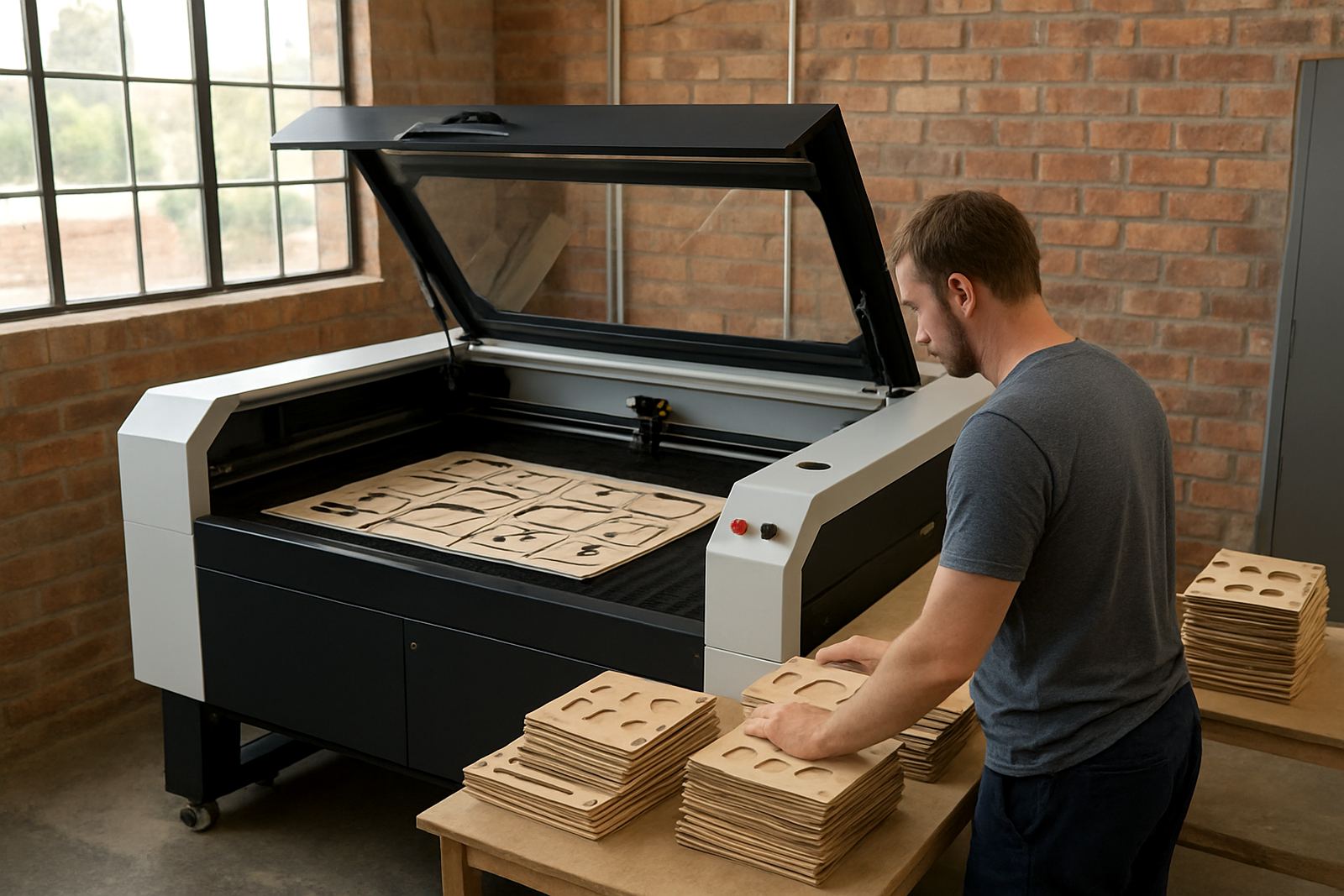
Starter leather cutters are usually supplied in compact bed sizes that make sense for small-batch work. Common options include 600 x 400 mm for light jobs and sample work, 900 x 600 mm for a wider mix of components, and 1300 x 900 mm if you want more room for nesting parts and reducing waste.
- Bed size matched to your daily output
- Optional honeycomb or knife-bed table for cleaner support
- Variable tube power for lighter or thicker leather
- Simple front access for loading sheets and offcuts
- Optional red-dot pointer for easier alignment
If you are cutting mostly small accessories, the smaller bed keeps costs down and takes up less space. If you plan to add larger panels later, it is worth choosing the bigger bed from the start so you do not outgrow the machine too quickly.
Where this cutter fits best
This product suits leather crafters, accessory makers, sampling studios, promotional product suppliers and small contract cutters. It works well for batches where accuracy matters more than raw speed, such as matched pairs, layered pieces and items that need clean internal corners.
- Wallet makers and small leather goods workshops
- Promotional and gifting suppliers
- Craft studios and training centres
- Repair and custom accessory businesses
- Jobbing workshops handling short run orders
It also helps if you often work from customer supplied artwork. The laser can follow detailed outlines that would take too long to do by hand. That is useful when clients want initials, cut-outs or repeat patterns, and they want the same result every time.
Power, extraction and workshop setup
A starter CO2 leather cutter normally runs on single phase or three phase power depending on the size and tube rating. Before installation, check the supply at your premises so the machine can be matched correctly. In many small workshops, a stable 220V single phase line is enough for the smaller units, while larger beds may need a proper three phase feed.
You also need fume extraction because leather cutting produces smoke and odour. A suitable extractor keeps the work area safer and helps protect optics and the machine cabinet. In coastal areas like Durban or Cape Town, the air can carry more moisture, so dry storage and regular checks matter. In Johannesburg and Pretoria, dust control is also important, especially in mixed-use industrial parks.
- Stable electrical supply with correct protection
- Extraction fan and ducting sized to the machine
- Clear working space for loading and servicing
- Basic anti-surge protection for load-shedding recovery
- Dry storage for leather and spare lenses
How to keep leather cuts clean and consistent
Leather can vary from hide to hide, so care is part of the job. Keep the optics clean, check the beam alignment regularly and make sure the lens is free from residue. If smoke builds up on the lens, edge quality drops fast and you will start seeing burnt edges or uneven cuts. It’s a small thing but it causes a lot of downtime.
For best results, the machine should be serviced on a planned basis. Preventive maintenance helps with rail cleaning, belt checks, cooling checks and extraction service. If your workshop runs daily, an annual service plan is a sensible move because it reduces breakdown risk and keeps the machine ready for repeat orders.
- Clean optics before long runs
- Check water cooling and airflow daily
- Use scrap pieces to confirm settings on new leather
- Store leather flat to avoid curl and warping
- Book service before problems affect production
Pre-Order Checks For A 900x600 Laser
Start with the material list. Leather thickness, hide size and whether you are cutting natural or bonded leather will affect the bed size and laser power you need. Then confirm your monthly volume, because a hobby level cutter and a light production cutter are not the same thing, even if they both handle the same material.
You should also check the finishing standard your customers expect. Some jobs need very fine detail, while others only need clean outline cuts. If you are making layered components, ask for guidance on nesting and spacing so you can get more parts from each sheet. A quick consultation before installation saves time later, especially when you are working with tight margins.
- Leather type and typical thickness
- Largest part size and sheet size used
- Daily or weekly cutting volume
- Electrical supply at the premises
- Need for operator training and service support
LaserCutter CO2 supplies demo cuts, installation support and operator training from Wynberg, Johannesburg, with nationwide service coverage for businesses that need assistance after setup.
Installation and support from our Johannesburg base
When a starter leather cutter is installed properly, it starts paying its way sooner. The setup process normally includes position planning, power checks, extraction setup, basic calibration and operator handover. We also show your team how to set up test cuts, choose the right speed and power, and handle routine cleaning.
Support is available across Johannesburg, including Sandton, Midrand, the East Rand and the West Rand, with service support also available in Pretoria, Durban and Cape Town. For sites outside Gauteng, we can assist with delivery planning, commissioning and remote support where needed. If your workshop is in a humid or dusty area, we will also look at storage and maintenance habits so the machine stays in better working order.
Key facts
| Product type | Starter CO2 laser cutter for leather and light workshop use |
|---|---|
| Typical bed sizes | 600 x 400 mm, 900 x 600 mm, 1300 x 900 mm |
| Laser source | Sealed CO2 laser tube, power matched to application |
| Best materials | Leather, bonded leather, thin craft boards and accessory components |
| Power requirement | Single phase or three phase power depending on the leather cutter model |
| Support included | Installation, operator training, maintenance and breakdown response |