
Start With the Sheet Size You Buy Most Often
The easiest way to choose a laser bed is to look at the stock sizes you already use. If you work with acrylic, plywood or leather sheets in standard formats, the bed should suit that material with as little offcut as possible. In many Johannesburg workshops, the usual question is not whether a machine can cut a large sheet, but whether it can handle the common 1,220 x 2,440 mm board once it has been trimmed for handling, wrapping and safe loading.
For small production shops, a bed that matches half sheets or quarter sheets can be enough, especially when you are making signage, samples, tags, stencils or small decor items. For higher volume work, a larger bed cuts down on repositioning and keeps edge quality more consistent. The right size also makes nesting easier, which matters when material prices keep moving and every offcut counts.
- Match the bed to your main sheet format first
- Allow space for clamps, margins and safe handling
- Think about how the material will be loaded by one or two operators
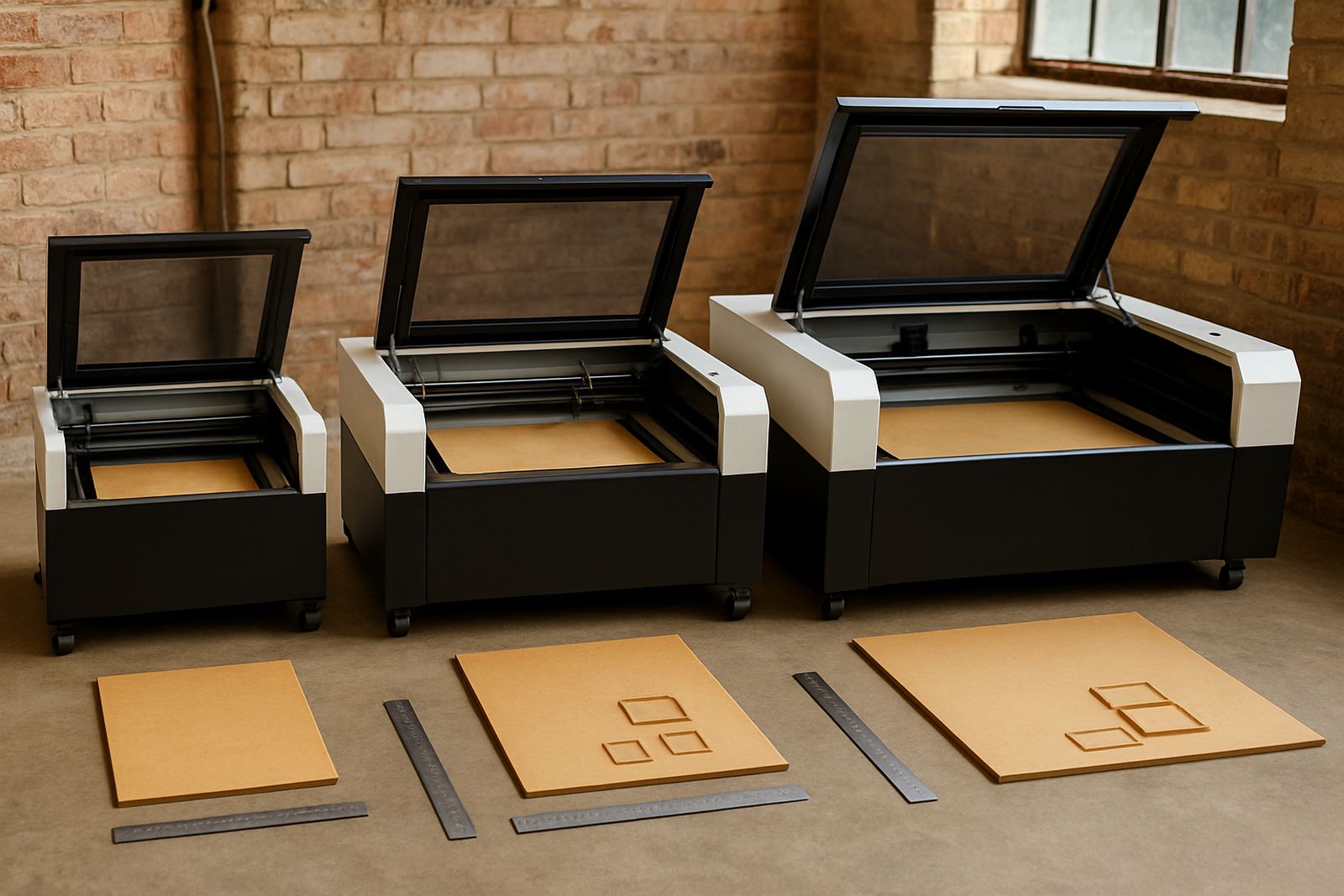
Small Bed, Medium Bed or Full Sheet Capacity
There is no single correct size. A smaller bed can be the better buy if you mostly cut badges, box panels, display lettering or leather parts. It takes less floor space, is easier to fit through a workshop doorway, and can be simpler to maintain. That said, once you start cutting larger signs, furniture inlays or multiple parts from one board, the time spent moving material starts to bite.
A medium bed often suits growing businesses that need more flexibility without going straight to a full sheet machine. Full sheet capacity is useful when production is regular and the work is repeatable, but it needs proper extraction, cooling and enough room around the unit for access. In a tight Wynberg industrial bay or a mixed-use unit in Sandton, access points and floor loading can matter just as much as the cutting area.
- Small beds suit samples, short runs and fine detail work
- Medium beds give a balance of price, output and workshop fit
- Full sheet beds work best where volume and board handling are planned properly
Think About the Products, Not Just the Material
Two workshops can both cut acrylic, yet need very different bed sizes. One may do promotional items and lettering, while the other makes illuminated panels, retail fit-outs or layered signage. A leather business might only need a modest bed for straps, patches and small goods, while a maker of larger templates or furniture components needs more length and width to avoid joins.
Ask what the final product looks like once it is finished. If you need long strips, wide panels or repeated nested parts, bed size should support that workflow. If your items are small, a huge machine can sit half empty most days. That is money tied up in capacity you are not using. A practical choice usually comes from the shape of the product, not only the size of the raw sheet.
For custom work in Johannesburg, Pretoria or Durban, that product mix can change quickly, so it helps to choose a bed that gives some headroom without going far beyond what you can sell. That way the machine keeps earning instead of sitting idle.
Allow for Extraction, Cooling and Access Around the Machine
Bed size affects more than cutting area. A larger unit normally needs more space for extraction ducting, cooling checks, service access and loading. If your workshop runs through load-shedding with backup power, you also need to think about how the machine will sit in relation to your inverter, generator or power conditioning setup. Good airflow matters because acrylic fumes, dust from wood and residue from leather all build up in the system over time.
In coastal areas, humidity can affect storage and material handling, so a bed that suits your stock flow can reduce the time sheets sit open in the workshop. In the Rand, dust and seasonal temperature swings can affect alignment and optics cleaning schedules too. Keep enough space around the machine for maintenance, because a cramped layout makes routine work slower and more expensive.
- Leave room for extraction hose runs and cooling access
- Plan safe loading space for heavy sheets and offcuts
- Keep service access clear for alignment and optics checks
Use Real Orders to Test the Right Size
The best test is your order history. Look at the last three to six months and note the common part sizes, sheet formats and repeat jobs. If most work fits comfortably on a smaller bed, that may be the sensible route. If you are constantly splitting jobs across multiple setups, a bigger bed can save time and reduce handling errors.
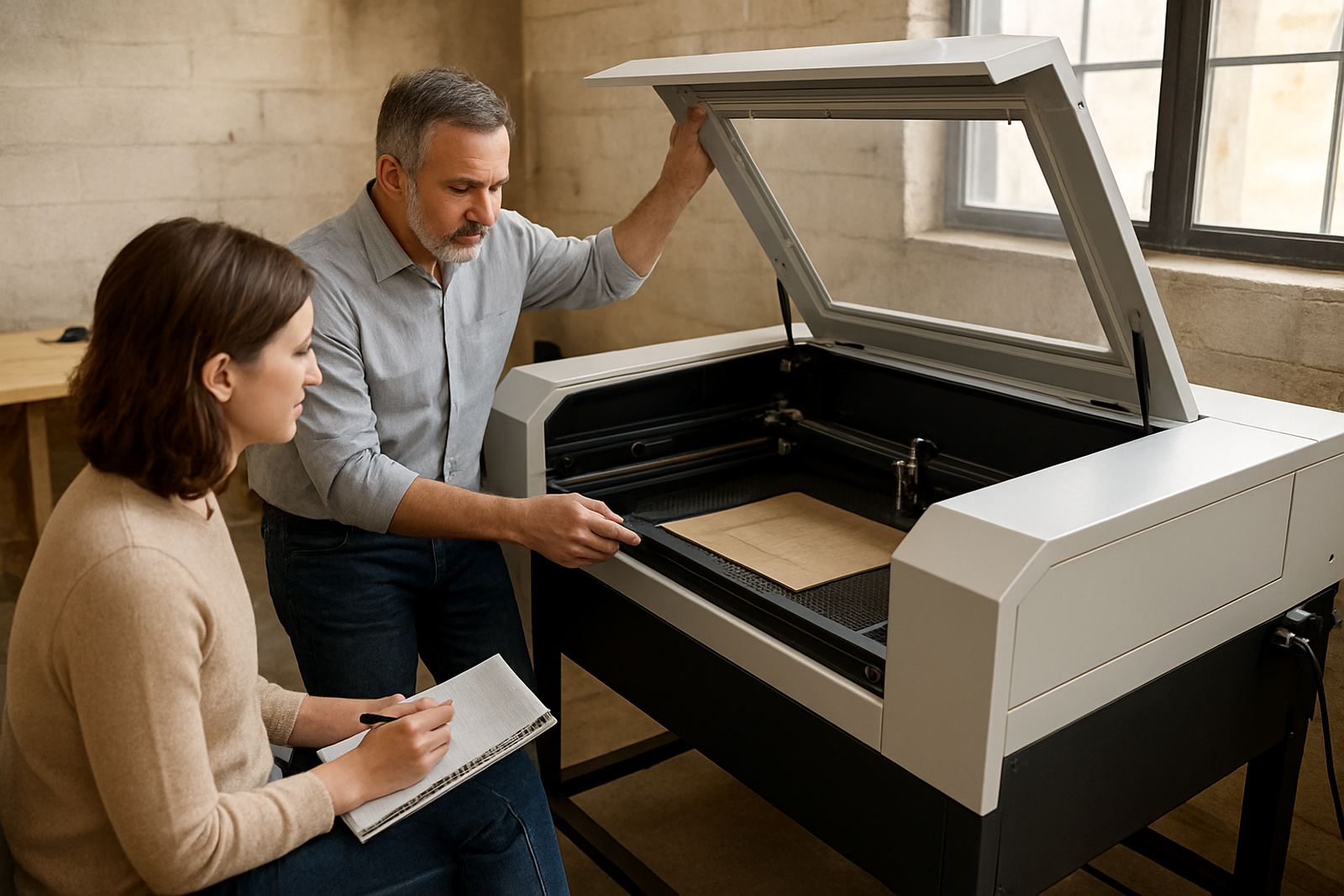
For example, a maker in Wynberg cutting acrylic parts for retail clients may start with small display pieces, then add sign panels and larger point-of-sale units. Once that happens, the extra bed width can speed up nesting and reduce wasted trims. A business in Pretoria doing school signage and leather goods might need a different size mix again. That is why demo cuts and operator training help so much, because you can see how the machine handles your own material before you commit.
We often tell customers to bring the actual sheet sizes they buy from their supplier, not only a drawing. A design may look compact on screen, but the real board size and grain direction can change the whole setup.
Choose a Bed Size That Can Grow With Your Work
It makes sense to buy for the work you have now, but leave a bit of room for growth. If your business is doing better custom work each month, a machine that is slightly larger than your current minimum can prevent an early replacement. The goal is not the biggest bed available, but the one that keeps paying its way.
Before you choose, ask these questions:
- What sheet sizes do I buy most often?
- What are my most common finished product sizes?
- How much workshop space do I have for loading and servicing?
- Will the machine still suit me if orders increase by 20 to 30 percent?
- Do I have the power, cooling and extraction setup to support it?
A sensible bed choice gives you cleaner nesting, less handling, and more predictable output. That is usually better than chasing the largest machine in the catalogue.