

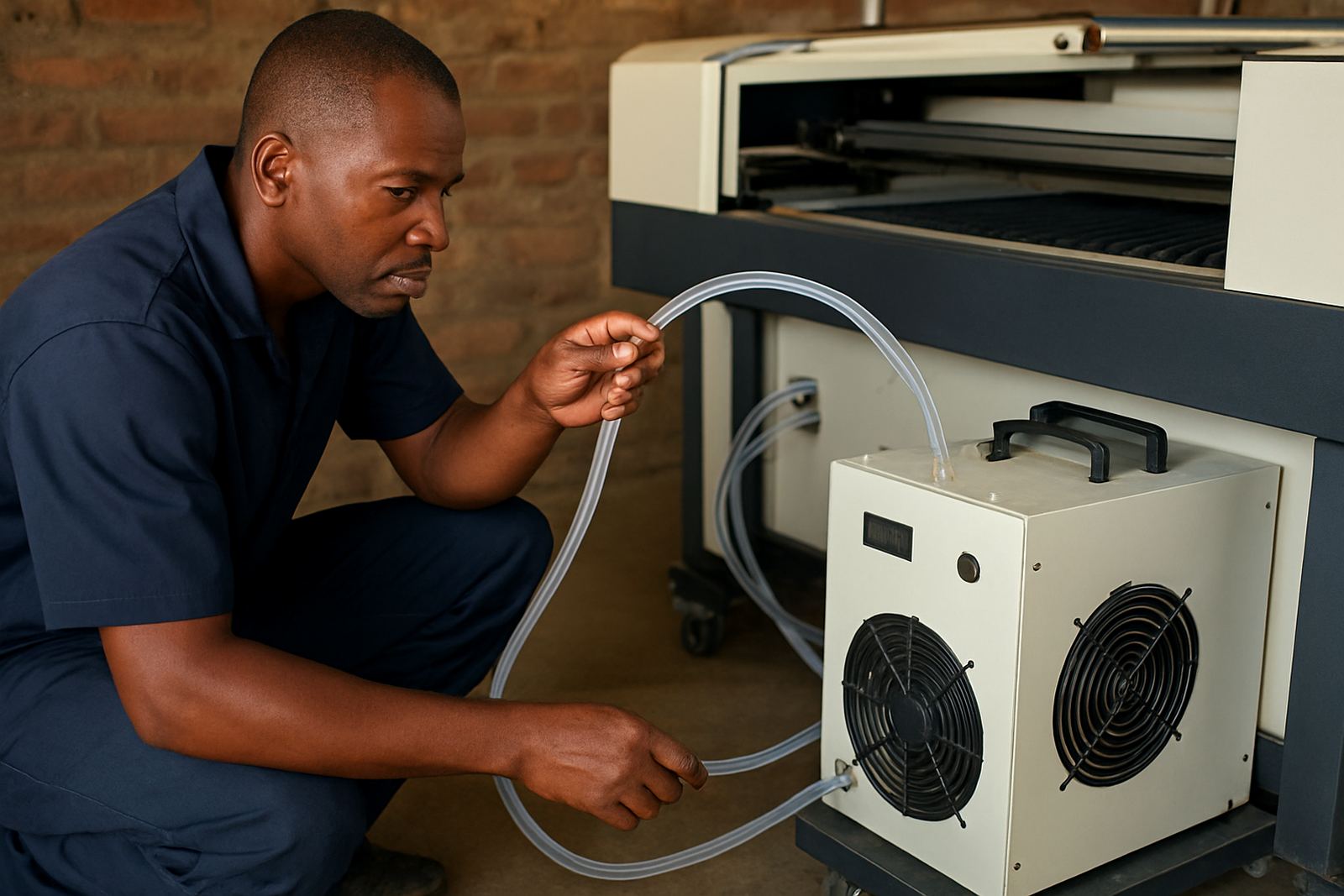
Why cooling water matters on a CO2 laser
A CO2 laser tube works best when its temperature stays steady. If the water gets too warm, circulation slows or air gets into the line, the machine can lose cutting power, mark edges unevenly, or shut down before the job is finished. Over time, heat stress can shorten tube life and put extra strain on seals, fittings and the pump.
In a busy workshop, cooling water is often treated as a top-up job. That is usually where trouble starts. A proper routine is not complicated, but it does need to be consistent. The same applies whether you are cutting acrylic signage in Wynberg, leather samples in Midrand, or small wooden parts for a craft business in Pretoria.
Basic water care also helps keep daily production predictable. When the temperature is stable and the water is clean, you are less likely to see random pauses, alarm faults or weak beam output. That means fewer retries and less waste on material that was already expensive.
What water the machine actually needs
Not all water behaves the same inside a laser system. Tap water can carry minerals, rust particles and biological growth. Over time, those solids build up in the tube and hoses. In some areas, especially where water is hard, deposits can coat the inside of the cooling path and reduce heat transfer.
For day to day use, keep the water clean, low in sediment and topped up to the correct level. If the machine has a specified coolant mix, follow that ratio carefully. Too much additive can make the water too thick for proper flow. Too little can leave you with poor protection in hot weather. A small mistake here can be expensive later.
- Use clean water that does not leave visible grit or scale.
- Check the level before starting the first job of the day.
- Keep the reservoir covered so dust and workshop debris do not fall in.
- Replace water at a regular interval instead of waiting for it to turn cloudy.
Daily checks that take less than five minutes
A short routine at the start of the shift can prevent a full day of stoppages. Look at the water level, feel the hoses for strong flow, and check that the pump is actually moving water through the system. If the line feels warm very quickly, or you hear a change in pump noise, stop and inspect it before running a long cut.
Also check for leaks under fittings, around the pump and near the tube connections. Even a slow drip can lead to air in the line. Air pockets reduce cooling and can create hot spots in the tube. If the water is milky, brown or smells stale, it needs attention before the next run.
- Confirm flow before every major cutting batch.
- Look for bubbles in the line after startup.
- Check hose clamps and fittings for seepage.
- Wipe dust from the reservoir cover and surrounding area.
A small note on routine: if your team is sharing the machine, make the water check part of the handover. That keeps the responsibility clear and avoids the usual “I thought somebody else had checked it” problem.
Heat, humidity and load-shedding in South Africa
Local conditions matter. In Johannesburg, dust and dry air can work their way into open containers and fittings. In Durban, humidity can encourage algae growth and corrosion if the water is left unchanged for too long. Coastal sites also need to watch metal fittings and exposed connectors, because moisture in the air can accelerate wear.
Load-shedding adds another layer. When the power drops out, circulation may stop while the tube still holds heat. If the machine comes back on immediately without a proper check, the cooling system may not recover fast enough. That is why many operators keep a clear restart routine after interruptions.
For a small workshop in Wynberg, one common pattern is cutting all morning, then having the machine sit through an afternoon outage. If the water was already warm, and the pump does not restart cleanly, the next job can start with heat already building. That is where a simple shutdown and restart process saves time.
Signs the cooling system needs service
Cooling problems rarely appear all at once. More often, the machine starts showing small changes that are easy to ignore. Cuts may look slightly duller, edge quality may vary from one side of the sheet to the other, or the machine may need longer to finish the same job. In some cases the warning is a louder pump, lower flow or frequent temperature alarms.
If you notice any of the points below, the system needs a proper check rather than another quick top-up.
- The water turns cloudy within a short time after changing it.
- There is visible algae, sludge or sediment in the tank.
- The machine trips on temperature more often than before.
- The water line has air bubbles that do not clear.
- The pump sounds strained or starts and stops irregularly.
It is usually cheaper to sort out the cause early than to run the tube hot until it fails. A tube replacement is far more costly than a clean, corrected cooling circuit.
How maintenance teams keep water systems steady
Good water care is not only about topping up the tank. It includes cleaning the reservoir, checking the pump output, flushing lines when needed, and making sure the cooling path is not partially blocked. During a service visit, the technician should also check whether the water type suits the local conditions and the machine's daily duty cycle.
A proper maintenance routine normally includes:
- Reservoir cleaning and refill.
- Inspection of hoses, clamps and connectors.
- Flow test through the full cooling circuit.
- Cooling performance check under working load.
- Advice on change intervals for your production volume.
If your operator training was rushed, it helps to revisit the cooling routine with the team. The person loading material should know what normal flow looks like, where the level mark sits, and when to stop the machine instead of pushing through a bad shift.
A practical example from a busy Johannesburg workshop
A small signage workshop in Wynberg was cutting acrylic name panels and wooden display parts for local clients. Production was fine in the morning, but by mid-afternoon the cuts started to look inconsistent and the machine warned of rising temperature. The owner first assumed it was only the weather, but the problem turned out to be dirty water, a partly blocked line and an air pocket after a power cut.
After the tank was cleaned, the water replaced and the flow checked properly, the machine returned to stable running. The team also changed their routine so the first operator of the day checks the water level and the last operator logs any power interruption. That small change cut their stoppages and made the output much more predictable.
That is the real value of cooling water care. It does not sound dramatic, but it keeps the machine ready for the next order, the next deadline and the next load-shedding window. For workshops that rely on daily cutting, that steadiness matters more than fancy extras.