
Why Lens Life Changes Before the Glass Looks Worn
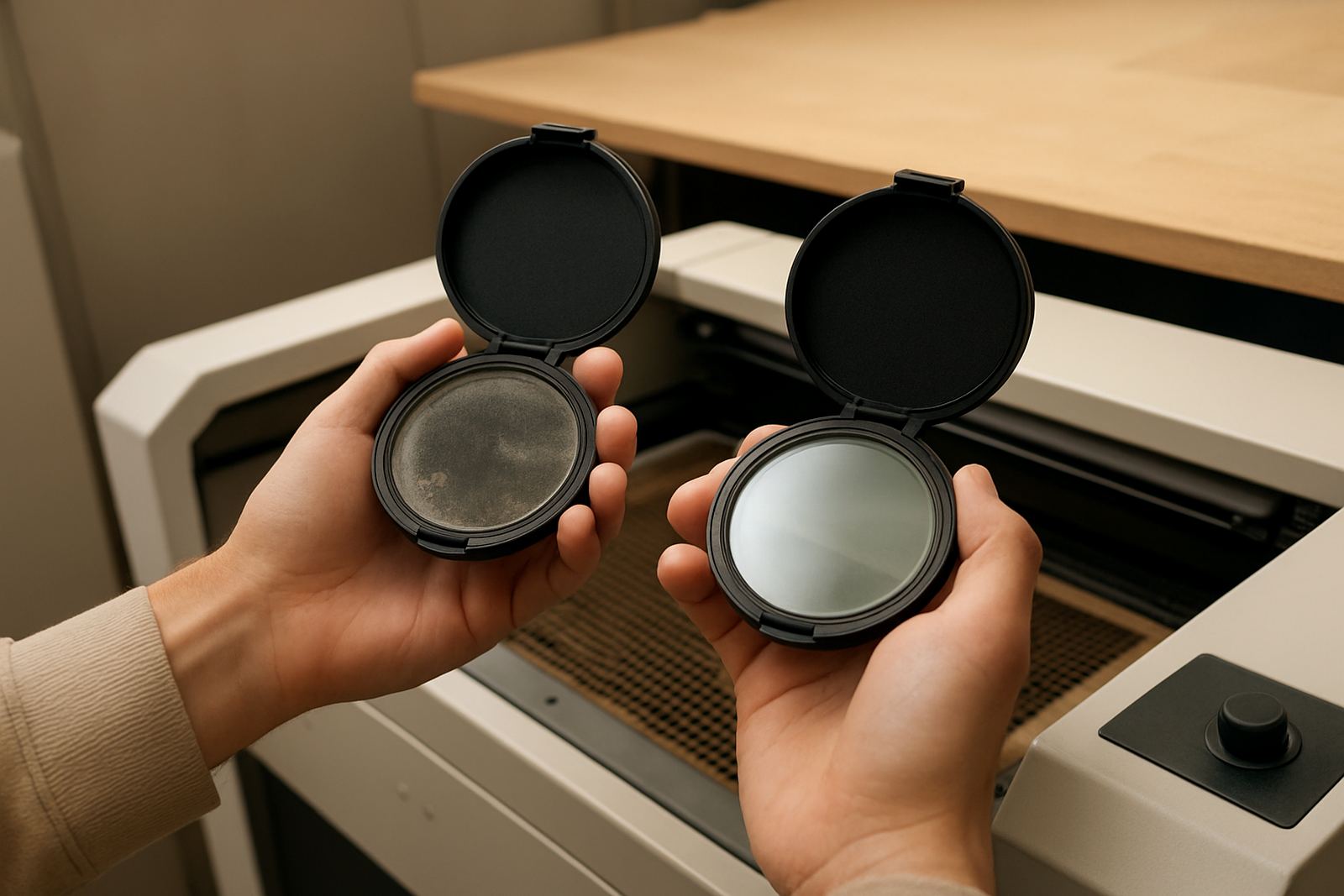
Many users wait until a lens looks dirty before they think about it, but performance usually drops long before visible damage shows. A lens can still look clear and yet lose cutting power, especially when fine residue builds up on the surface or a coating is stressed by heat. That is why the real question is not only how long a lens lasts, but how well it is protected through daily use.
In a busy workshop, a lens is exposed to more than light. Smoke particles from acrylic, char from wood, leather dust and airborne grit all pass through the cutting path. If extraction is weak, or material is too close to the focus point, those particles settle faster. Over time the beam becomes less clean, cuts need more passes, and edge quality starts to drift.
The important thing is that lens life is tied to operating habits. Good maintenance can stretch service life well beyond the average, while poor cleaning can ruin a new lens in a few weeks.
Smoke, Dust and Fumes in Real Workshop Conditions
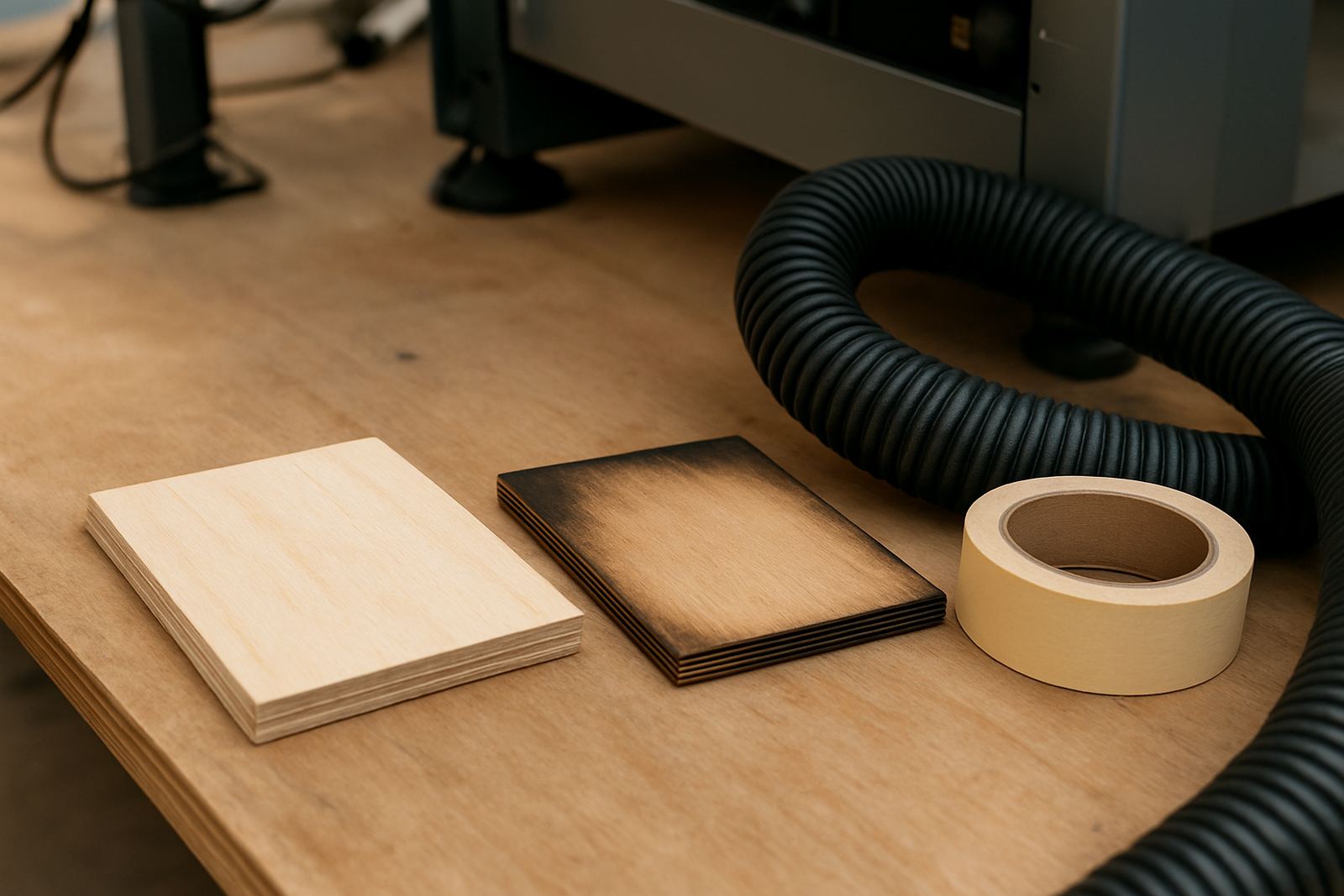
Different materials create different threats. Acrylic can leave a sticky film if airflow is poor. Wood produces fine carbon dust that clings to the lens housing and lens mount. Leather can release oily vapour and debris that settles on the optics. In some areas around Johannesburg, especially where workshop doors stay open for ventilation, fine dust from traffic and construction also finds its way into the machine.
Coastal humidity can make the problem worse. In Durban and parts of Cape Town, moisture helps residue stick to the lens more firmly, so a light layer of grime becomes harder to remove cleanly. That does not mean a machine will fail quickly, but it does mean the cleaning routine needs to be more disciplined.
- Keep extraction running properly before, during and after the job.
- Check that the air assist is strong enough to clear smoke from the cutting zone.
- Do not leave scrap near the machine where loose dust can be pulled into the optics path.
- Clean the work area regularly, not only the machine itself.
Cleaning Habits That Protect the Coating
Good lens care is careful, not aggressive. A lens coating is there to help the beam pass through efficiently, but the coating can be scratched by rough cloths, dirty wipes or the wrong liquid. A quick wipe with a shirt sleeve may seem harmless, yet it often drags grit across the surface and leaves micro marks that reduce transmission.
The safest approach is to clean only when needed, and to handle the lens by the edge. Use proper lint-free material, a clean workspace and a light touch. If there is stubborn residue, remove it in stages instead of scrubbing harder. A lens should be cleaned until clear, not polished until stressed.
- Wash hands or wear clean gloves before handling optics.
- Use a clean lens tissue or lint-free swab for every pass.
- Apply only a small amount of approved cleaning fluid.
- Never reuse a dirty wipe on a second lens.
- Inspect the surface under good light before refitting it.
A common mistake is cleaning too often. If the machine is cutting well and the lens is still clean, leave it alone. Every unnecessary removal adds risk.
Heat, Alignment and the Load-Shedding Factor
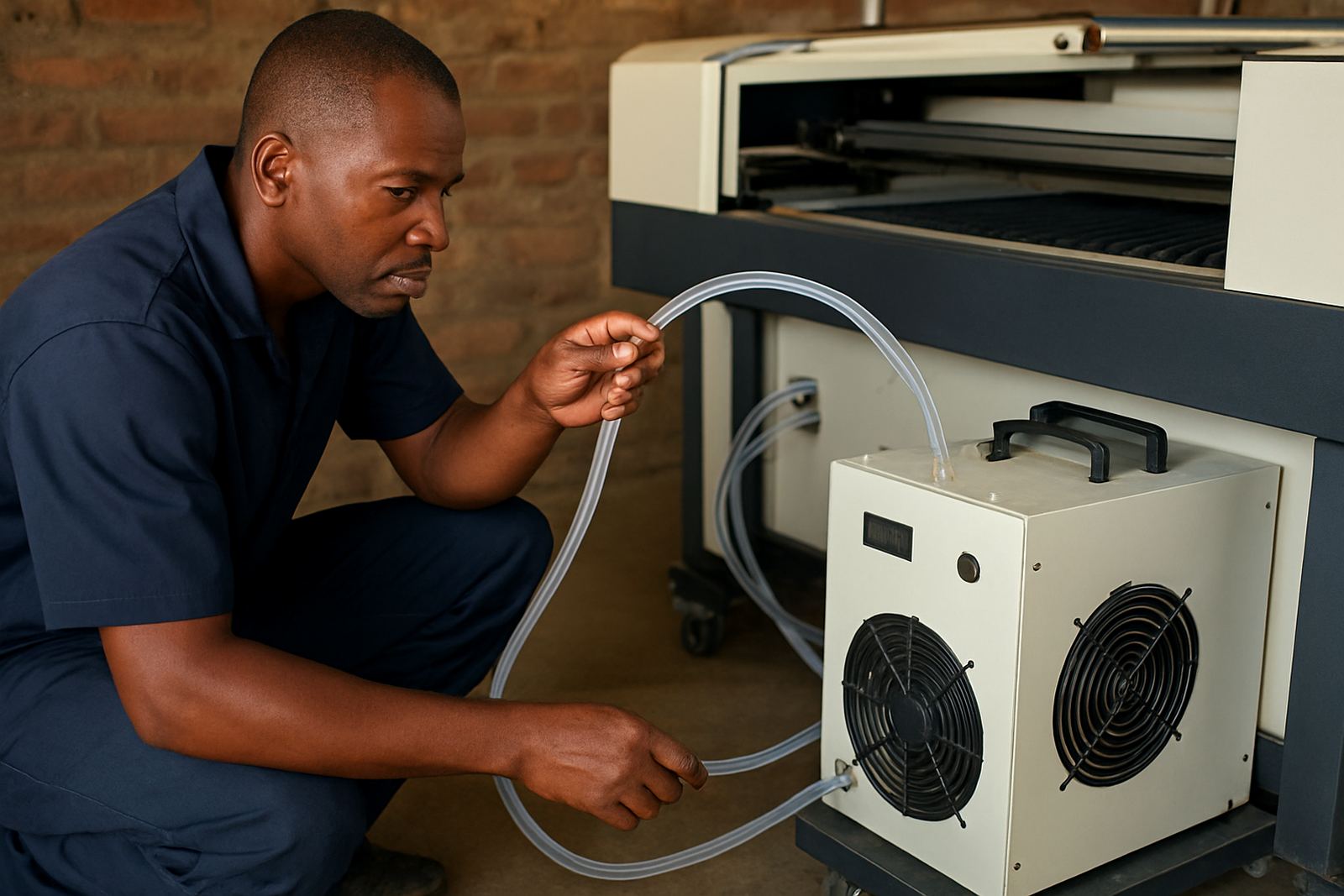
Lens life is not only about dirt. Heat and beam alignment matter as well. If mirrors are out of line, the beam may enter the lens at an angle, which puts uneven stress on the coating and can create hot spots. Those hot spots reduce clarity and shorten service life. The same applies when cooling is weak, because excess heat in the optical path can affect both the lens and the surrounding mount.
In South African workshops, load-shedding adds another layer of risk. A machine that loses power mid-job can leave smoke sitting in the cutting chamber, and when power returns the first job may push that residue through the lens path again. Unplanned stops can also affect extraction fans and cooling systems, so the restart routine matters.
For that reason, it helps to treat beam alignment, cooling checks and extraction service as part of lens protection, not just machine upkeep.
Signs the Lens Is Wearing Faster Than It Should
When lens condition starts to slip, the signs are usually practical rather than dramatic. You may see more edge charring, slower cutting on the same material, or a need to run higher power than before. Sometimes the machine still cuts, but the detail on small lettering or intricate shapes looks softer and less consistent.
Watch for these clues:
- Cut edges turn brown or rough on material that used to finish cleanly.
- Passes need to be repeated on the same thickness.
- Small details lose sharp corners or fine internal cuts.
- The machine needs more frequent focus checks than usual.
- Smoke marks show up around the cut line even with normal settings.
If several of these appear at once, the lens is not always the only problem, but it is one of the first parts to inspect. In many cases the issue is a mix of residue, alignment and airflow.
A Practical Johannesburg Example From Daily Use
A small maker in Wynberg that cuts acrylic signage and wooden craft parts may run the machine for long shifts, with doors opening for stock movement and demos. On a windy day, fine dust gets in. After a few days the operator notices slightly darker edges and longer cut times on 3 mm acrylic. The lens looks fine at first glance, so the temptation is to increase power. That usually masks the real issue.
Once the extraction filters are checked, the lens housing cleaned and the optics inspected properly, the machine often returns to normal. The lesson is simple: lens life is tied to the full working environment, not only the lens itself. A clean room, steady airflow and disciplined cleaning habits do more for performance than overdriving the machine.
For teams running installations across Johannesburg, Pretoria, Midrand, the East Rand or further afield, the best routine is a regular one. Check before the shift, clean after the shift, and do not let residue sit overnight. That habit saves parts, time and material.
How to Stretch Lens Life Without Guesswork
The most reliable way to extend lens life is to make care part of the daily schedule, not an emergency response. Keep a simple log of when the optics were cleaned, when extraction was serviced and when beam alignment was last checked. That makes it easier to spot a pattern before the lens is damaged.
Use preventive maintenance, and book support when cut quality changes rather than after a failure. A small issue caught early is usually cheaper than replacing optics later. For workshops that rely on regular output, an annual service plan can also help keep cleaning intervals, cooling checks and alignment work on track.
In short, lens life is mostly a matter of control. Control the smoke, control the dust, use the right cleaning method, and keep the machine properly set up. Do that and the lens will usually give steady service for much longer than expected.