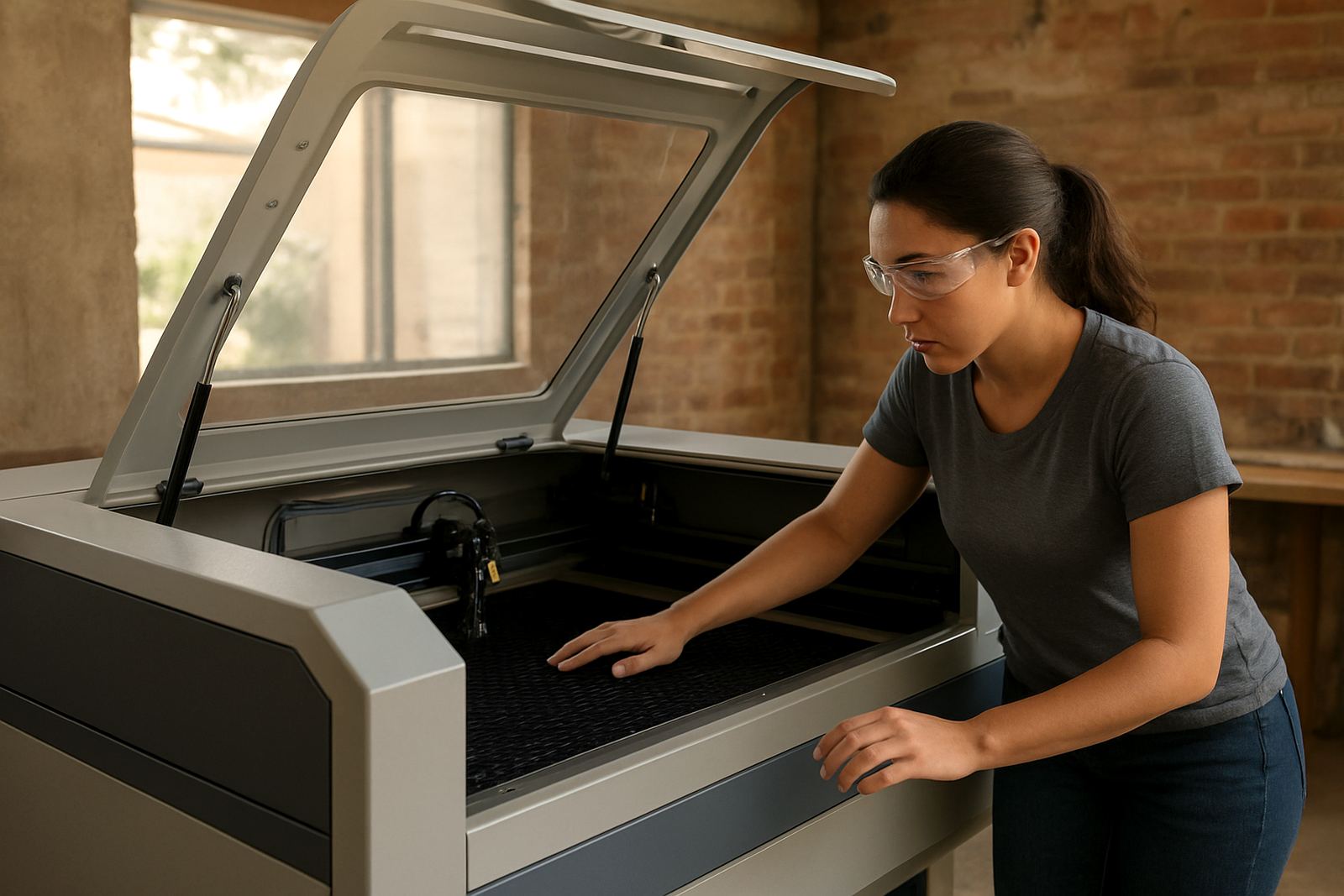

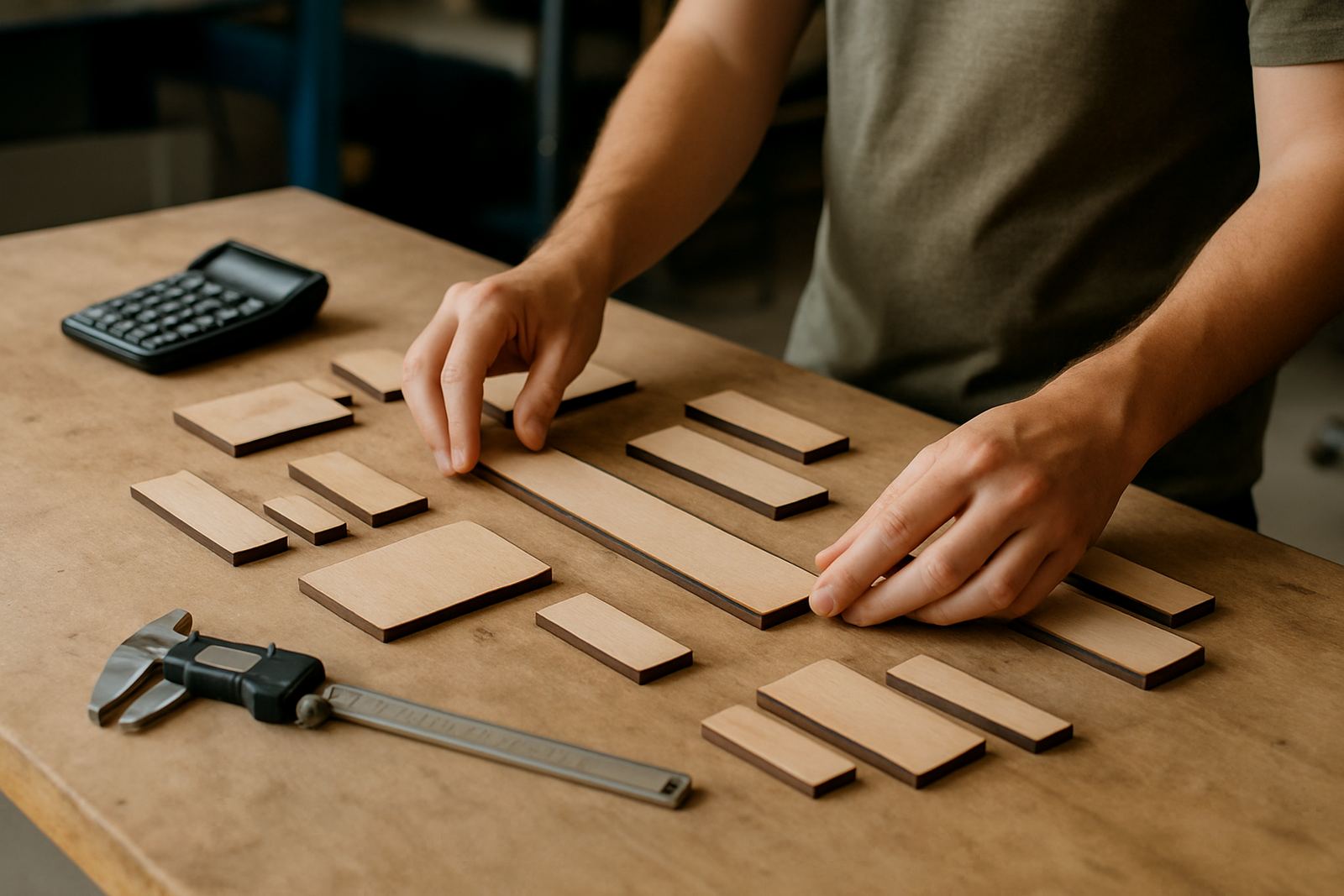
Start with the real job, not just the cutting time
When people ask for a price on laser cutting, the first mistake is to count only the minutes on the machine. A proper quote starts with the full job spec: material type, thickness, size of each piece, quantity, detail level and whether the customer supplies their own sheet or wants you to source it. Acrylic, wood and leather all cut differently, and the same design can behave very differently at 3 mm, 6 mm or 10 mm.
In Johannesburg and Pretoria, many small orders look simple on paper but need careful nesting, test cuts and machine setup. Fine lettering, tight corners and repeated small parts all take more attention than a few big shapes. If the artwork is messy, the file cleaning time should be included as well. That is part of the job, not a favour.
A useful rule is to separate the quote into three parts: setup fee, cutting charge and finishing or handling. This makes it easier to explain why a small order can cost more per piece than a large one. It also protects you when a customer wants "just one sheet" cut with lots of detail and expects the same rate as a batch run.
Material choice changes the Rand value fast
Material is one of the biggest pricing drivers because it affects waste, cut speed, edge quality and the chance of a failed run. Cast acrylic cuts cleaner than some lower grade sheet, but it still needs the right settings. Plywood may char at the edges, leather may have a strong smell and some boards can warp if stored badly in humid areas like Durban or near the coast. That affects yield and labour.
If the customer brings their own material, you still need to price for the risk. Sheet quality is not always consistent, and warped or scratched material can cause rejected parts. If you supply the material yourself, include your procurement time, transport, offcuts and stock handling. A quote that ignores those costs can look cheap and then disappear once the invoice is paid.
- Include the cost of sheet stock, offcuts and wastage allowance
- Charge more for brittle, warped or inconsistent materials
- Price separately for supplied material versus customer supplied material
- Factor in storage and handling for bulk orders
Setup, nesting and file clean-up deserve their own line
Every custom cut job needs setup. Someone has to review the drawing, correct line colours or layers, check dimensions and nest the parts efficiently so the sheet is used properly. For one-off jobs, this can take longer than the cutting itself. In a busy Wynberg workshop, that admin time can easily be the difference between a fair job and a loss.
Nesting is especially important when the parts are small or the sheet is expensive. Better nesting reduces waste, but it takes time and experience. That should be reflected in the price. If the file arrives as a photo, a sketch or a badly prepared PDF, the redraw or conversion should be charged too. Customers often understand this once it is explained clearly.
- Charge a setup fee for every new design or first-off job
- Use a minimum charge for very small orders
- Add file preparation time when drawings need correction
- Include nesting and layout planning in the quote
Machine time is only one part of production cost
Laser cutting is not just a matter of pressing start and walking away. The machine must be checked, the lens and mirrors kept clean, the cooling system monitored and extraction working properly. Those support costs should be built into your rate, because they affect every order. A workshop in Johannesburg also has to plan around power interruptions, so load-shedding can add delay and scheduling pressure.
When you price per metre of cutting or per minute of machine time, make sure the rate includes electricity, maintenance, operator labour and wear items. If the job needs several passes, engraving plus cutting, or slower settings to protect the finish, the price should rise accordingly. A faster job is not always a simpler one if the finish requirements are strict.
For larger production runs, the price per piece can come down because setup is spread across more units. For short runs, the opposite is true. That is why an accurate minimum charge matters. It keeps small jobs worthwhile and stops quote creep on custom work.
Finishing, packing and delivery can change the final quote
Many customers think the price ends when the last piece comes off the bed, but there is often more to do. Some jobs need protective film removal, edge cleaning, sorting by size, light sanding or packaging for dispatch. If the order is going to Sandton, Midrand, the East Rand or further afield, transport and handover time should be included too.
For commercial clients, damaged corners or scratched surfaces can mean a rejected batch. Good packing reduces that risk, especially for acrylic parts and detailed pieces. If the client wants a relocation of a machine, operator training or installation support, that is a different service from ordinary cut work and should be priced separately. Keep each line item clear so nobody confuses production with support.
- Quote packing, sorting and wrapping as separate labour if needed
- Include local delivery or courier handling where relevant
- Price surface protection for scratch-sensitive parts
- Keep installation or training costs outside the cutting rate
A Johannesburg example shows why the details matter
Say a small furniture maker in Wynberg needs 40 acrylic nameplates and 10 wooden templates cut for a market order. The file is tidy, but the acrylic is 3 mm and the wooden pieces have fine internal cuts. A fair quote would include a setup fee, the sheet material, machine time, sorting and packing. If the same client later asks for the order to be repeated with a logo change, the setup may be lower, but the new artwork still needs checking.
Now compare that with a one-off craft order from Pretoria that arrives as a photo of a sketch. The design must be redrawn, the lines checked and the sheet used carefully because the parts are small. Even if the cutting time is short, the quote may be higher than the Wynberg batch order. That is normal, and it is why a proper pricing model protects both the supplier and the customer.
Clear pricing helps everyone. The client knows what they are paying for, and the workshop can keep the service reliable without guessing. In practice, the best quotes in Rand are the ones that explain the work honestly and leave no room for surprise later.