
Start with the supply, not the machine
Before a laser cutter is moved into place, check the supply at the wall and not just the rating on paper. A machine may list its electrical needs clearly, but a site can still struggle if the breaker is undersized, the cable run is too long, or other equipment is pulling heavy load from the same circuit. In workshops around Wynberg, Sandton and the East Rand, the issue is often not the machine itself but the way the room was wired years ago for something else.
Give the installer a clean site with enough capacity for the laser, extraction, chiller and any supporting tools used at the same time. If the power dips often, the operator will see unstable cutting, nuisance trips and extra wear on parts. That is money lost in the first month, not later. Ask for a proper check of the incoming supply, breaker size and earthing before delivery day, because a small fault here can hold up the full install.
- Keep the laser on its own dedicated circuit where possible.
- Allow for the machine, extraction and cooling unit together.
- Check that plugs, sockets and cable sizes suit the actual load.
- Test the site during peak use, not only when the workshop is quiet.
Plan for load-shedding and voltage dips
South African sites know what interruptions feel like. A machine that loses power mid-job can leave acrylic marked, wood scorched or leather with a poor edge. Even when the utility supply returns, a sudden restart can upset settings and damage work in progress. That is why power backup is not a luxury item, it is part of the installation plan.
For smaller setups, a correctly sized backup system may be enough to ride out short interruptions and protect controls. For larger production rooms, the bigger concern is consistency. Laser equipment prefers steady power, and the same applies to the cooling system and extraction fan. If one component keeps dropping out while the others run, performance becomes uneven and the operator spends time resetting instead of producing. In Durban, where humidity can be high and storms arrive fast, this matters even more because power issues often come with moisture and heat.
- Decide how long you need to keep the machine safe during an outage.
- Protect the control side as well as the cutting side.
- Use surge protection and proper earthing for the full setup.
- After any interruption, check alignment and test on offcuts before restarting production.
Extraction keeps the cut clean and the room usable
Ventilation is not only about comfort. A CO2 laser produces smoke, fine particles and odour depending on the material. Without proper extraction, those by-products settle on optics, stain surfaces and make the workspace unpleasant for staff. In a closed room the smell can linger and the air can become difficult to work in, especially when cutting wood or leather for long periods.
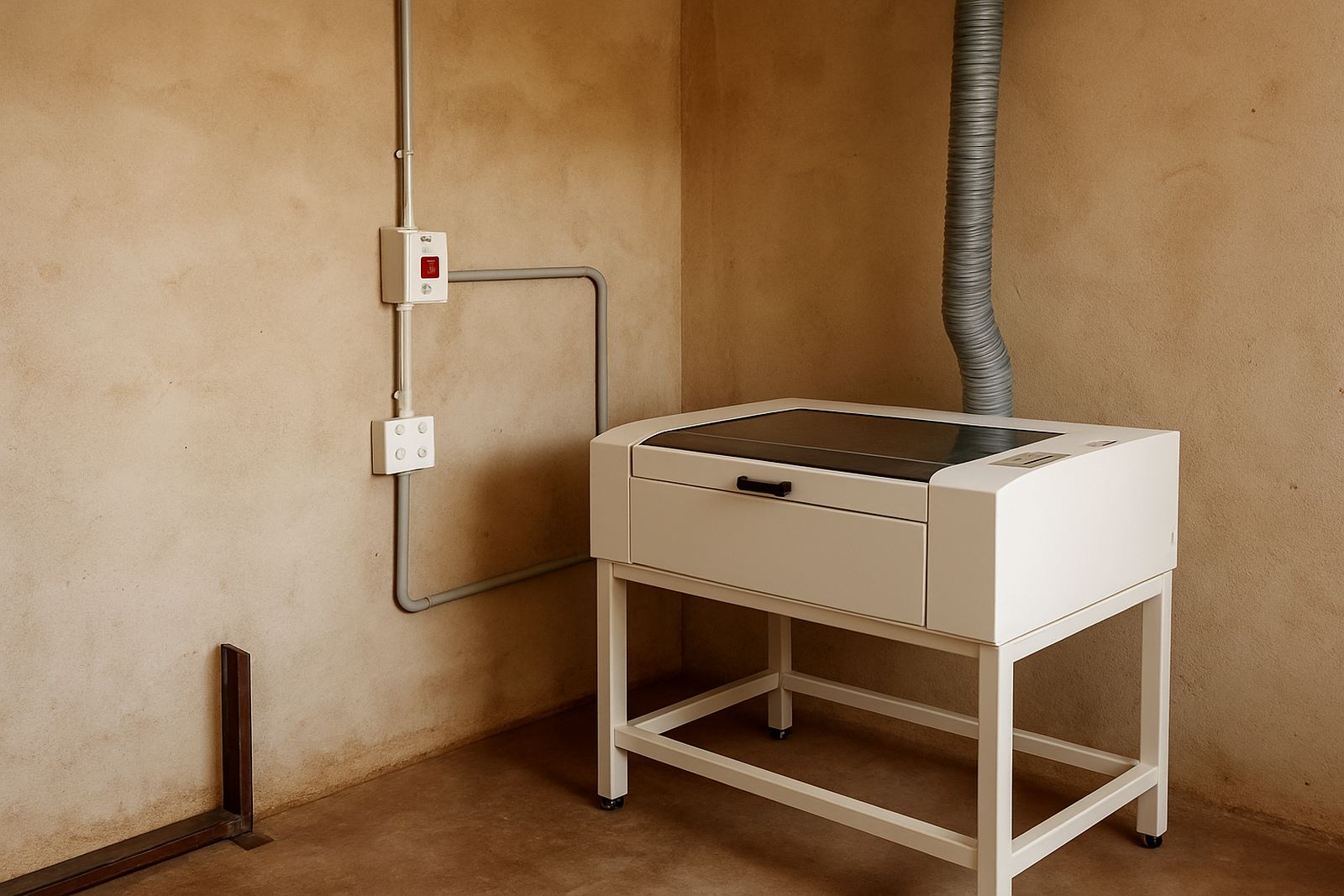
A good extraction setup removes fumes at source and carries them away efficiently. That means the ducting must be short where possible, with bends kept to a minimum and filters or fans matched to the work being done. If the workshop is in a tight unit or near other tenants, the discharge point must be planned carefully so it does not cause complaints or breach local rules. Municipal by-laws and landlord requirements can be stricter than people expect, so it pays to ask before drilling the first hole.
- Place extraction close to the cutting zone, not across the room.
- Use ducting that suits the volume of air being moved.
- Keep the outlet clear of neighbours, windows and air intakes.
- Schedule regular cleaning so dust and residue do not build up.
Cooling and airflow affect accuracy
When people talk about laser performance, they often focus on the beam and ignore temperature. Yet steady cooling is part of clean cutting. If the machine runs too hot, parts expand, optics work harder and repeatability drops. That is especially relevant in places such as Midrand and Pretoria where workshop temperatures can climb during the day, then cool down sharply at night.
The cooling system should be set up where it can breathe, with enough space around it and easy access for top-ups, checks and cleaning. Hoses should be routed neatly and protected from knocks. If the room has poor general airflow, heat from the machine and extraction system can build up and make the full setup work harder than needed. That puts strain on components and can shorten service intervals. A tidy install is easier to maintain and less likely to cause a sudden stoppage just when orders are due.
Prepare the room before the truck arrives
The best installations go faster because the room was sorted beforehand. A clear floor, level stand, correct door clearance and a safe path for moving equipment all save time. If the unit is heading into a factory, studio or school workshop, measure the space properly and check the floor load. A heavy machine on an uneven base can create vibration, which is never welcome when cutting fine detail.
Also think about where the operator will work, where material will be stored and how offcuts will leave the room. Acrylic sheets and wood panels need dry storage, away from direct sun and damp walls. In coastal areas such as Cape Town support calls and Durban install jobs, humidity can affect stored material before it even reaches the cutter. Keep bundles flat, labelled and off the concrete floor if possible.
- Measure doors, passages and turning space before delivery.
- Check the floor is level and able to carry the machine.
- Set aside space for material, offcuts and finished work.
- Keep the room dry, clean and free of loose scrap.
Training should include the site setup too
Operator training is easier when the room is set up properly from day one. Staff need to know not only how to run jobs, but how to check airflow, recognise a power issue and respond if the machine stops unexpectedly. A good site procedure reduces mistakes and keeps production moving when the usual operator is off sick or on leave.
During training, the team should be shown how to inspect filters, when to clean optics and what signs point to poor extraction or unstable power. If a business has more than one shift, written steps matter. Keep a simple checklist near the machine so the start of day routine is the same each time. That habit saves time and helps avoid damage caused by small oversights.
- Teach staff what normal sound, smell and smoke levels look like.
- Show them how to stop work safely during an interruption.
- Use a daily checklist for power, cooling and extraction.
- Make one person responsible for reporting faults early.
Where a site in Johannesburg or further afield is set up correctly, the first month is usually calmer and the machine performs closer to expectation. That is the point of careful planning: less rework, fewer delays and fewer calls for avoidable problems. A little time spent on power and ventilation before install day can prevent a lot of stoppages later.
A practical note from a Wynberg install
One common local example is a workshop in Wynberg that wants to move from hand finishing to laser cutting. The floor space is ready, but the power board is crowded, the extractor route crosses a busy passage and the cooling unit has no clear service space. The machine can still be installed, but only after those issues are fixed. If they are ignored, the operator may get poor cuts, smoky air and a machine that needs attention far too often.
The better approach is simple: assess the supply, plan the extraction path, leave service space and test the setup before production starts. That way the install team can focus on alignment and training, not firefighting avoidable site problems.