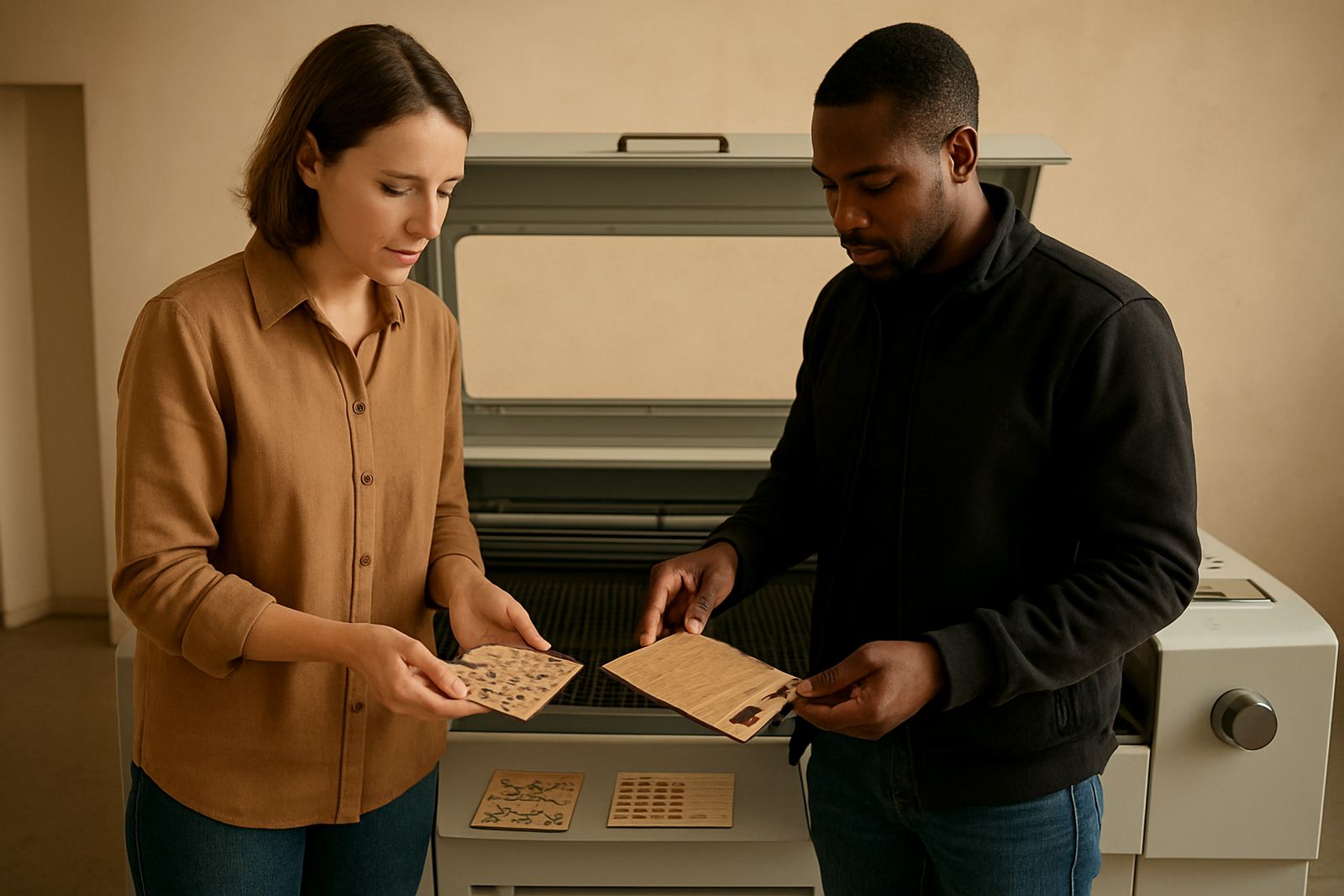
Why your material matters more than the brochure claims
Two sheets of acrylic can look the same and still cut very differently. One may give a clean polished edge at a sensible speed, while the other chips, frosts or needs a second pass. The same goes for wood and leather, where glue lines, grain direction and moisture content can change the result completely.
A sample cut is not a nice-to-have. It is the quickest way to see what a machine will do with the material you plan to use every day. If you are buying for a craft studio, a signage shop, a school workshop or a small production floor, that test can save you from choosing the wrong power level, bed size or extraction setup.
In Johannesburg, where many buyers work in tight industrial spaces and need to keep to local safety rules, a proper test also shows how much smoke, noise and clean-up you will have to manage. That matters just as much as cut quality.
What a sample cut should show you before you commit
A proper test should answer simple practical questions. Can the machine cut your material in one pass? Does the edge need sanding? Does engraving stay sharp after handling? And can the extractor keep up when you run a few jobs back to back?
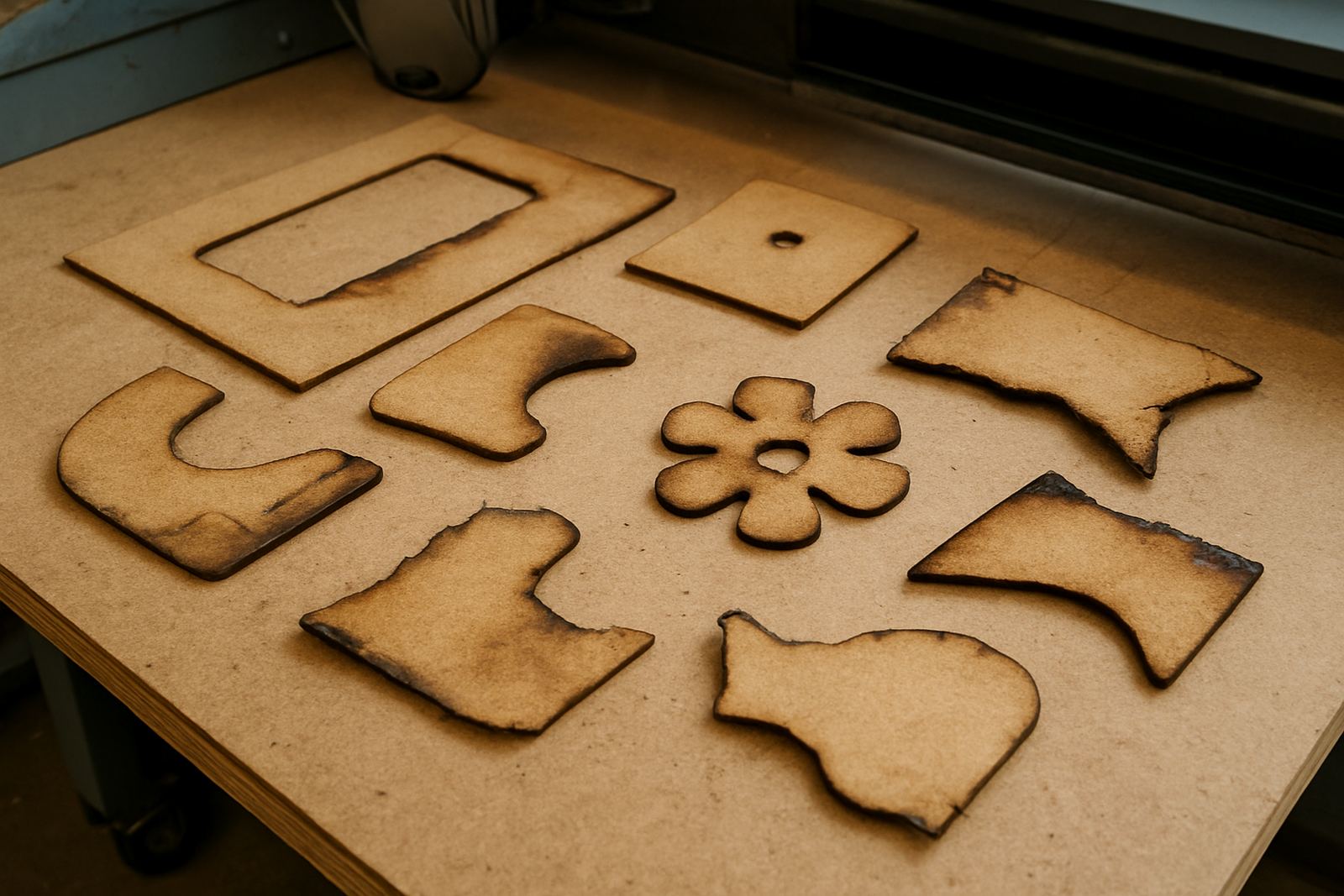
- Edge quality: smooth, frosted, burnt, or chippy edges tell you whether the settings suit the material.
- Speed and throughput: a fast-looking machine is no help if it slows down on thicker sheets.
- Detail retention: small text, holes and fine patterns show whether the beam is staying true.
- Clean-up time: if every part needs extra finishing, your labour cost goes up.
- Smell and residue: these reveal whether extraction and filtration are up to the job.
It is worth asking for several settings on the same sample. A good test shows the difference between a single pass and a slower pass, because the cheaper option is not always the better one once wastage and rework are counted.
How to prepare a fair test with your own material
Bring the exact material you plan to buy in bulk, not a similar off-cut from somewhere else. If you use 3 mm acrylic, bring 3 mm acrylic. If your furniture line uses 6 mm birch ply, bring that exact sheet type. For leather, send the same hide thickness and finish you will be working with in production.
Also bring a small list of the jobs you want to do. A keyring blank, a name plate, a stencil, an inlay piece or a signage panel can all reveal different strengths and weak points. If you are planning custom work, ask for an engraved line, a kiss cut and a full cut in one sample run.
- Label each sample with material type, thickness and supplier if you know it.
- Note any protective film, coating or adhesive backing on the sheet.
- Ask for the settings used, including speed and power, so you can repeat the result later.
- Keep the cut pieces and photos for comparison with other machines.
This is where a local demo room helps. At our Wynberg, Johannesburg base, buyers often arrive with a mix of acrylic, MDF and leather pieces. Testing them side by side shows which material behaves well and which one needs extra care. It is a small step, but it can prevent a lot of grief later.
The hidden costs sample cuts can expose
Many buyers focus on the machine price and forget the cost of operating it. Sample cuts reveal the hidden bits that affect your monthly spend: wasted sheets, extra sanding, ruined corners, slow turnaround and maintenance needs that show up only after the first few jobs.
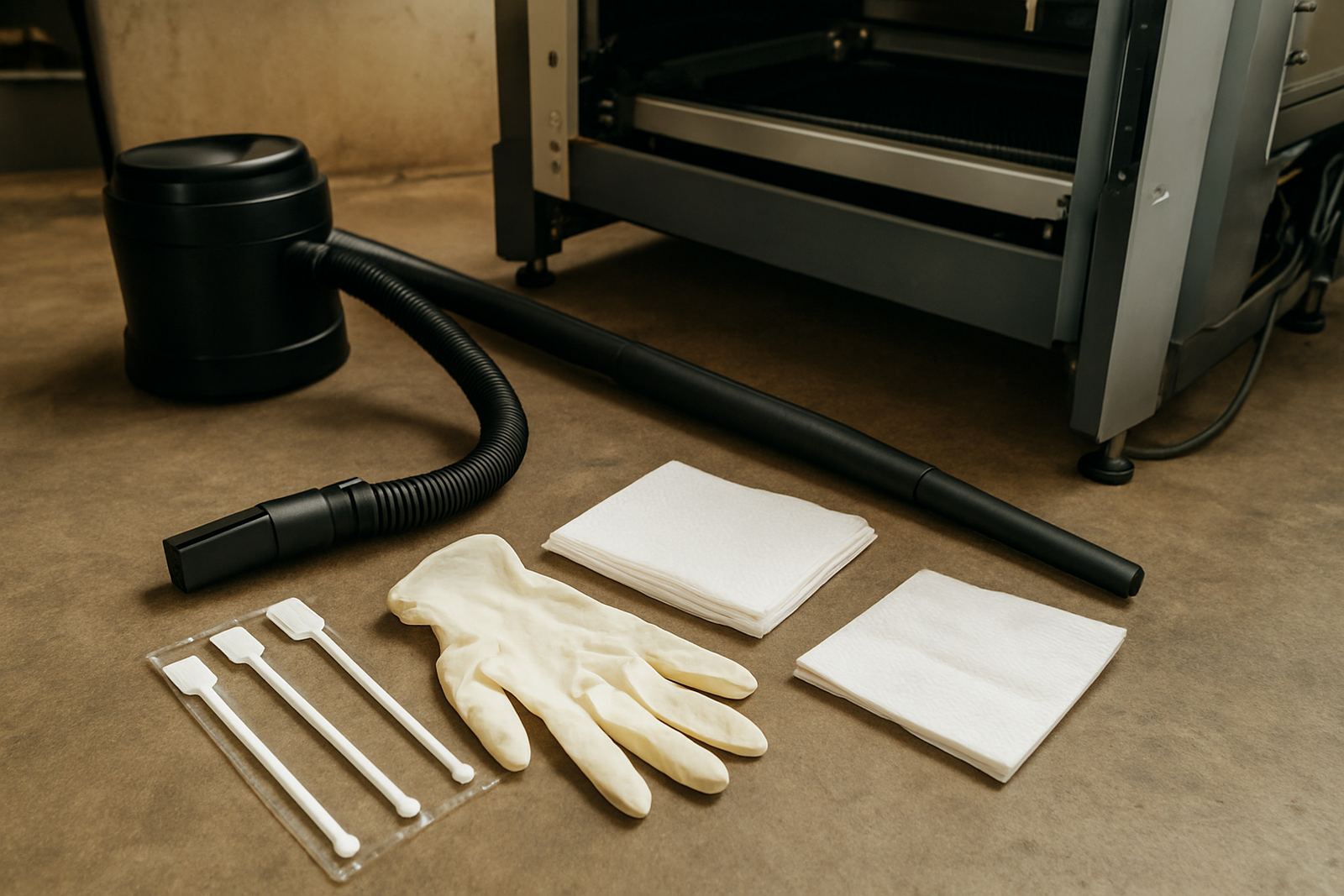
If a machine leaves rough edges on acrylic, you may spend more time finishing than you expected. If it struggles with thicker wood, you may need to cut slower and use more power, which affects productivity and sometimes tube life. If extraction is weak, residue builds up faster and optics cleaning becomes more frequent.
These are not small issues. In a workshop with load-shedding schedules, you want equipment that starts cleanly, holds alignment and does not waste power when you have a short production window. A sample cut gives you a realistic idea of how it will behave in the daily run, not just in a sales demo.
A Johannesburg example that saves money later
A small sign maker in Sandton once wanted a CO2 laser for acrylic name plates and decorative panels. On paper, two machines looked similar. During sample cuts, one produced a sharp edge on 3 mm clear acrylic but started to haze on 5 mm coloured sheet. The other handled both, but it needed a slower speed and a stronger extraction setup.
That test changed the decision. The owner chose the unit that matched the thicker stock, then adjusted the cutting schedule to suit the power available during the day. Because the material was tested first, there was less waste after installation and the operator had a clear starting point for future jobs. No guesswork, no surprise returns.
For businesses in Pretoria, Midrand, the East Rand or even Durban and Cape Town, the same principle applies. Different humidity levels, dust conditions and workshop layouts can change how a machine performs. A local sample test helps you plan for your actual environment, not an ideal one.
Questions to ask during the test, not after delivery
Before you sign off, use the sample cut to ask the awkward but useful questions. How often will the optics need cleaning? What extractor setup is recommended? Can the machine handle the sizes you use most? What happens if the beam needs alignment after transport?
- What is the best material thickness for the work I do most often?
- How long does a full service normally take?
- What preventive maintenance should I schedule each month?
- Can the machine be moved later if I expand or relocate?
- What support is available if I need training after install?
Good answers matter because the machine is only part of the equation. Training, setup, extraction and maintenance all affect how well your workshop runs. A sample cut often reveals whether the supplier understands the realities of daily production or only knows how to switch the machine on.
The simple rule for better buying decisions
If your work depends on consistency, test your own material before you buy. Bring the sheets, ask for the real settings, and compare the results on the jobs you plan to sell. That one step can save hours of adjustment later and help you choose the right machine for your workload.
At LaserCutter CO2, sample cuts, installs and operator training are handled for buyers across South Africa, with support in Johannesburg, Pretoria, Midrand, the East Rand, the West Rand, Durban and Cape Town. The point is simple: when you know how your own material behaves before delivery, the machine fits your business from day one.
What a good sample cut should leave you with
You should walk away with a clear view of edge quality, cutting speed, smoke control and finishing time. If the sample looks neat but takes too long to produce, that is still useful information. If it cuts beautifully but needs constant cleaning, that matters too.
The best test is honest and repeatable. It should show what the machine can do on your material, in your thickness, for your actual work. That is how you avoid buying on promise alone, and it is why sample cuts matter so much.