Why laser machine transport needs a proper plan
A CO2 laser machine looks solid, but it has parts that do not enjoy vibration, sudden braking or uneven roads. A single hard bump on the way from Wynberg to a site in Sandton or Pretoria can shift alignment, loosen fittings or damage the cooling and extraction setup.
The safest approach is to plan the move before the machine leaves the floor. That means checking the route, measuring door widths and stairs, confirming who is loading and unloading, and making sure the machine is prepared for transport in the right order. In Johannesburg traffic, even a short trip can become a long one, so timing matters as much as packing.
What to secure before the unit leaves the workshop
Before transport, the machine should be made safe inside and out. Loose accessories, sample offcuts, tools and containers need to be removed. Any water in the cooling system should be handled according to the machine setup and the trip length. The gantry, mirrors, lens housing and bed must be checked so nothing can move while the vehicle is on the road.
- Remove all loose items from the cutting chamber and service area.
- Lock or brace moving parts so they cannot shift during braking.
- Protect optics from dust, moisture and contact damage.
- Label disconnected hoses, cables and fittings for easy reassembly.
- Record the machine condition before loading, including any existing wear.
If a machine is being moved after an installation in Midrand or on the East Rand, those records help avoid confusion later. They also make it easier to spot any issue that happened in transit.
Loading methods that reduce damage on South African roads
Most transport damage does not happen on the long drive, it happens during loading and offloading. A machine that is lifted from the wrong point can twist the frame or put pressure on the base. The team handling the move should know the machine weight, the centre of balance and the correct points for lifting or rolling.
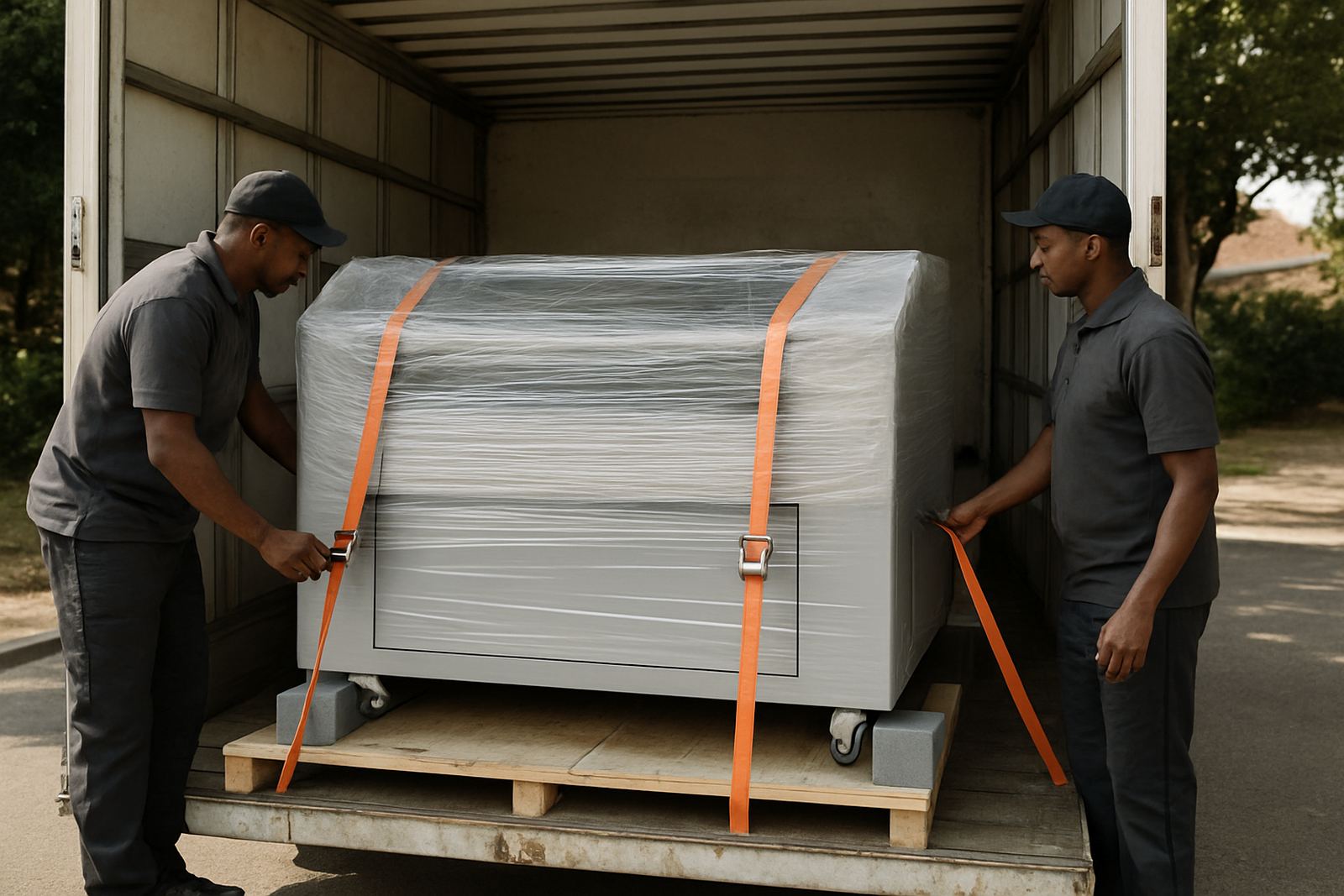
For a move across Johannesburg, a closed vehicle is usually the better choice where possible because it keeps out dust and summer rain. Coastal humidity is another factor for Durban support moves, since metal parts and electrical fittings should stay dry. If the machine must travel on a trailer or in a truck with gaps, it needs proper covering and restraint, not just rope tied at the corners.
- Use a level vehicle floor and non slip support where possible.
- Secure the machine with rated tie-down points, not random frame parts.
- Keep the machine upright unless the manufacturer allows otherwise.
- Pad any contact areas so straps do not rub the casing.
- Check that the route avoids steep kerbs, low bridges and rough access roads.
How to protect optics, tubes and cooling systems in transit
CO2 laser equipment has sensitive components that dislike dust, heat and movement. Optics can shift out of alignment. Cooling systems can leak if hoses are not clamped or drained properly. In hot weather, a machine left standing in a metal vehicle can also heat up fast, so loading and offloading should be done without delay.
A careful move includes sealing exposed ends, checking hose connections and making sure the extraction path stays clean. If a machine is being sent for relocation from Cape Town support into the Johannesburg base, the extra travel time means more attention should be given to moisture control and packaging. A small bit of dust inside the optics path can affect cut quality once the machine is back in use.
- Cap or cover open hose ends and service points.
- Keep lenses and mirrors in protected packaging, not loose in a toolbox.
- Make sure the cooling setup is suitable for the trip and the climate.
- Protect the electrical panel from dust and accidental knocks.
Arrival checks before the first test cut
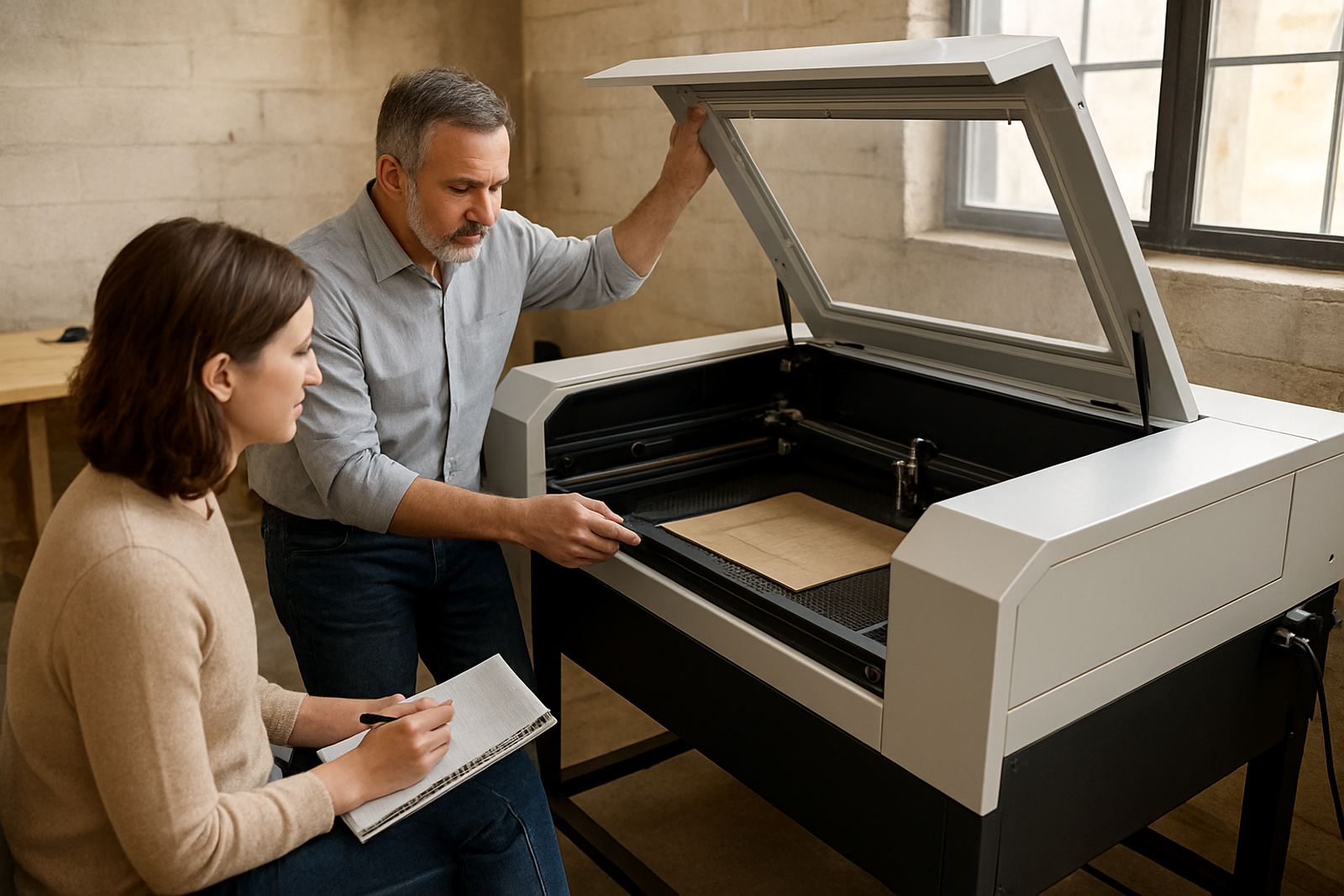
Once the machine reaches the new site, do not rush straight into production. First check for movement, missing fasteners, hose kinks and signs of impact. Then confirm that the power supply, extraction and cooling are ready for the load at that site. In some premises, especially in older industrial units, the electrical setup may need a closer look before the first start-up.
A practical arrival check should include the frame, bed, rails, beam path and accessories. If the machine travelled to a workshop in West Rand or Pretoria service area, the operator should also check that the working table is level and that the extraction flow is strong enough for acrylic, wood or leather work. Rushing this stage can lead to poor cuts and a second call-out that could have been avoided.
A Johannesburg move example: Wynberg to a Sandton workshop
One common move is from the Wynberg base to a small production space in Sandton. The machine might travel only a short distance, but the road can involve traffic, speed bumps and tight access at the destination. If the team plans ahead, the move can be done in a single day with less stress on the machine and the client.
In that kind of move, the machine is prepared the day before, loaded early to avoid traffic, and offloaded only once the site is clear. The operator training can then happen after the machine is levelled, connected and tested. That approach saves time, reduces damage risk and gives the client a better start. It is a simple process, but it works because every step is handled in order, not in a rush.
When to bring in installation and service support
Some moves are straightforward. Others involve stairs, narrow doors, long cable runs or a machine that needs beam alignment after transport. When that happens, it is worth using experienced installation and service support rather than forcing the move with general labour alone. The same applies if the machine has been idle for a while, or if the site has load shedding, unstable power or limited extraction capacity.
For businesses in Midrand, the East Rand, Durban or Cape Town support areas, transport planning can be paired with installation, operator training and a follow-up service check. That way the machine is not only delivered, it is set up to work properly from day one. Good transport is not about making the move look easy. It is about making sure the machine works as it should after the journey.