Repeatable leather parts for production and small runs
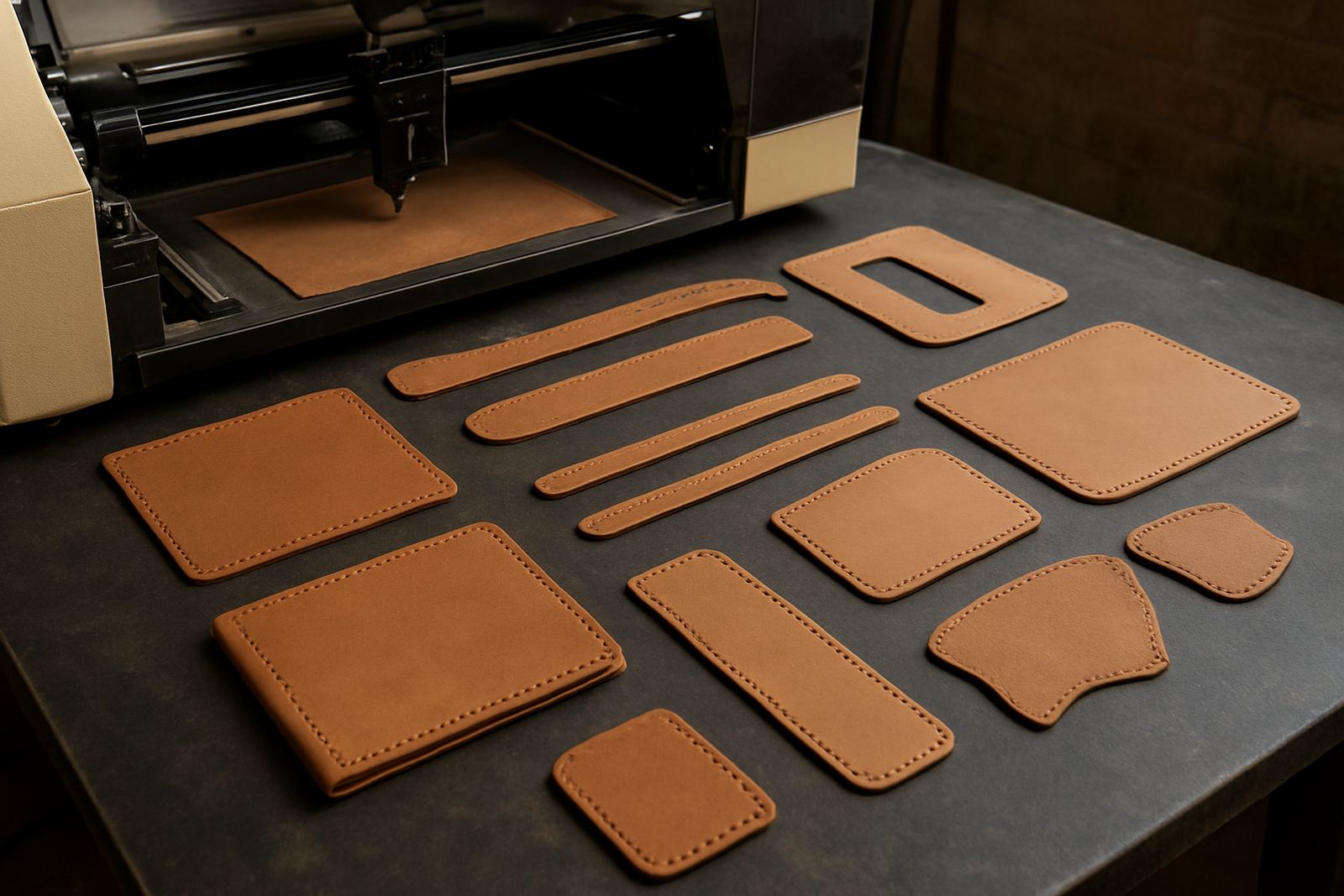
Leather work is unforgiving when the pattern shifts by even a millimetre. A good laser setup helps you cut the same wallet panel, strap end or label shape again and again, which saves time at stitching, punching and final assembly. For Johannesburg makers, the bigger issue is not only speed but consistency across batches, especially when orders come in from craft markets, online stores and small retailers at the same time.
For leather accessories, the typical client is balancing product variety with tight margins. One week it is luggage tags and belts, the next it is keyrings, watch straps and personalised gift sets. A CO2 laser is suited to this sort of work because it handles detailed outlines, holes, vents and engraved marks in one pass, while keeping the edge neat enough for many stitched goods. With the right settings and material prep, you can reduce manual trimming and get cleaner assembly out of the machine.
What a practical leather cutting setup includes
A leather cutting line does not need to be complicated, but it does need the right pieces working together. The machine size should match your pattern sheets, your daily output and the hides or panels you actually buy. If you are cutting A4 sized labels and small goods, a smaller bed may be enough. If you are nesting straps, bag panels or long belts, you will need a larger working area so the job is not broken into too many sections.
- CO2 laser cutter with a bed size suited to your pattern sheets
- Stable extraction for smoke and odour control
- Chilled cooling system for long cutting sessions
- Air assist to help keep edges cleaner
- Simple nesting software and reliable file preparation
- Workbench space for sorting, inspection and stacking cut parts
In many workshops the machine sits beside cutting tables, stitching machines and finishing stations. That layout helps with flow, because leather should move quickly from cutting to edge finishing and sewing. It also helps to keep the area dry and dust free, since humidity and workshop debris can affect both the leather and the cut quality. A small slip in layout planning can slow the whole operation down.
Planning the workshop around leather grades and hide sizes
Before buying or relocating a machine, measure the largest pattern you cut and add room for nesting. A strap may be only 25 mm wide, but the hide it comes from can vary in shape, scars and usable area. That means your process should account for material waste, nesting gaps and the way grain direction affects the final product. This is especially important for premium accessories where visual consistency matters across the full batch.
For Cape Town or Durban conditions, moisture control is worth thinking about. Leather can pick up humidity and become harder to store flat, while coastal air may affect packaging and finishing. In Johannesburg, dust and load-shedding are the bigger practical concerns, so many workshops plan for backup power, surge protection and a cleaning schedule for optics and filters. If the machine sits in a busy retail back room, make sure staff have enough clearance around the bed for loading, offloading and safe handling of sheets.
- Leave space for full sheet movement, not just the machine footprint
- Store hides flat and off the floor to avoid curl and damage
- Keep stitching and cutting workflows close together
- Allow for extraction ducting and service access on all sides
Common mistakes that waste material and time
One common mistake is trying to cut every leather type with the same settings. Vegetable tanned leather, coated leather and softer garment grades do not behave the same way, and the wrong settings can leave dark edges or an uneven cut. Another mistake is skipping test cuts when the material batch changes. Even a slightly different thickness can change the result. That small change becomes expensive when you are cutting hundreds of parts.
Another issue is poor file preparation. Loose curves, overlapping lines or duplicated segments can lead to double cuts and unnecessary heat on the edge. Some teams also forget to plan for offcuts and nesting, which makes a simple run more costly than it should be. If you are producing branded labels, the artwork should be checked for stroke thickness and small text size, because tiny details can disappear once the leather is cut and stitched. A quick check at the start saves a lot of rework later on, it really does.
- Do test samples before a full production run
- Check hide thickness and surface finish before setting speed and power
- Keep artwork clean, with no duplicate lines
- Do not cut too close to marked defects or weak spots in the hide
Budget ranges for leather accessory workshops
Budget depends on bed size, output needs, extraction, cooling and how much training and support you want with the install. For a small leather accessory business cutting wallets, labels and straps, a starter setup can begin in the lower hundreds of thousands of Rand. Mid-range setups for busier makers and light production usually sit higher once you add better extraction, cooling and relocation support. Larger workshop installations with more bed space and stronger daily output can move into a much bigger investment.
A practical way to plan is to budget for more than the machine alone. Allow for commissioning, operator training, beam alignment checks, spare optics, extraction servicing and the first round of maintenance. If your workshop is in Sandton, Pretoria, Midrand or the East Rand, delivery and installation timing also matter because production stoppages cost money. For teams working with custom orders, it is often better to budget for uptime than to chase the cheapest option upfront.
- Starter leather cutting setup: about R180 000 to R350 000
- Growing production setup: about R350 000 to R750 000
- Higher output workshop setup: from around R750 000 upwards
Support, installation and training from Wynberg to nationwide
Leather accessory work benefits from hands-on setup, because the machine needs to suit the material and the team using it. LaserCutter CO2 supports demo cuts, installations and operator training from Wynberg, Johannesburg, with service reach across Pretoria, Midrand, the East Rand, the West Rand, Durban and Cape Town. For a new workshop or a relocation, that local support helps get the machine into service faster and with fewer stoppages.
Machine care matters as much as the initial install. Preventive maintenance, optics cleaning, cooling checks, extraction service and beam alignment all affect cut quality on leather. If a workshop is producing stitched goods daily, small problems can grow quickly if they are not handled early. A service plan also helps with spare parts planning and breakdown response, which is useful when orders are already promised to clients. For practical leather production, that kind of support keeps the line moving.
When laser cutting makes sense for stitched goods
If your business cuts repeatable patterns, personalised labels or fitted leather parts, a CO2 laser often makes sense once manual cutting becomes slow or inconsistent. It is a useful choice when you need clean edges, repeatable sizing and a tidy finish that fits straight into stitching and assembly. It is also helpful when you want to offer short runs or custom work without making new cutting dies for every design.
For many South African leather makers the real benefit is control. You can change a file, test a new shape, cut a limited run and handle orders without waiting on outside suppliers. That kind of flexibility suits both craft studios and more formal production shops. The trick is to match the machine, the extraction and the workflow to the work you actually do, not to the work you hope to do one day.