
What stamp makers need from a CO2 laser
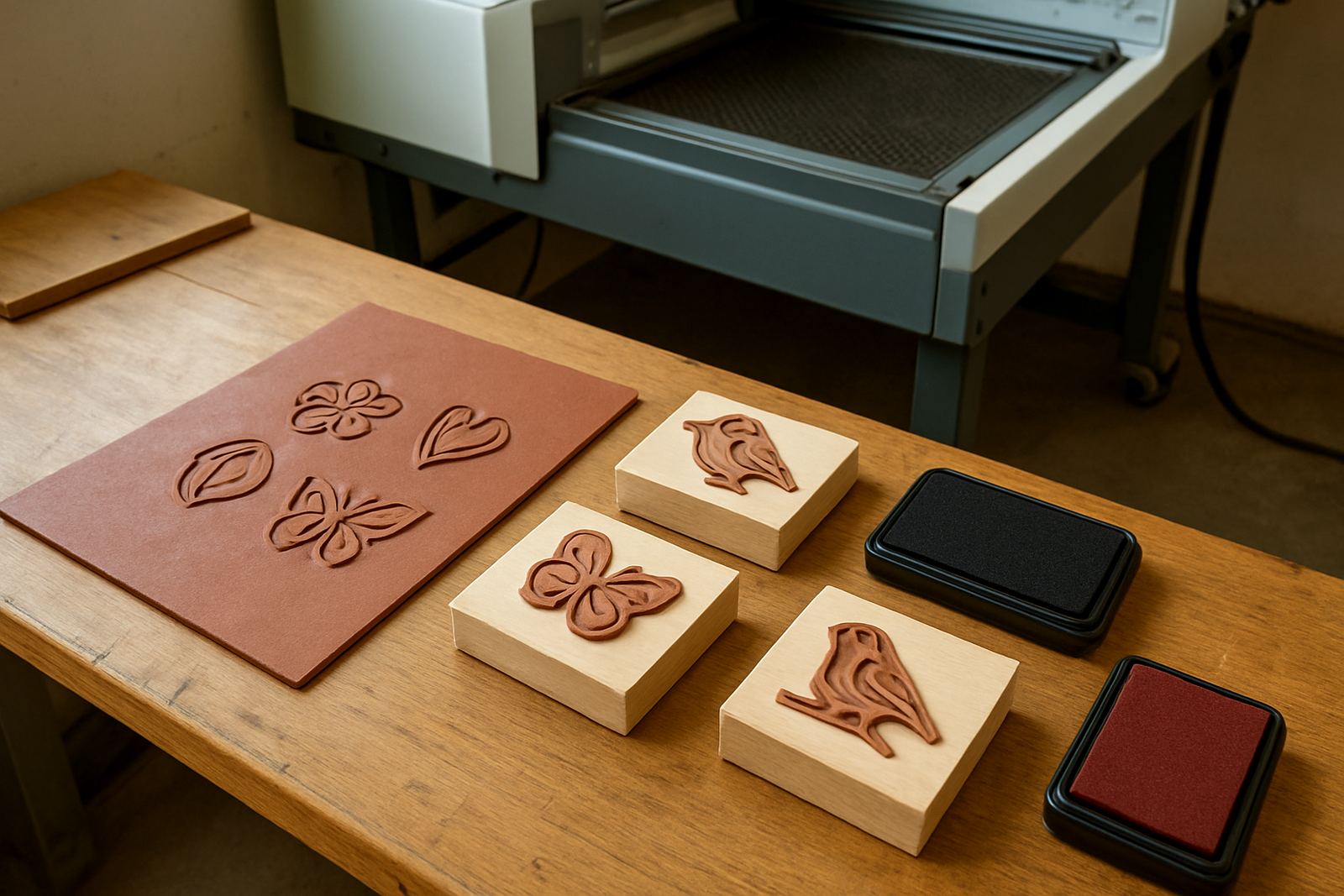
A practical stamp-making setup usually includes the laser machine, a stable table, extraction, cooling and a small finishing bench. If you are running a busy shop in Wynberg, Sandton or Midrand, space planning should allow for loading material, sorting finished parts and checking artwork before cutting. Good layout saves time, and it cuts mistakes when orders are moving quickly.
For stamp work, the useful machine range is often in the 40 W to 80 W class, depending on your volume and the thickness of what you are cutting. A larger bed gives more room for nests of many small stamps at once, while a smaller machine may suit a studio focused on custom orders. You will also need a proper exhaust path, a chiller or cooling system, and a clean air supply where possible.
- CO2 laser cutter with accurate low-power control
- Cooling system sized for local ambient conditions
- Extraction unit with ducting to the outside
- Artwork preparation computer and file handling set up
- Cleaning kit for optics and lenses
Layout and planning for better production flow
Before installation, decide where the machine will sit, where offcuts will go, and how finished stamps will move through the room. Stamp making looks simple, but a poor layout creates bottlenecks. Keep the machine on a level floor, leave space for ventilation access, and make sure the operator does not need to walk across the room every time a file is tested.
If your site is in a retail back room or a light industrial unit, check power supply, extractor routing and local fire rules first. In some buildings the landlord will want approval for ducting or external vents. In coastal areas, especially Durban and Cape Town, moisture control matters because humid air can affect rubber sheets, adhesives and storage. In Gauteng, dust and static are usually the bigger issue.
- Plan a straight workflow from artwork to cutting to finishing
- Store rubber, mounts and adhesive sheets in a dry cabinet
- Allow room for cleaning, checking and re-cutting small jobs
- Keep the operator’s screen away from direct glare
Common mistakes in stamp cutting jobs
One common mistake is pushing the laser too hard. That can scorch the stamp face and leave edges that need extra cleaning. Another problem is using settings that work for one material batch but not the next. Rubber products can vary a bit, so test cuts are worth the small time loss. It saves waste, and the final mark prints cleaner.
Another issue is poor extraction. Stamp materials can give off smoke that settles on optics and inside the cabinet. If the lenses are not cleaned, detail gets softer and the machine starts to work harder for the same result. We also see shops skip beam alignment or cooling checks, then wonder why the cut changes from one corner of the bed to another.
- Using the same setting for every rubber type
- Poor fume extraction leading to dirty optics
- Ignoring cooling water temperature and flow
- Not testing small text before full production
- Leaving finished stamps in damp storage areas
Installation, training and support across South Africa
LaserCutter CO2 works from Wynberg in Johannesburg and supports demo cuts, installs and operator training nationwide. For stamp makers, that means help with setup, first job testing, routine maintenance and practical guidance for your team. We also assist with beam alignment, extraction service, spares supply and annual service plans so the machine keeps running properly.
For businesses scaling from hand-cut work to machine cutting, operator training is often the part that changes output the most. A trained operator learns how to set power, speed and focus correctly, when to pause for a test run, and how to spot trouble before it becomes downtime. Tyron on service and Johan on technical support often deal with the same problems: cooling, alignment and dirty optics that could have been handled earlier.
We also support relocation if your workshop moves from one unit to another, or if you are expanding into a second room. Load-shedding planning matters too. A stable power setup and sensible job scheduling can keep stamp orders moving even when the lights go off for a while.
Budget ranges for rubber stamp production setups
Budget depends on bed size, power rating, cooling, extraction and how much finishing equipment you already have. A smaller workshop doing custom stamp orders may start with a modest setup, while a higher-volume business will need better cooling, stronger extraction and more room for storage and finishing. It is worth budgeting for service and consumables from the start, not after the first breakdown.
As a general guide, many stamp-focused laser setups in South Africa fall into these ranges:
- Entry-level setup: about R85 000 to R140 000
- Mid-range production setup: about R150 000 to R280 000
- Higher-output setup with stronger support equipment: about R300 000 to R500 000+
Those figures shift with the machine size, cooling needs and the level of installation work on site. If you are planning for a school supply shop, craft production line or a commercial print finishing unit, it helps to map the monthly order volume before buying. That way the machine fits the job instead of forcing the workflow to change around it.