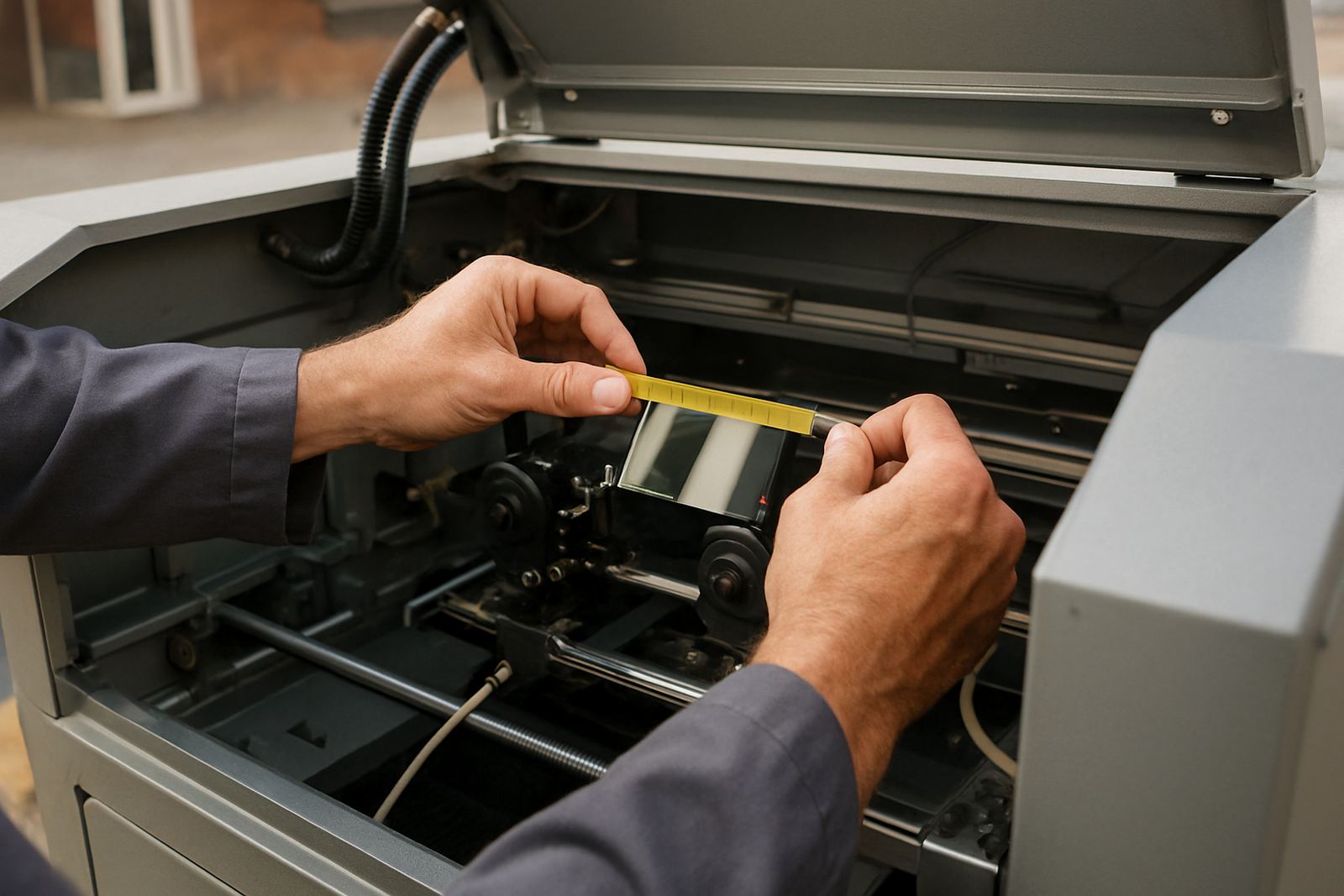
What beam alignment does for your laser cutter
Beam alignment is the process of setting the laser path so the beam travels cleanly through the mirrors and reaches the cutting head in the correct position. When this is off, the machine can still fire, but you start seeing wider kerf variation, poor edge finish, uneven cutting across the bed and extra strain on the optics and tube.
For CO2 laser cutters, alignment matters most on acrylic, plywood, MDF, veneer, leather and paperboard, where even a small offset can show up as burnt corners or incomplete cuts. On larger beds, like 900 x 600 mm and 1300 x 900 mm machines, the beam needs to stay consistent from one side of the table to the other, not just in the centre. That is where a proper alignment service saves time and material.
Our beam alignment work is suitable for craft studios, sign shops, packaging makers, schools, fabrication teams and production users who need reliable output every day. If your machine has been moved, serviced, bumped, or is running in a dusty workshop with load-shedding interruptions, alignment should be checked sooner rather than later. A small drift can become a bigger problem if the machine keeps cutting while out of line.
What is included in the alignment service
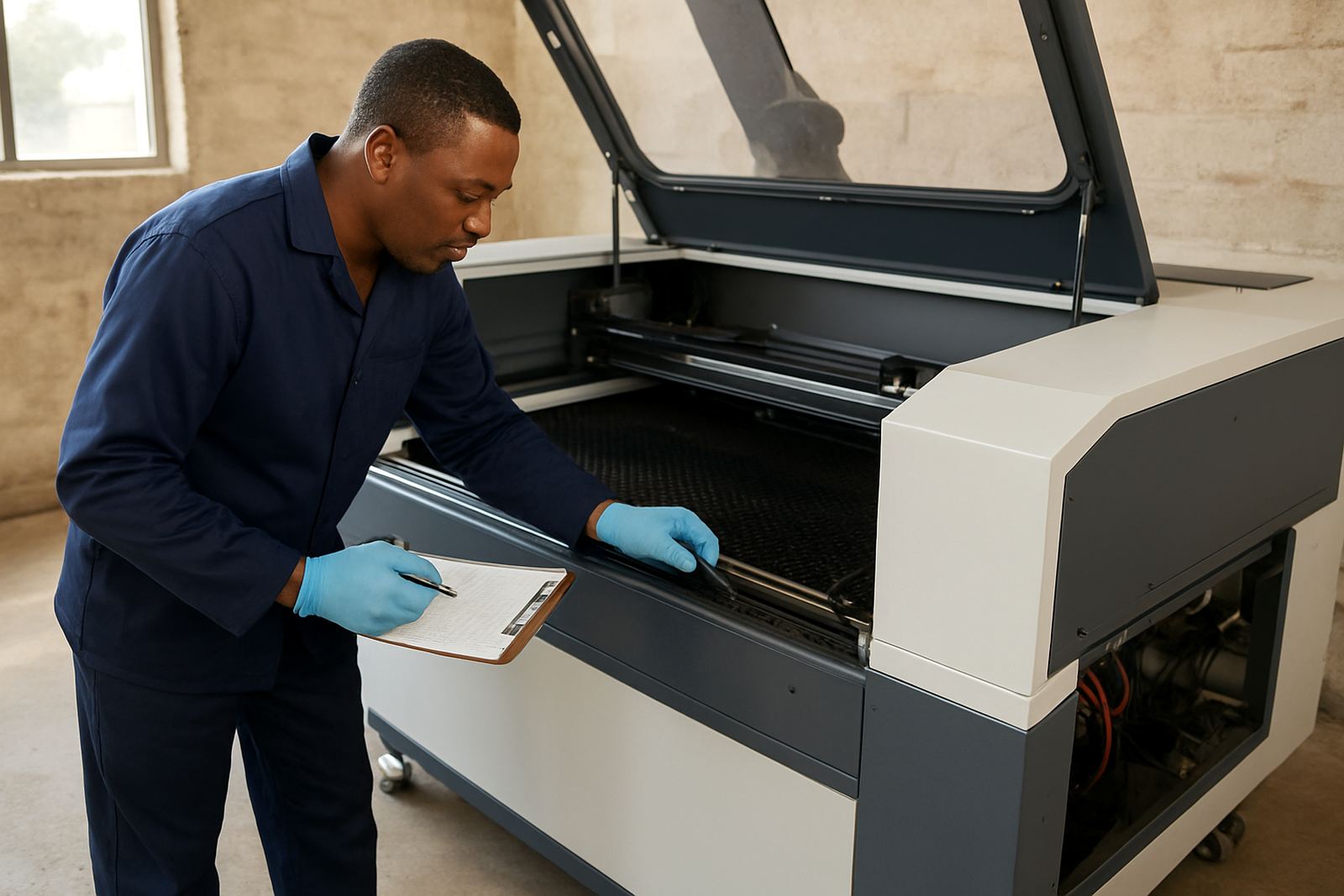
We inspect the full optical path, check mirror condition, verify the beam path at multiple points on the bed and adjust the system so the beam is centred and consistent. The service is done carefully because a quick tweak can sometimes hide the real issue, especially if there is looseness in mounts or contamination on the lenses.
- Initial machine inspection and beam path assessment
- Mirror position checks and realignment
- Head and nozzle centring checks
- Lens seating inspection and cleaning where needed
- Test cuts at key points on the bed
- Cut quality verification on sample material
- Basic airflow and extraction check around the cutting zone
If we find a worn mirror mount, damaged lens, unstable carriage or tracking issue, we will flag it before continuing. Alignment should not be treated as a once-off guess. It needs proper checking across the machine, from the first mirror through to the final cut point.
How we carry out the alignment process
We start with the machine in a safe, clean state and confirm the existing settings. Then we fire low-power test pulses to trace the beam step by step. This shows where the beam is landing at each mirror point and whether the path changes as the head moves.
After that, we adjust mirror mounts and head position, then repeat the tests until the beam stays centred through the full travel range. On larger machines we check near corners as well as the middle, because a machine can look aligned in one area and still fall off in another. Once the path is set, we run live cutting tests on your material or a suitable substitute to confirm edge quality and corner sharpness.
- Step 1: inspect and clean the optical path
- Step 2: trace the beam with low power test marks
- Step 3: adjust mirrors and head position
- Step 4: verify alignment across the full bed
- Step 5: run sample cuts and confirm results
Where needed, we also check cooling and extraction because heat build-up and poor fume removal can affect cut consistency. A machine that is overheating or choking on smoke will not hold alignment results for long, so we look at the bigger picture too.
Turnaround times and when to book
For Wynberg and the wider Johannesburg area, standard alignment work is usually handled on site or as part of a scheduled service visit, depending on machine access and condition. If the machine only needs a routine alignment check, turnaround is often same day or within 1 to 2 working days. More involved repairs, such as damaged optics or loose gantries, can take longer if parts must be sourced.
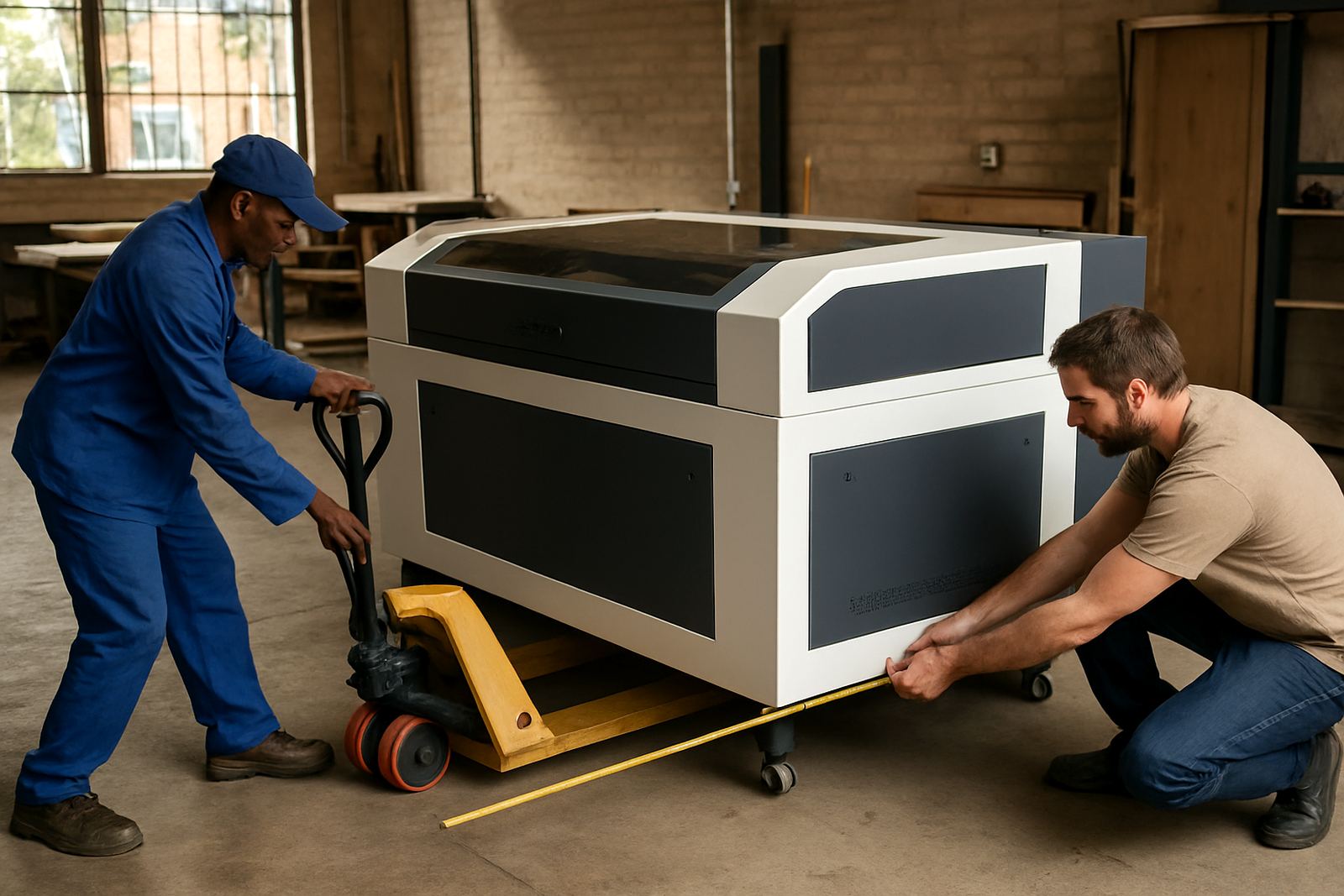
You should book beam alignment after machine relocation, after a major service, when cutting starts to vary across the bed, or when you notice one side of the table cutting cleaner than the other. Machines that run daily should also be checked after power issues or repeated hard shut-downs during load-shedding, especially where the machine was moved while still warm.
For production users, we normally recommend an alignment check every 3 to 6 months, with tighter intervals in dusty sites or workshops near the coast where humidity can affect optics and fixings. If the machine is used lightly, an annual check may be enough, but do not wait if cut quality changes. A machine that is out by even a small amount can waste sheets quickly.
Pricing approach and what affects the cost
Beam alignment is priced according to the machine size, access, condition and whether the work is a routine correction or part of a bigger fault-finding job. We keep pricing practical and upfront, with the service scoped around the actual time and parts needed rather than a one-size-fits-all figure.
Costs are influenced by the number of mirrors in the path, whether the lens or nozzle needs replacement, the condition of the mounts, and if the machine needs extra calibration after installation or relocation. If we are travelling to a site outside Johannesburg, such as Pretoria, Midrand, Durban or Cape Town support areas, travel and timing are factored in before work starts so there are no surprises.
For customers with regular production schedules, we can combine beam alignment with preventive maintenance or an annual service plan. That often works out better than calling for repeated emergency visits when quality starts dropping. It also helps you plan around production stoppages rather than losing half a day unexpectedly.
Maintenance intervals that keep alignment stable
Once the beam is aligned, keeping it that way is mostly about clean optics, stable mounts and proper handling. Vibrations, moved machines, loose fasteners and dirty air paths all work against consistent cutting. If your workshop sees a lot of dust from wood or acrylic, the checks need to be more frequent.
- Daily: wipe visible dust from the work area and check airflow
- Weekly: inspect mirrors and lens for residue or smoke marks
- Monthly: test cut quality across the bed and inspect fasteners
- Every 3 to 6 months: full beam alignment check for active production use
- After relocation: full realignment before production restarts
In humid or coastal conditions, optics can cloud more quickly and fittings may loosen over time. In busy shops, operators can also notice slight changes in sound, cut width or corner finish before a fault becomes obvious. That is the right time to call for a check, not after the job starts failing. A machine that is kept in line runs smoother, uses less material and gives more dependable results.
Key facts
| Service type | CO2 laser beam alignment and verification |
|---|---|
| Materials supported | Acrylic, wood, leather, MDF, veneer and paperboard |
| Typical machine sizes | 600 x 400 mm, 900 x 600 mm, 1300 x 900 mm and larger |
| Turnaround | Same day to 2 working days for routine alignment, depending on condition |
| Coverage | Wynberg Johannesburg, Sandton, Pretoria, Midrand, East Rand, West Rand, Durban and Cape Town support |
| Recommended interval | Every 3 to 6 months for regular production use, and after relocation or major service |