What our preventive maintenance covers
Preventive maintenance is a planned service visit that checks the parts most likely to affect cut quality, uptime and machine life. For workshop users running short daily batches or heavier production, it is the sensible way to catch wear before it turns into a breakdown. We work on CO2 laser cutters used for acrylic, MDF, plywood, veneer, cork, leather and similar non-metal materials.
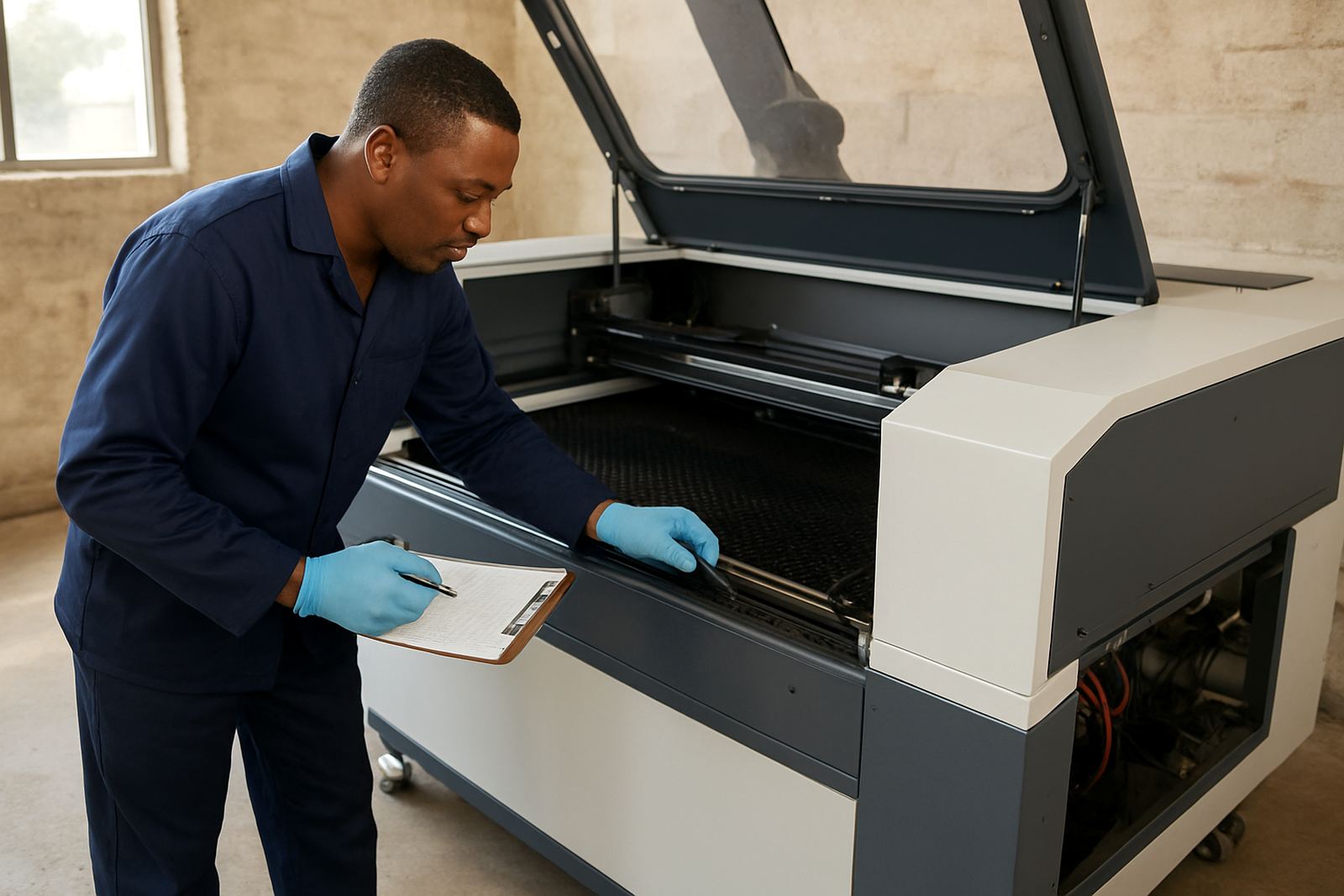
A standard visit is built around the actual condition of the machine, not just a tick-box service. We inspect the motion system, optical path, cooling system, extraction, cabling, safety circuits and general cleanliness inside the cabinet. If your machine sits in a dusty area, near spray finishes or in a coastal location with more humidity, we pay extra attention to optics and corrosion points.
- Beam alignment check and basic correction where needed
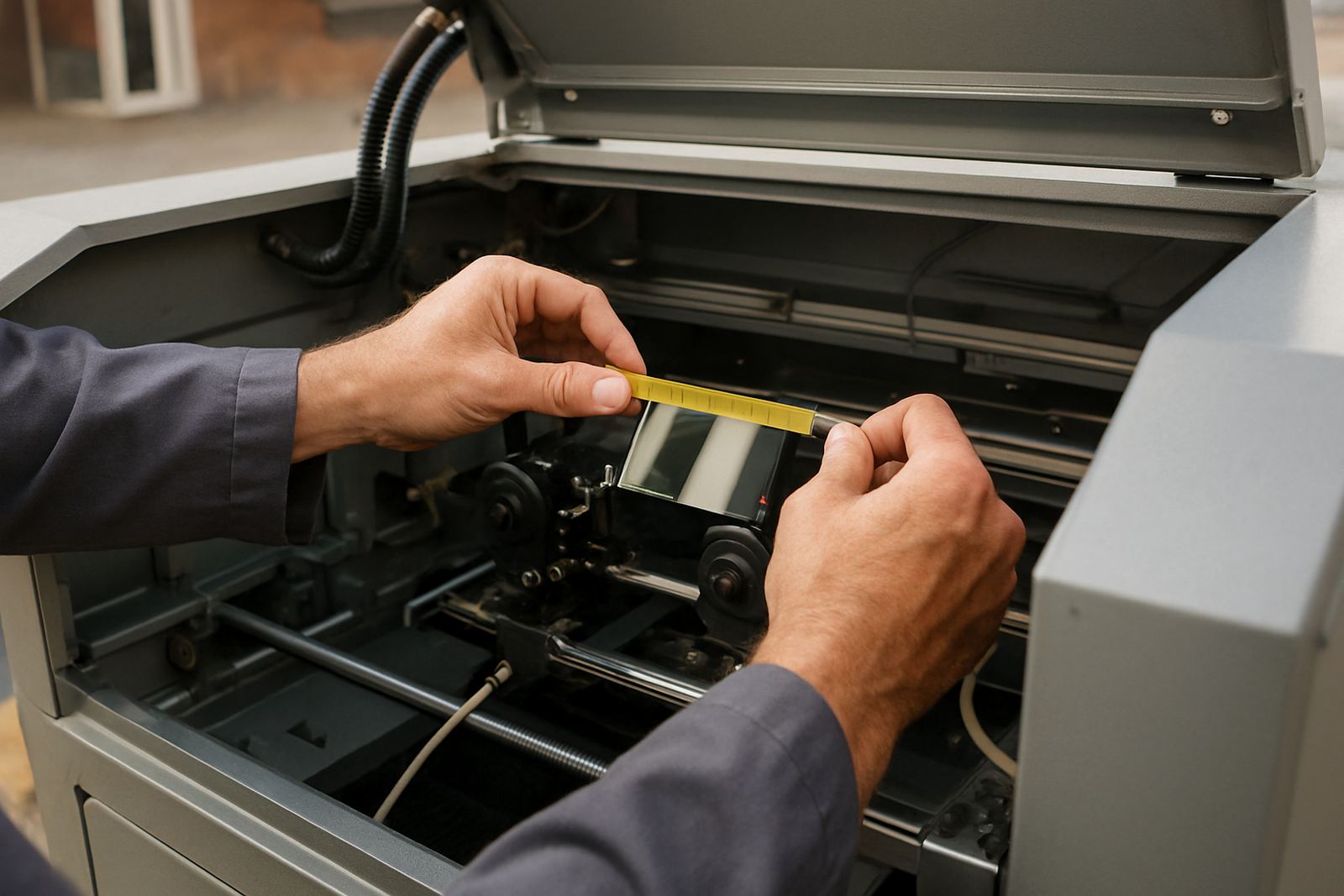
- Optics cleaning for mirrors and lens components
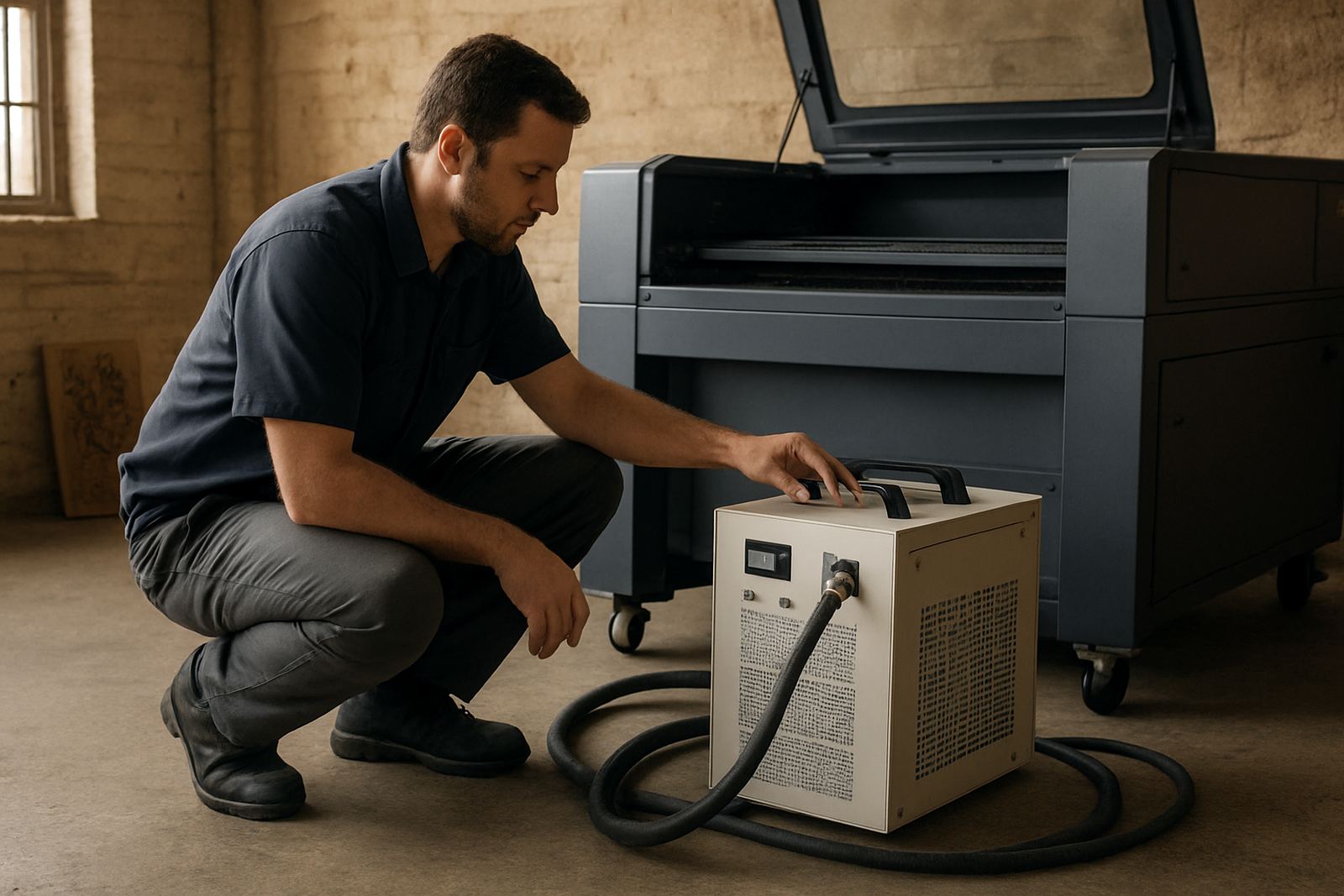
- Cooling system inspection, water flow and temperature checks
- Extraction and airflow service to help remove smoke and residue
- Motion system inspection, belts, rails and drive components
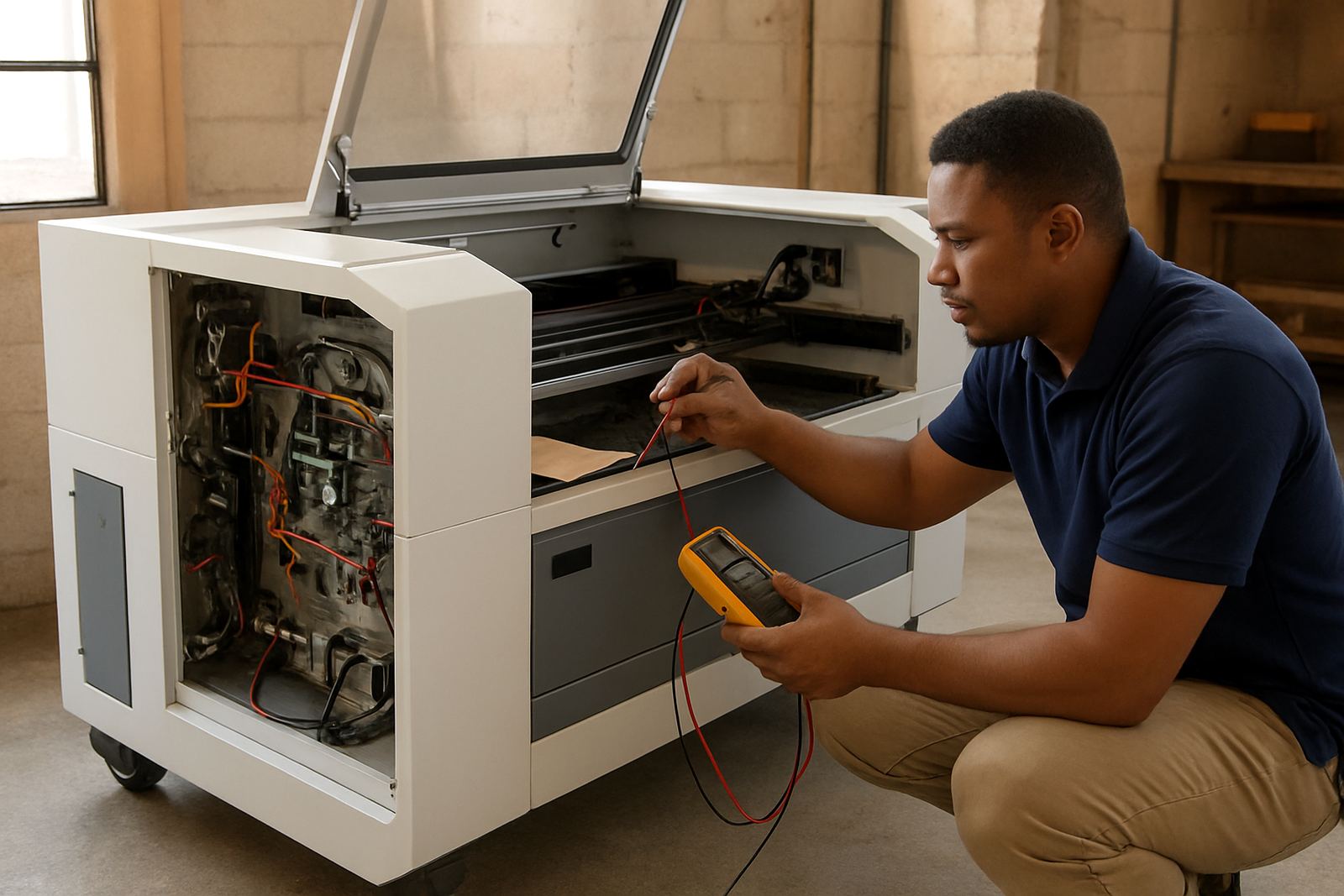
- General safety checks, covers, interlocks and emergency stop function
How a service visit is done
We start by looking at how the machine is being used, what materials it cuts, and whether there are any current fault signs such as uneven edges, weak cutting power, missed steps or overheating. That first assessment helps us decide what can be done immediately and what needs a follow-up part or deeper repair. It also gives you a clear picture of the machine condition before work begins.
Once the unit is safe and accessible, our technician carries out the service in stages. We clean key optical surfaces, check the water chiller or cooling arrangement, inspect airflow and extraction, then test alignment and cutting consistency. If the machine is due for it, we also check the tubes, mirrors, lens mount, belts, guides and electrical connections. Before we leave, we run test cuts so you can see the result on actual material.
- Initial condition check and fault discussion
- Safe shutdown and access to service points
- Cleaning, inspection and adjustment work
- Test cutting on your preferred material where possible
- Final handover with findings and recommendations
Recommended maintenance intervals
The right interval depends on operating hours, material type, dust load and the workshop environment. A machine running every day on thick acrylic in a busy production space needs more frequent attention than a light-use unit doing occasional craft work. We usually advise a quarterly check for busy shops, with shorter intervals in high-dust or high-humidity environments.
For many customers, the practical pattern is monthly user checks and a scheduled professional service every 3 to 6 months. If the machine is used in Durban or another coastal area, optics and metal components can need earlier attention because of moisture in the air. In Johannesburg, Pretoria and the inland industrial areas, dust and extraction buildup are often the bigger issue, especially when cutting wood-based boards.
- Heavy daily use: every 3 months
- Medium workshop usage: every 4 to 6 months
- Light use or training machines: every 6 to 12 months
- Coastal or high-humidity sites: shorter intervals may be needed
Turnaround times and on-site planning
Most preventive maintenance visits are scheduled in advance so production loss stays low. In Johannesburg and nearby service areas, we can often arrange a site visit with minimal lead time, depending on workload and parts needed. For machines in Pretoria, Midrand, the East Rand, West Rand, Sandton and Wynberg, we plan routes to reduce travel delays and keep the visit efficient.
A standard service is often completed in a single day, though larger systems or machines needing extra fault-finding may take longer. If a unit needs replacement optics, a cooling component or extraction-related parts, we will advise the expected turnaround before the job goes ahead. Where possible, we also support remote checks first so we can arrive with a better idea of what is needed.
For customers outside Gauteng, we coordinate travel and timing in line with the installation or service schedule. Cape Town, Durban and other national locations can be covered by planned site support, especially for businesses that want to combine a service visit with operator refresher training or a relocation.
What the service can prevent
Regular maintenance is not only about avoiding an outright breakdown. It also helps stop gradual problems that affect production quietly, such as rough edges, slower cutting, extra smoke marks and uneven engraving depth. If the beam drifts out of alignment or the cooling system starts to underperform, the machine can still run but the quality drops and material waste goes up.
For businesses cutting signs, decor, packaging inserts or custom leather work, those small changes matter. A machine that is just slightly out of tune can waste sheets, increase rework and create bad cuts that need hand finishing. Preventive servicing is a practical way to keep the machine predictable, especially when deadlines are tight and material costs are rising.
- Reduced risk of unplanned downtime
- Better cut consistency across long production runs
- Longer life for consumable and mechanical parts
- Cleaner edges and less post-processing
- Improved cooling and safer operating conditions
Pricing approach and service plans
We quote preventive maintenance according to the machine type, location, service depth and any parts required. A compact workshop machine does not need the same time or consumables as a larger production unit, so pricing is usually based on the actual scope after an initial assessment. If the machine is part of a regular service plan, the visit can be priced more efficiently over the year.
Our approach is straightforward. We confirm the machine details, current condition and the level of service needed, then set out the labour, travel and any parts separately where necessary. That way you know what you are paying for before work starts. For customers with multiple units, we can also schedule staggered visits so each machine gets serviced without taking the whole workshop offline at once.
- Single machine servicing or multi-machine workshop visits
- Quoted labour and travel based on location
- Parts supplied separately if needed
- Optional annual service plan for repeat maintenance
Key facts
| Service focus | CO2 laser cutter preventive maintenance for acrylic, wood, leather and similar materials |
|---|---|
| Typical visit length | Half day to 1 day, depending on machine size and condition |
| Maintenance interval | Every 3 to 6 months for most active workshop users |
| Coverage area | Wynberg, Johannesburg and nationwide by appointment |
| Main checks | Alignment, optics, cooling, extraction, motion, safety systems |
| Support options | On-site service, remote support, planned follow-up and annual service plans |