
What our cooling checks cover
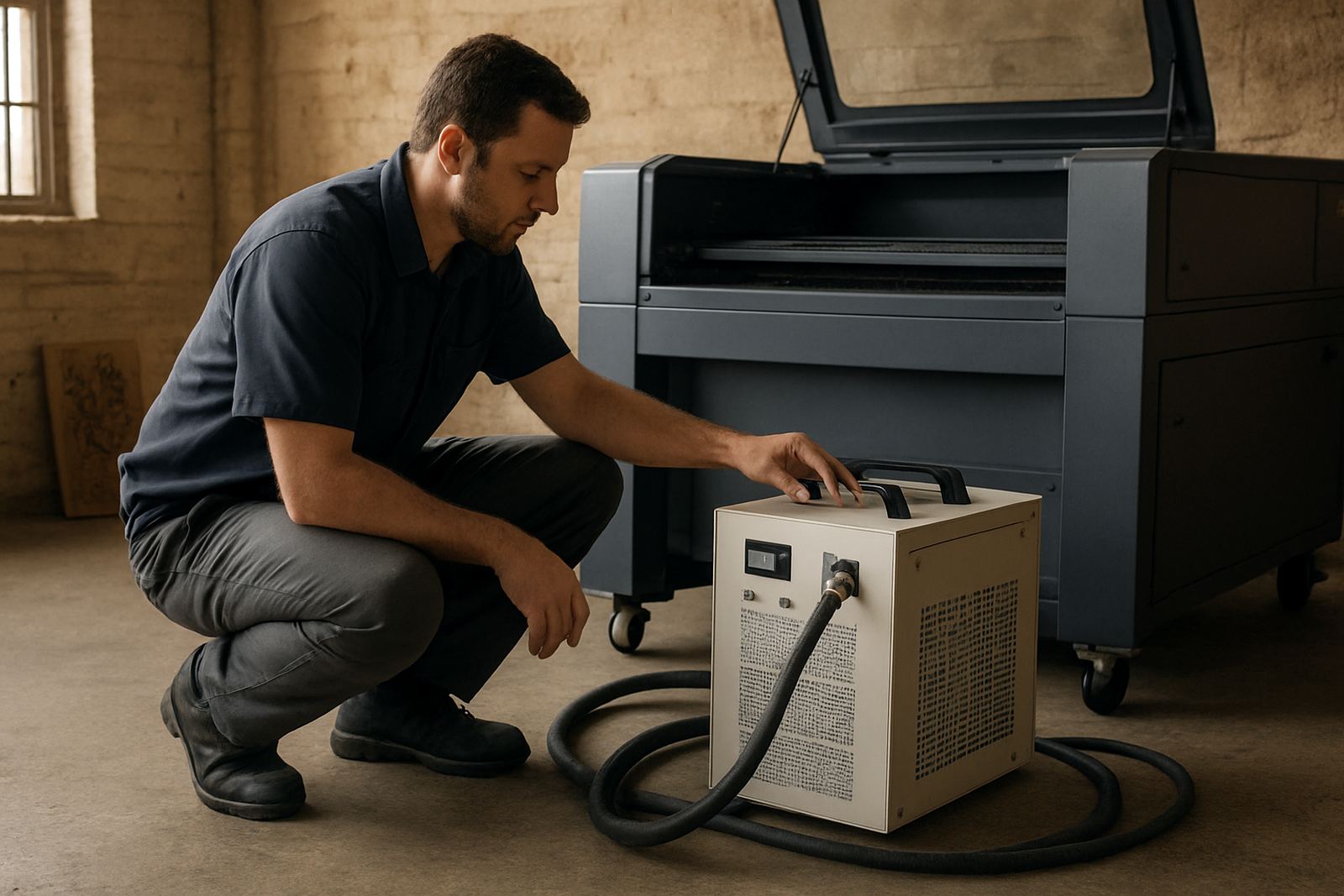
CO2 laser tubes need steady water cooling to stay within the correct operating range. If the water runs too warm, flow drops, or the pump starts struggling, you can get weak output, unstable cutting, tube damage and random shutdowns. Our cooling checks look at the whole system, not just the water level in the tank.
We inspect the machine in your workshop, whether you are running a craft setup in Wynberg, a production bay in Midrand or a small studio in Durban. The aim is simple: keep the laser stable in South African conditions where summer heat, dust and load-shedding can all affect cooling performance.
- Water temperature reading and stability under load
- Flow rate, pump pressure and return flow condition
- Reservoir level, contamination and hose condition
- Chiller or external cooling unit settings and alarms
- Leak checks, fittings and clamp security
- Heat build-up around the machine enclosure
Signs your cooling system needs attention
If the machine is cutting well one day and misbehaving the next, the cooling circuit is often part of the problem. A tube can still fire while the water is not doing its job properly, so the signs are easy to miss at first. We often see issues after hot weather, after a move, or when a machine has sat unused for a while.
Common warning signs include fluctuating output, a pump that sounds louder than normal, visible bubbles in the return line, or water that feels warmer than usual after a short run. If your machine trips during long jobs or starts leaving rough edges on acrylic and wood, it is worth checking the cooling before you lose a tube. It saves money and time, no question.
- Alarm codes linked to temperature or water circulation
- Reduced cutting power on thicker material
- Tube running hot after only a few minutes
- Condensation, damp fittings or small leaks
How the inspection is done
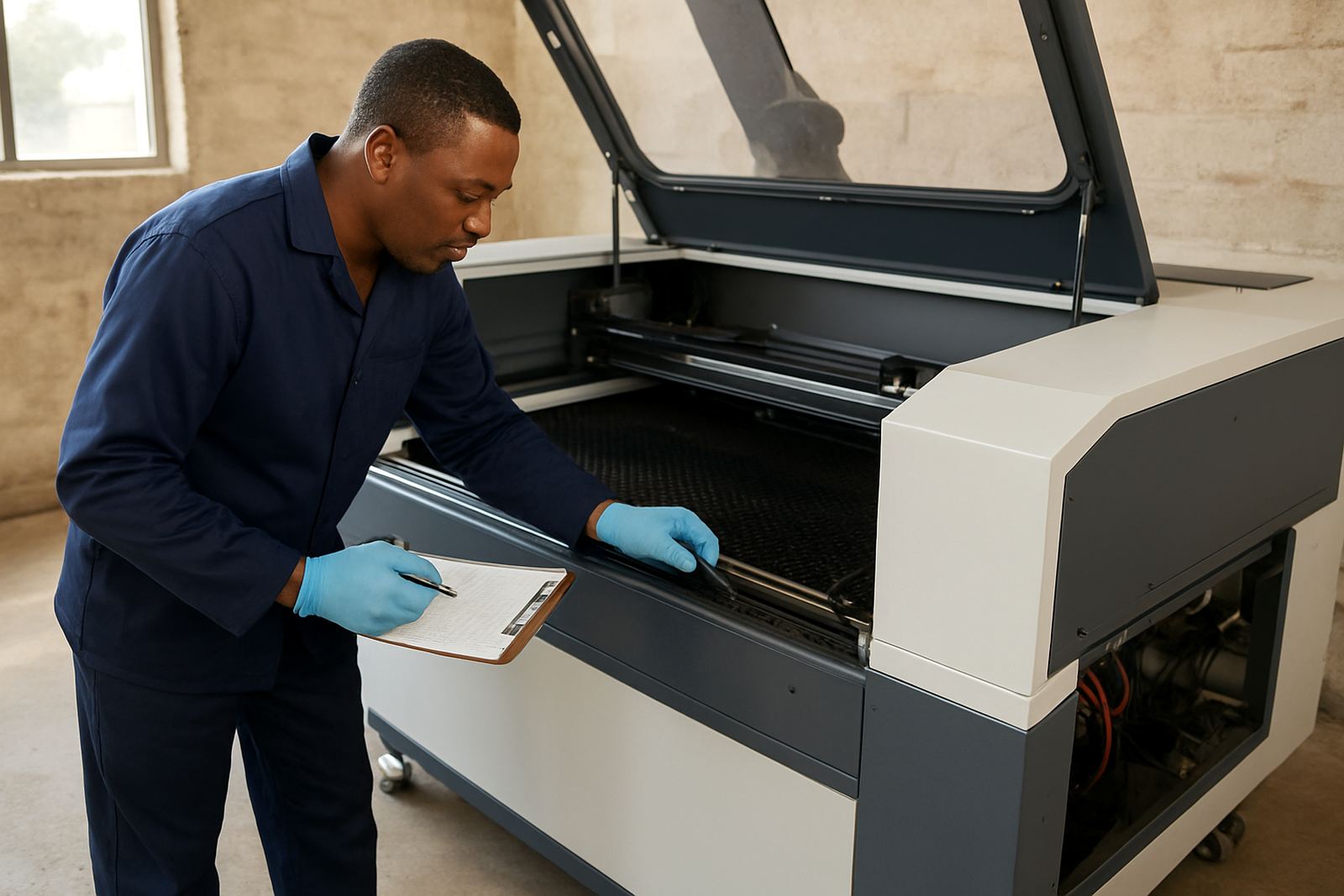
We begin with a visual inspection of the cooling path, then test the system while the machine is running. That lets us see what happens under normal operating conditions, not just when the unit is switched off. We check the machine setup, confirm the water is clean and make sure the system is moving enough volume at the right pressure.
If needed, we will clean the reservoir, flush the circuit, adjust cooling settings and test again. For some machines, especially those used near the coast or in dusty spaces, we also check for scale, algae growth and hose softening. The process is practical and direct, and we explain what we find before any work is done.
- Initial machine check and operator feedback
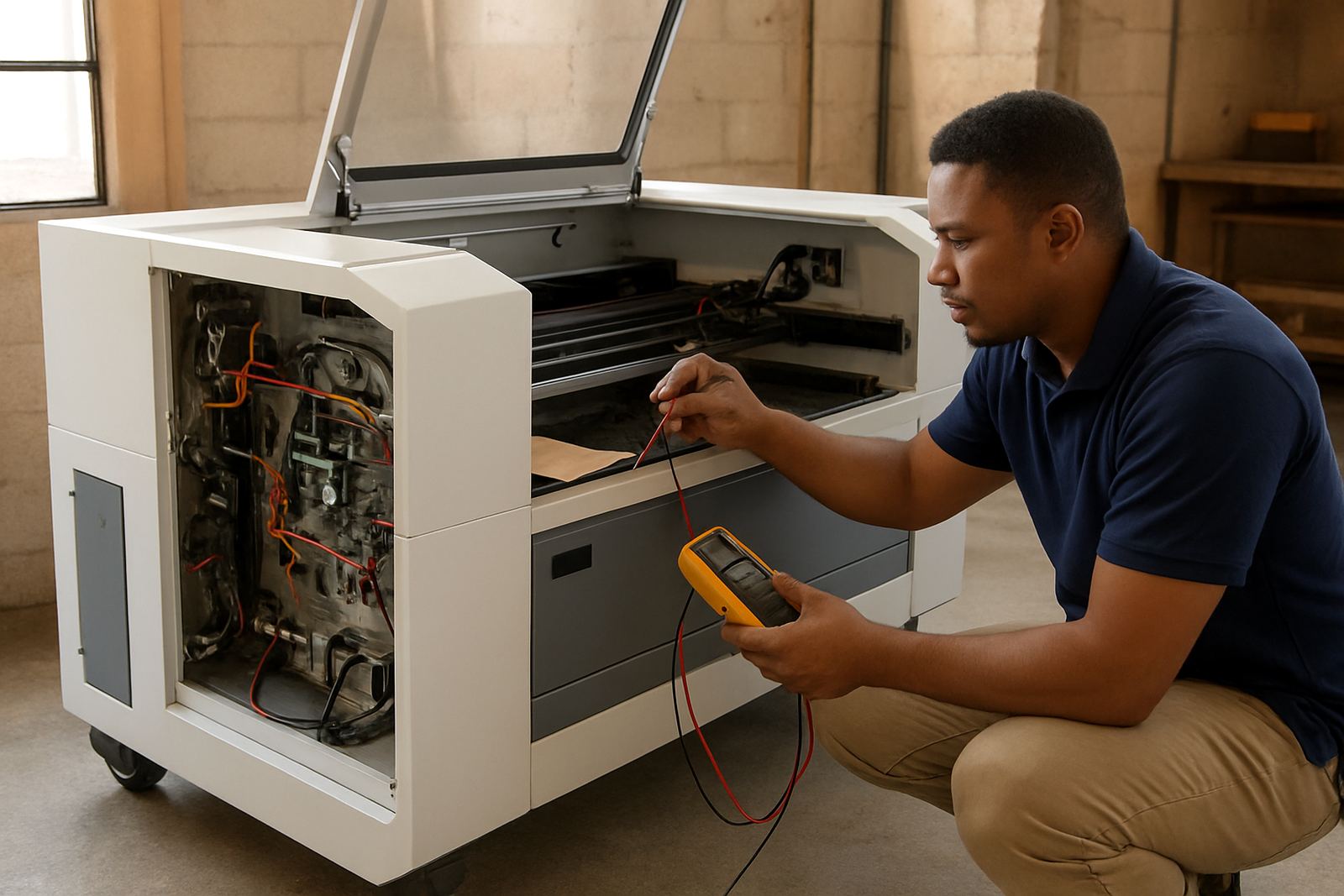
- Live test of temperature, flow and alarms
- Clean, flush or top-up where required
- Final test cut or run to confirm stable cooling
Turnaround and site support
Most cooling checks are completed during a single site visit if the issue is basic, such as a blocked line, low water level or a tired pump. If parts need replacement, we will advise on the quickest route to get the machine back into service. For customers in Johannesburg, Pretoria, Midrand, Sandton, the East Rand and West Rand, we can arrange support visits. For Durban and Cape Town support areas, timing depends on route planning and the urgency of the fault.
Where a machine needs deeper attention, we can include the cooling check in a maintenance visit, or combine it with beam alignment, optics cleaning or an annual service plan. That is often the smartest approach for businesses running daily jobs and trying to avoid unexpected downtime.
- Simple checks and adjustments: same visit where possible
- Minor cleaning or flushing: usually quick turnaround
- Parts-related faults: handled once the required component is confirmed
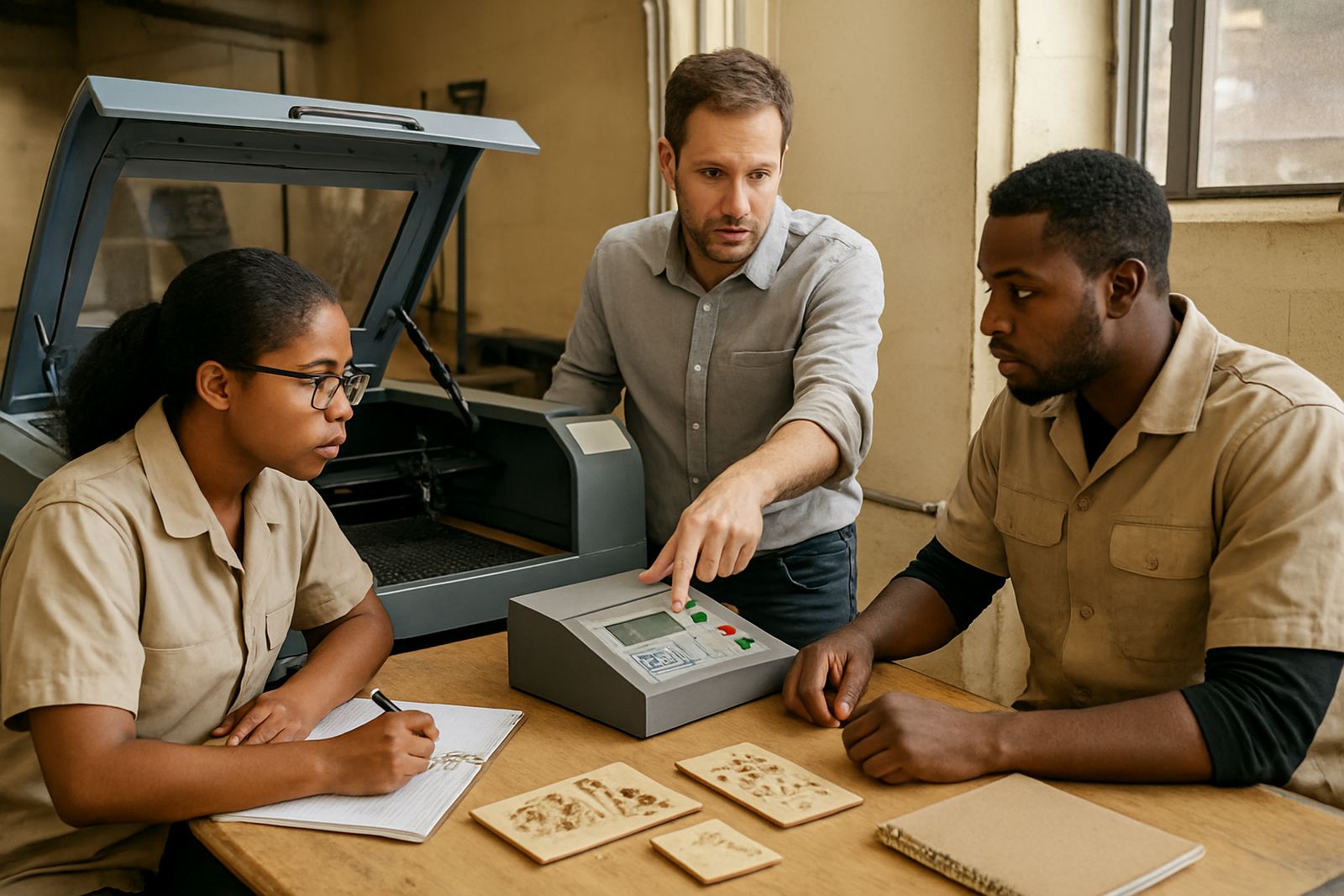
- Training note included if the operator needs a refresher
Pricing approach and what affects the cost
We price cooling checks according to the machine setup, the site location and the level of work needed. A straightforward inspection with a clean bill of health is priced differently from a system that needs flushing, pump replacement or hose repairs. We keep the pricing clear so you know what is included before we start.
Factors that can affect cost include the type of cooling arrangement, whether the machine needs a full flush, and whether extra time is needed for access, leak tracing or after-hours support. If you are budgeting for regular upkeep, we can quote for a once-off check or fold it into a scheduled maintenance visit. That helps smaller shops manage cash flow and still keep the machine healthy.
Recommended service intervals for South African workshops
For most CO2 laser cutters, we recommend a cooling check every 3 to 6 months. If the machine runs long shifts, sits in a warm room, or works in a coastal area with higher humidity, more frequent checks make sense. In hot inland areas like Johannesburg and Pretoria, summer temperatures can push cooling systems harder than owners expect.
Operators should also do quick weekly checks in-house. That includes water level, hose condition and pump noise before the day starts. If the machine is used daily for acrylic, wood or leather cutting, a short routine check can prevent a costly tube failure. The goal is not to over-service, just to keep the machine within spec and reliable.
- Weekly: water level, pump noise and visual leak check
- Monthly: inspect hoses, fittings and return flow
- 3 to 6 monthly: full cooling inspection and clean-up
- Immediately after a move, power issue or overheating alarm
Key facts
| Service focus | Inspection of water cooling systems, flow condition and temperature performance |
|---|---|
| Suitable for | CO2 laser cutters used for acrylic, wood, leather and similar sheet materials |
| Typical operating water range | Around 18 to 22 degrees Celsius, depending on machine specification |
| Inspection points | Pump, hoses, reservoir, chiller settings, fittings, alarms and return flow |
| Service area | Wynberg, Johannesburg base with nationwide demo cuts, installs and operator training |
| Recommended interval | Every 3 to 6 months, or sooner after overheating, relocation or heavy use |