What your operators learn on day one
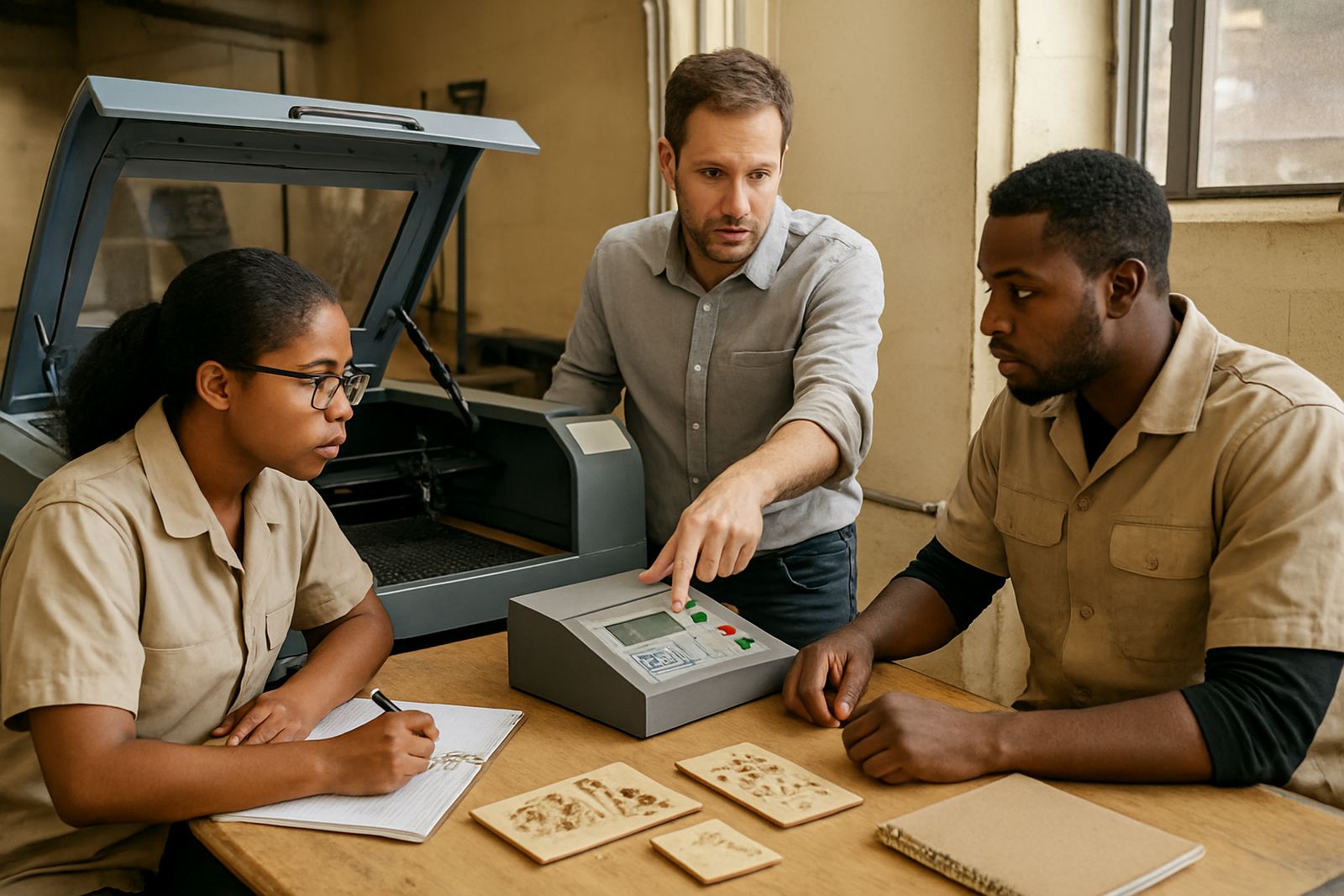
Training is built around the actual work your team needs to do, not theory alone. We start with safe machine use, power-up and shut-down steps, then move into the settings that matter most for clean cuts and repeatable results. That includes speed, power, air assist, focus height and how to spot when a material test is needed.
Operators are shown how to read a job, prepare the bed, secure material properly and identify common causes of poor edge quality, such as warped sheets, dirty optics or weak extraction. By the end of the session, your staff should be able to run basic jobs with better control and less waste.
- Safe start-up and shut-down routine
- Focusing, bed setup and material placement
- Power, speed and air assist basics
- First-cut checks for acrylic, wood and leather
- How to avoid burn marks, missed cuts and overcutting
Training that suits production, demo and small workshop use
We train operators for a range of CO2 laser sizes and workshop setups, from compact units for custom work to larger flatbed machines used in regular production. This is useful for sign shops, craft studios, leather goods makers, joiners and print rooms that need accurate cutting day after day. If your machine handles sheet sizes around 900 x 600 mm, 1300 x 900 mm or larger, we tailor the session to the table size and control layout in use.
We also cover practical workshop conditions that affect output in South Africa, including voltage dips during load-shedding, dust build-up, coastal humidity and extraction limits in enclosed spaces. It is the kind of detail that helps a new operator avoid early mistakes, especially in a busy shop where the machine cannot sit idle for long.
- Training matched to your machine size and material mix
- Suitable for new operators and refresher sessions
- Useful for Johannesburg, Pretoria, Midrand and surrounding areas
- Can be arranged at our Wynberg demo room or on-site nationwide
How the session runs from booking to sign-off
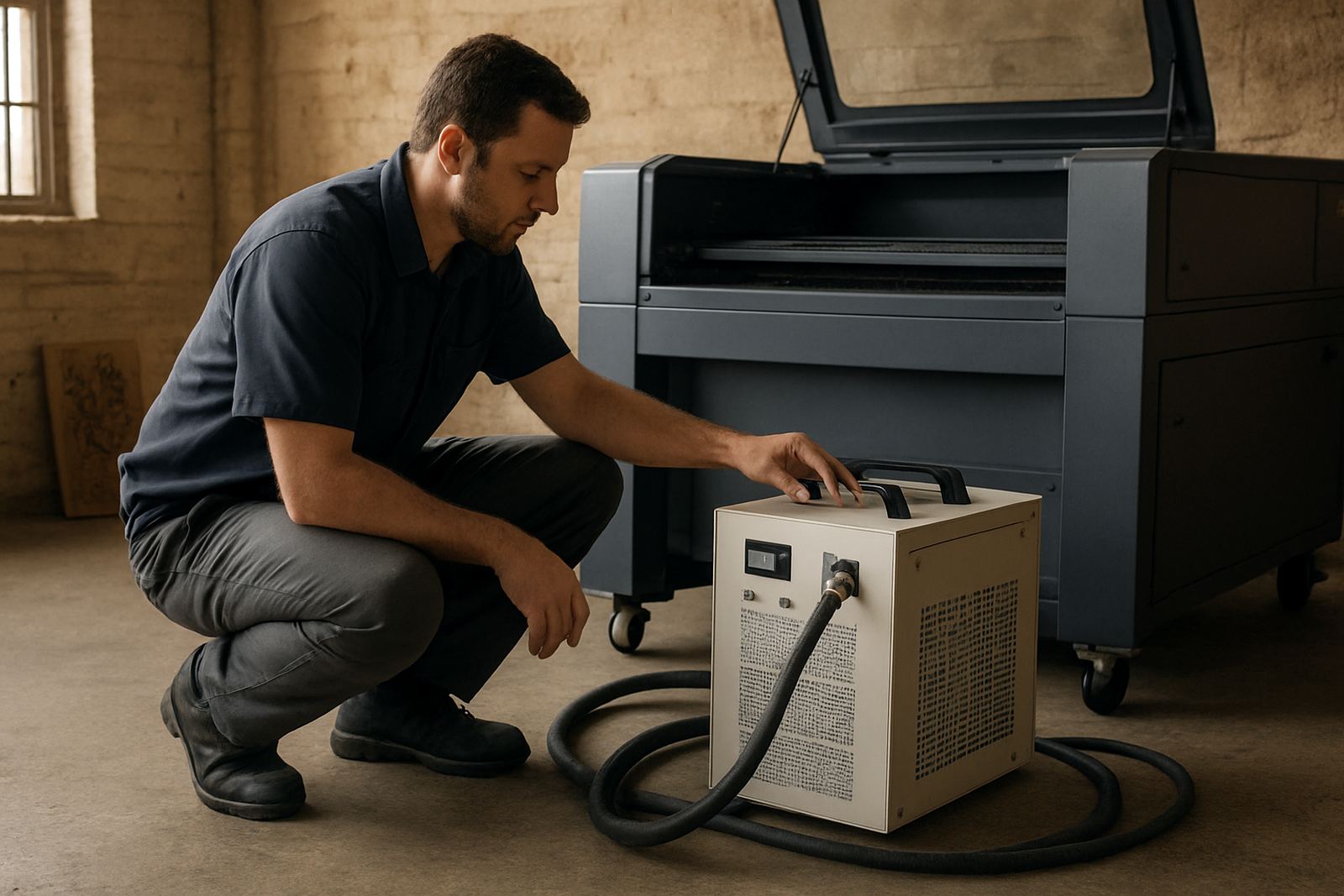
Once you submit an enquiry, we confirm the machine type, your material range and the level of operator experience. That helps us plan the right content and bring the correct consumables for testing. Where needed, we can include a quick review of installation points, extraction, cooling water and compressor connections before training begins.
The session usually follows a simple sequence. We first check the machine condition, then demonstrate the core functions, then guide the operator through supervised practice jobs. We finish with a short sign-off and notes on the settings used so your team can repeat them later. If the machine needs a small setup correction, that is handled on the day where possible.
- Pre-training call to confirm machine type and materials
- On-site or demo room session with live practice
- Job settings recorded for future reference
- End-of-session review and follow-up support
Practical checks we build into the training
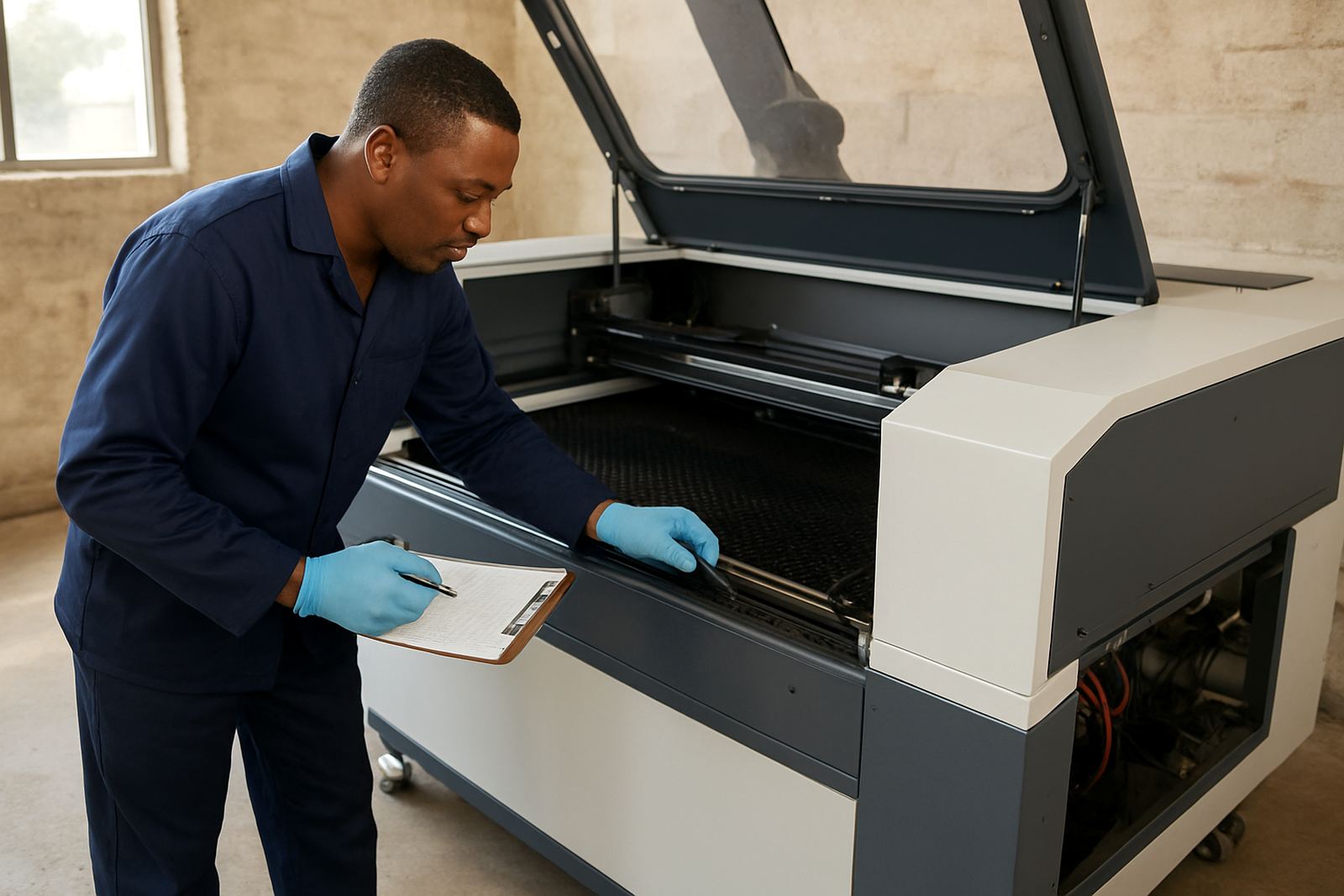
A good operator does more than press start. We show your staff how to carry out daily checks that protect the tube, mirrors, lenses and motion system. That includes checking water temperature, looking at airflow, cleaning residue from the cutting area and making sure the extraction path is clear. Small habits like these can prevent bigger breakdowns later.
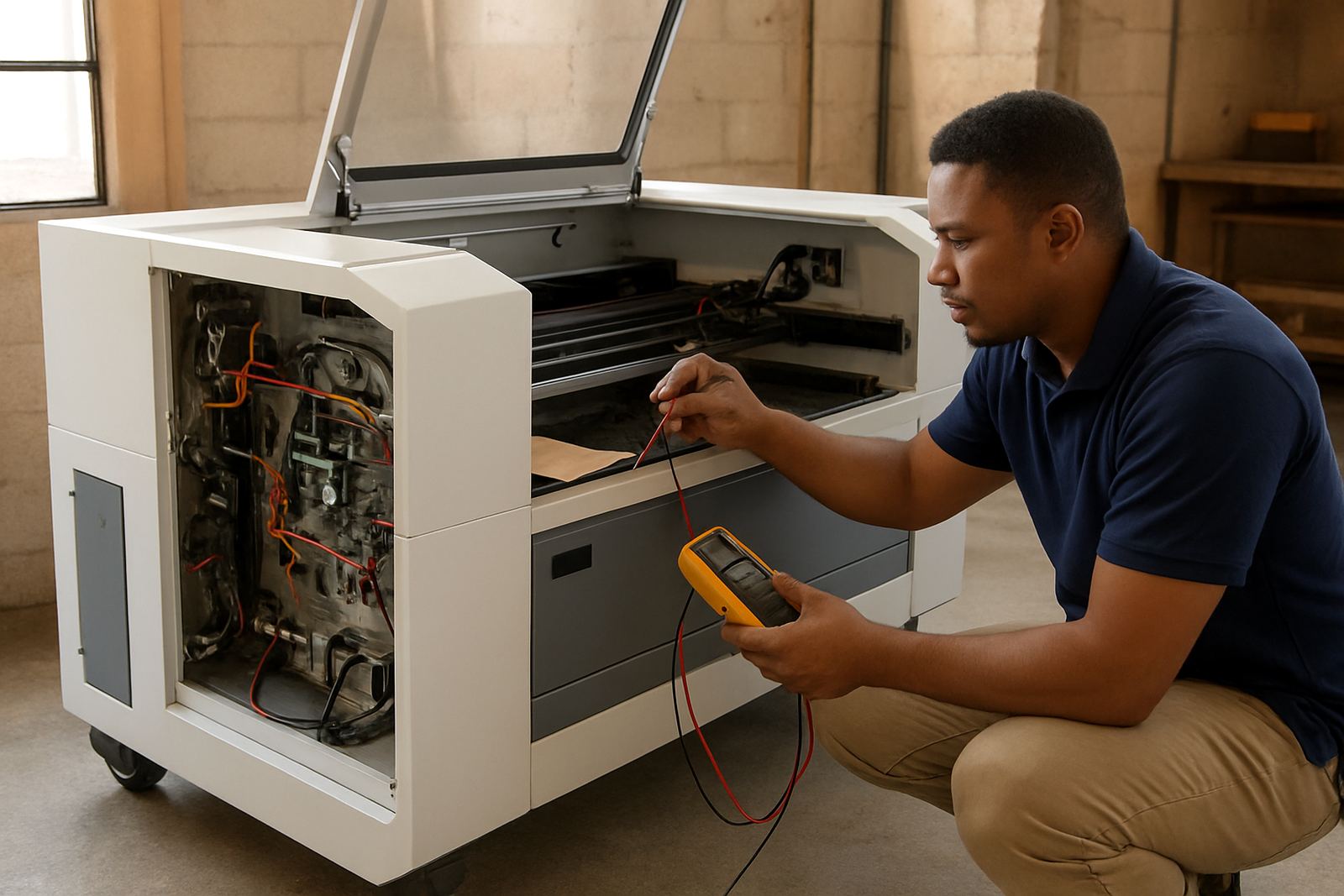
We also cover what to watch for when a machine starts drifting out of tune. If a corner is not cutting cleanly, or one side of the sheet is underpowered, operators learn how to notice it early and when to escalate it. A few minutes spent on checks each day can save a fair amount of downtime and wasted material.
- Optics inspection and safe cleaning basics
- Cooling water level and temperature checks
- Extraction and air assist confirmation
- Bed cleanliness and debris removal
- Early signs of beam alignment or focus issues
Maintenance intervals and daily routine guidance
Operator training includes the maintenance rhythm that keeps a CO2 laser running properly. For most shops, daily cleaning and visual checks are essential, with deeper checks done weekly and monthly depending on usage. In a high-output environment, we advise a more frequent inspection cycle because dust, soot and adhesive residue build up faster than many teams expect.
Typical guidance includes daily lens and bed checks, weekly mirror inspection and rail cleaning, and monthly review of cooling, extraction and motion components. If your machine is used near the coast or in a dusty industrial area, the schedule may need tightening a bit. We explain what should be logged by the operator and what should be left for a technician.
- Daily: clean bed, check water and airflow, inspect cut quality
- Weekly: inspect optics, rails and belts, test repeatability
- Monthly: review cooling, extraction and alignment stability
- Seasonal: adjust for humidity, dust and power interruptions
Pricing approach and turnaround times
Our pricing is based on the machine type, number of operators, training location and whether the session is a first-time setup or a refresher. We quote according to the practical work involved, so a single operator in Wynberg will differ from a full team training visit in Durban or Cape Town. Where demo cuts are needed for multiple materials, that is included in the scope if agreed in advance.
Once the booking details are confirmed, we arrange the training around travel and workshop access. For urgent start-up help after installation, we do our best to fit you in early so your team does not lose production time. The best results come when the machine is ready, the materials are on hand and the operator can practise on the actual jobs they will run later.
Key facts
| Format | Hands-on, machine-specific operator training |
|---|---|
| Scope | Safety, setup, material tests, daily routines and basic fault awareness |
| Machine types | CO2 laser cutters for acrylic, wood, leather and similar non-metal materials |
| Session length | Typically half-day to full-day depending on machine and operator experience |
| Locations | Wynberg demo room and on-site training nationwide |
| Support cover | Johannesburg, Sandton, Midrand, Pretoria, East Rand, West Rand, Durban and Cape Town |