Why extraction matters on every CO2 laser
A CO2 laser cutter needs more than power and alignment. When smoke hangs in the cabinet it can mark acrylic edges, darken timber, leave leather with a burnt finish and coat mirrors and lenses with residue. That build-up reduces airflow, slows production and can lead to more frequent cleaning and more waste material.
Our extraction service is set up for the materials most commonly cut in South African workshops, including cast acrylic, plywood, MDF, hardwoods and leather. We assess how your machine breathes during real work, not only when it is idle, and we check whether fumes are being moved far enough away from the machine and the operator area. In Wynberg and across Johannesburg, dust and pollution can add to the load, so a system needs enough capacity to cope.
- Cleaner cutting area and less smoke settling on surfaces
- More consistent edge quality, especially on dense wood and thicker sheets
- Lower residue on optics, rails and internal panels
- Better comfort for operators during long shifts
What our extraction service includes
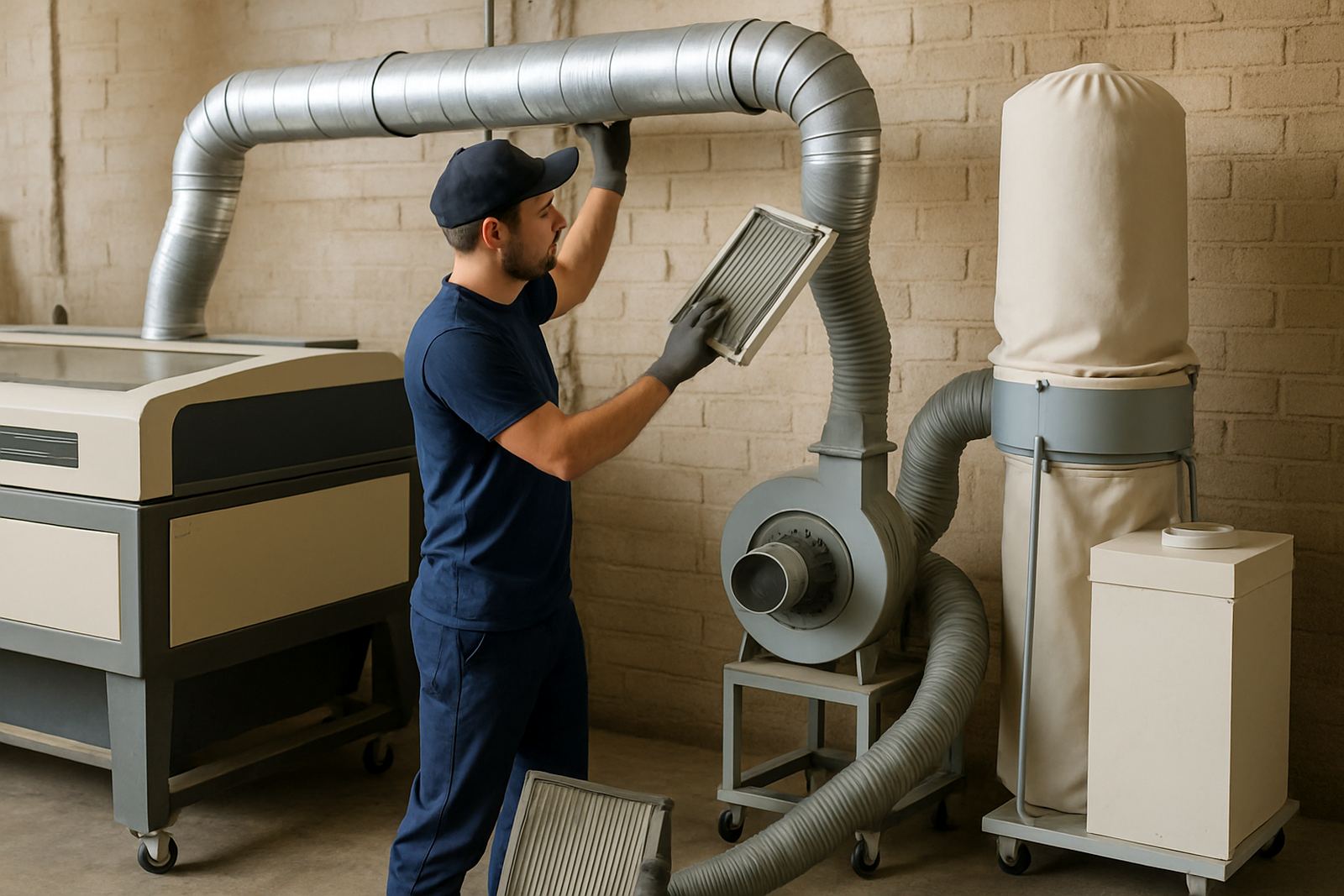
We service the full extraction path from the machine cabinet to the ducting and discharge point. That includes checking fan performance, airflow restrictions, filter condition where fitted, hose routing, bends, joints and seals. If the system is undersized or badly routed we will say so plainly, because a weak extraction line can cause more trouble than no service at all.
Depending on your setup, we can clean, inspect and test the following items:
- Extraction fan or blower housing
- Ducting, flexible hose and clamps
- Inline filters and pre-filters where used
- Cabinet openings, seals and access panels
- Backdraft points and discharge outlets
- Extraction points inside the cutting chamber
We also look at related conditions that affect performance, such as coolant heat, condensation, and whether the machine is being used in a room with poor make-up air. In coastal areas moisture can affect dust movement and filter life, while in Gauteng dry dust can build up quickly on blades and housings.
Our service process from inspection to test cut
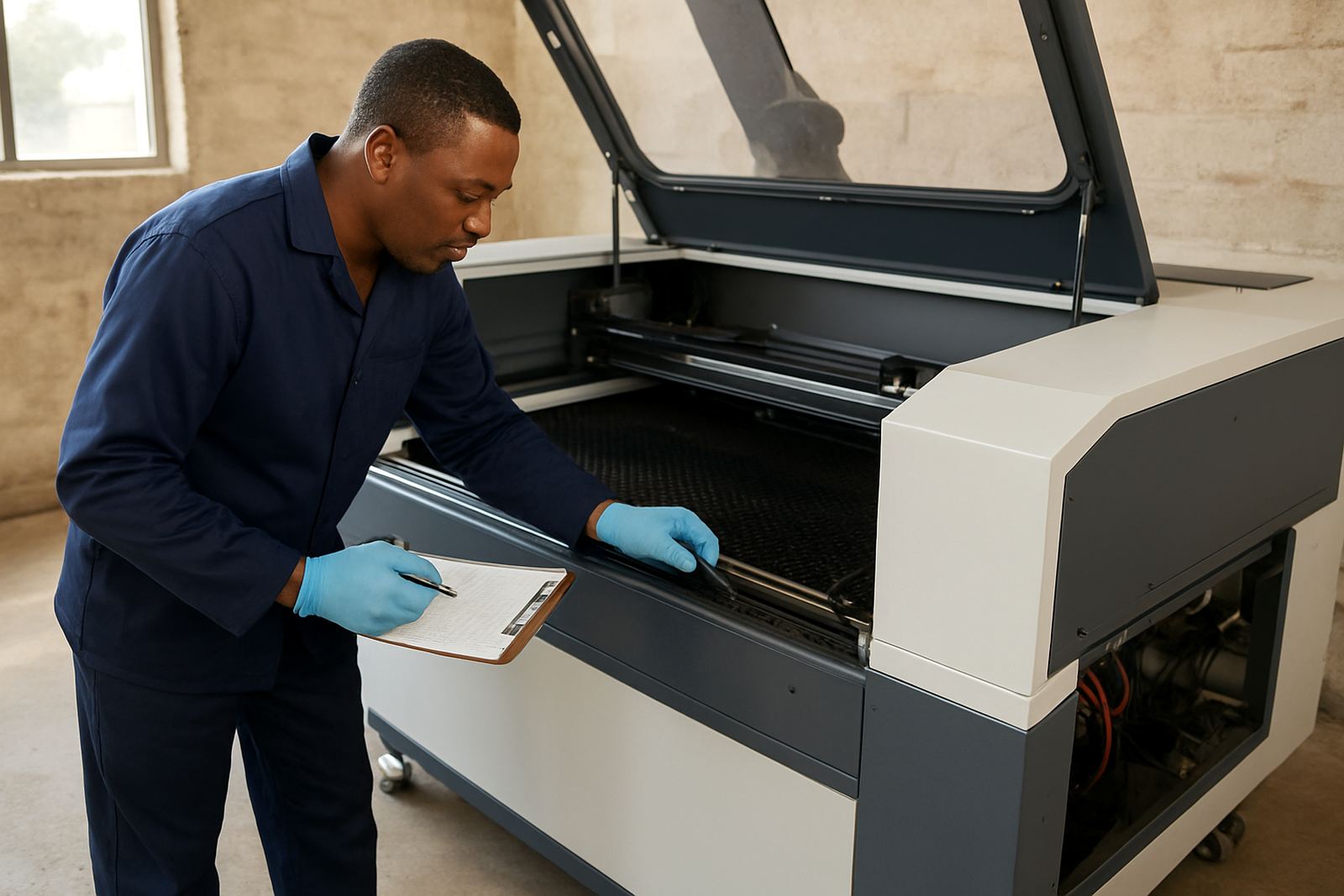
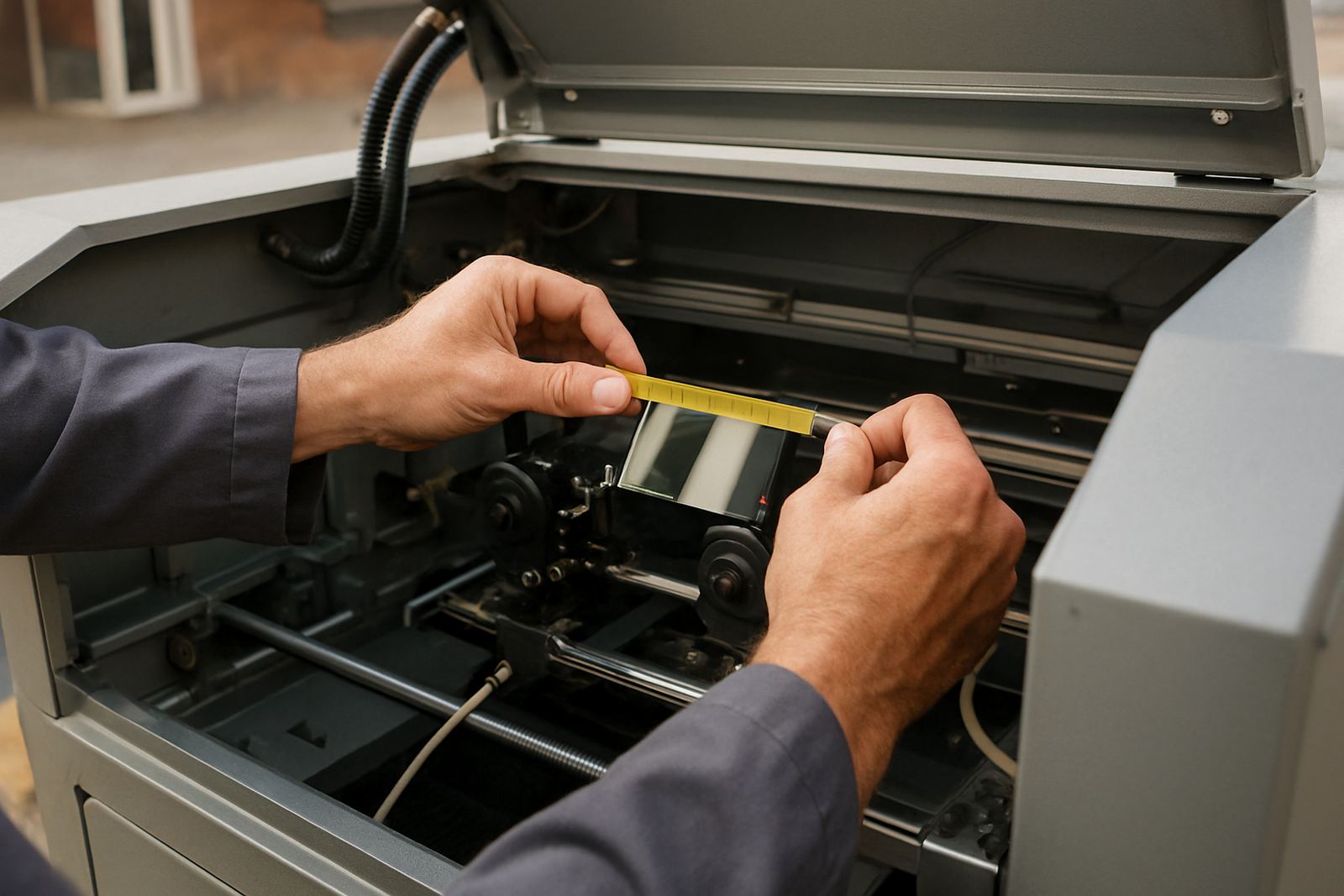
We keep the process simple and practical. First we inspect the machine site and the current extraction route. Then we measure airflow, check for leaks and identify any parts that are choking the system. After that we clean the components that can be serviced on site and replace worn parts where needed.
Once the system is restored we run a test cut on the material you use most often, so we can check smoke pull away, edge finish and odour control. If the machine is in daily production, we plan the work around your schedule to limit downtime and keep orders moving.
- Site inspection and airflow check
- Cleaning of accessible components
- Filter or hose replacement if required
- Extraction test during a live cut
- Final report with actions and follow up needs
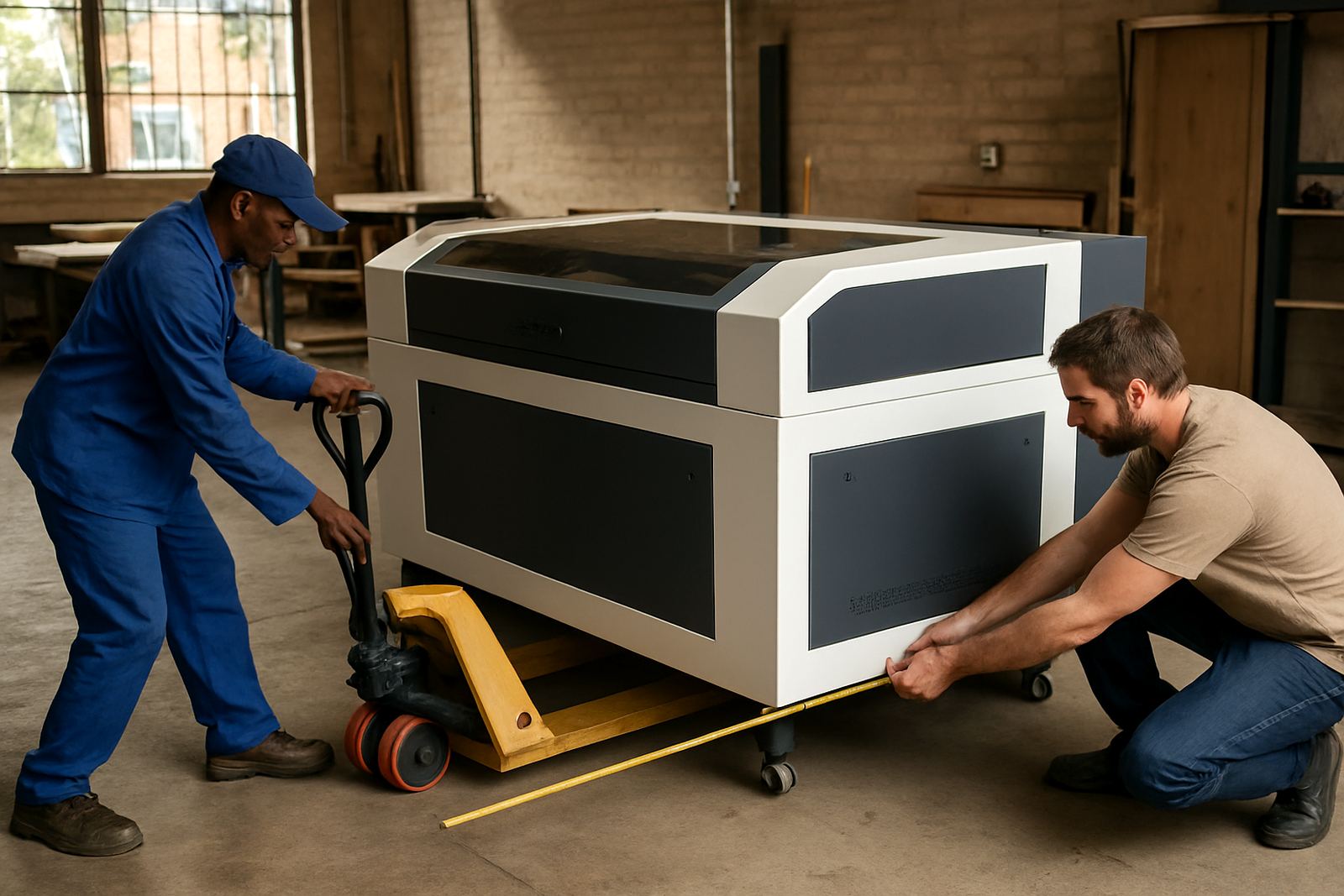
If the machine is being moved or installed in a new room, we can also help set the extraction route correctly from the start. That avoids short bends, pinched hoses and discharge points that send fumes back toward the building.
Turnaround times and callout planning
For standard servicing in Johannesburg and nearby areas, we aim to book inspections and maintenance quickly, often within a few working days depending on travel and job load. Breakdown work is assessed by urgency, with priority given to machines that have stopped extracting completely or are sending heavy smoke back into the work area.
Turnaround depends on the condition of the system and whether parts are required. A basic clean and airflow test can often be completed on site in one visit, while a full repair may need a return visit once the correct parts arrive. During load-shedding we also check whether the extraction system starts reliably with generator or inverter supply, since poor power quality can affect motor performance.
Pricing approach for service and repairs
We price extraction service according to the actual condition of the system, the machine size, the length of ducting and the work needed to restore safe airflow. A routine clean and inspection costs less than a full strip-down with filter replacement and duct repair. If you have a workshop with multiple machines, we can assess them together and quote as a single site visit to reduce callout cost.
You will get a clear breakdown before work begins. That may include labour, travel for outlying areas, parts if needed and any follow-up visit. We do not push unnecessary replacements. If a hose can be re-seated and sealed properly, that is what we recommend. If a blower is worn or undersized, we explain the limits and the likely benefit of replacing it.
- Inspection only for fault finding and airflow measurement
- Routine maintenance for clean-up and testing
- Repair quotation for motors, filters or ducting
- Multi-machine pricing for workshops and training centres
Maintenance intervals that keep airflow steady
Most workshops should plan extraction servicing every 3 to 6 months, depending on how many hours the machine runs and what materials are being cut. Heavy acrylic and wood cutting creates more residue than light engraving, so the service interval can be shorter in busy shops. In dusty industrial areas, monthly visual checks are a good idea even when a full service is not due yet.
Between services, the operator should watch for weaker suction, more visible smoke in the cabinet, hotter cutting on thicker sheet and a build-up of dust on the fan grill. If the machine suddenly starts smelling stronger than usual, or if the cut line darkens more than normal, the extraction system may be part of the problem.
- Check airflow weekly at the start of shift
- Inspect filters and hose joints monthly
- Book a full service every 3 to 6 months
- Review the system after any relocation or room change
For sites in Wynberg, Sandton, Pretoria, Midrand, the East Rand, the West Rand and coastal service areas, we tailor maintenance to the way your workshop actually runs. If you need a cleaner work area and steadier cut results, start with the extraction line before the rest of the machine is blamed.
Key facts
| Service scope | Fan, ducting, filters, seals, discharge point and airflow path |
|---|---|
| Typical maintenance interval | Every 3 to 6 months, depending on runtime and material load |
| Supported materials | Acrylic, wood, MDF, plywood, leather and mixed light production jobs |
| Service area | Johannesburg base with support in Pretoria, Midrand, East Rand, West Rand, Durban and Cape Town |
| Typical turnaround | On site clean and test in one visit for standard jobs, parts dependent repairs may need a return visit |
| Site conditions checked | Dust load, humidity, load-shedding effects, room ventilation and extraction routing |