
What Our Optics Cleaning Service Covers
We clean the optical path on CO2 laser machines used for acrylic, wood, leather and similar sheet materials. The job is focused on restoring beam transmission and keeping the laser spot tight across the bed, which helps reduce flare-up, charring and uneven cutting.
Our service is suitable for machines in workshops, schools, maker spaces and production floors across Johannesburg, Sandton, Midrand, Pretoria, the East Rand, West Rand, Durban and Cape Town. If your machine has been running in a dusty room, near open extraction, or through long shifts during load shedding changeovers, optics can pick up residue much faster than expected.
- Mirror cleaning and inspection
- Lens cleaning and seating check
- Beam path visual inspection
- Contamination check from smoke and dust
- Basic focus and alignment verification
Signs Your Mirrors Or Lens Need Attention
Optics usually do not fail all at once. More often, the machine starts giving small warning signs such as slower cutting, extra pass marks, a wider kerf, or edges that look burnt on one side. You may also see more flare in the cut line, poor engraving contrast, or a need to push power higher than normal just to get through the same material.
Humidity on the coast and fine dust in industrial areas can both shorten the cleaning interval. If your extraction is underperforming or your machine sits near a workshop door that is open most of the day, residue builds up on the lens and mirrors sooner. On some machines the first sign is simply that the beam no longer feels stable and the job starts wandering a bit, especially on detailed work.
- Inconsistent cut depth from one side of the bed to the other
- More smoke staining on the material edge
- Needing higher power settings for the same thickness
- Reduced engraving sharpness
- Frequent focus adjustment without real improvement
How We Clean The Optical Path
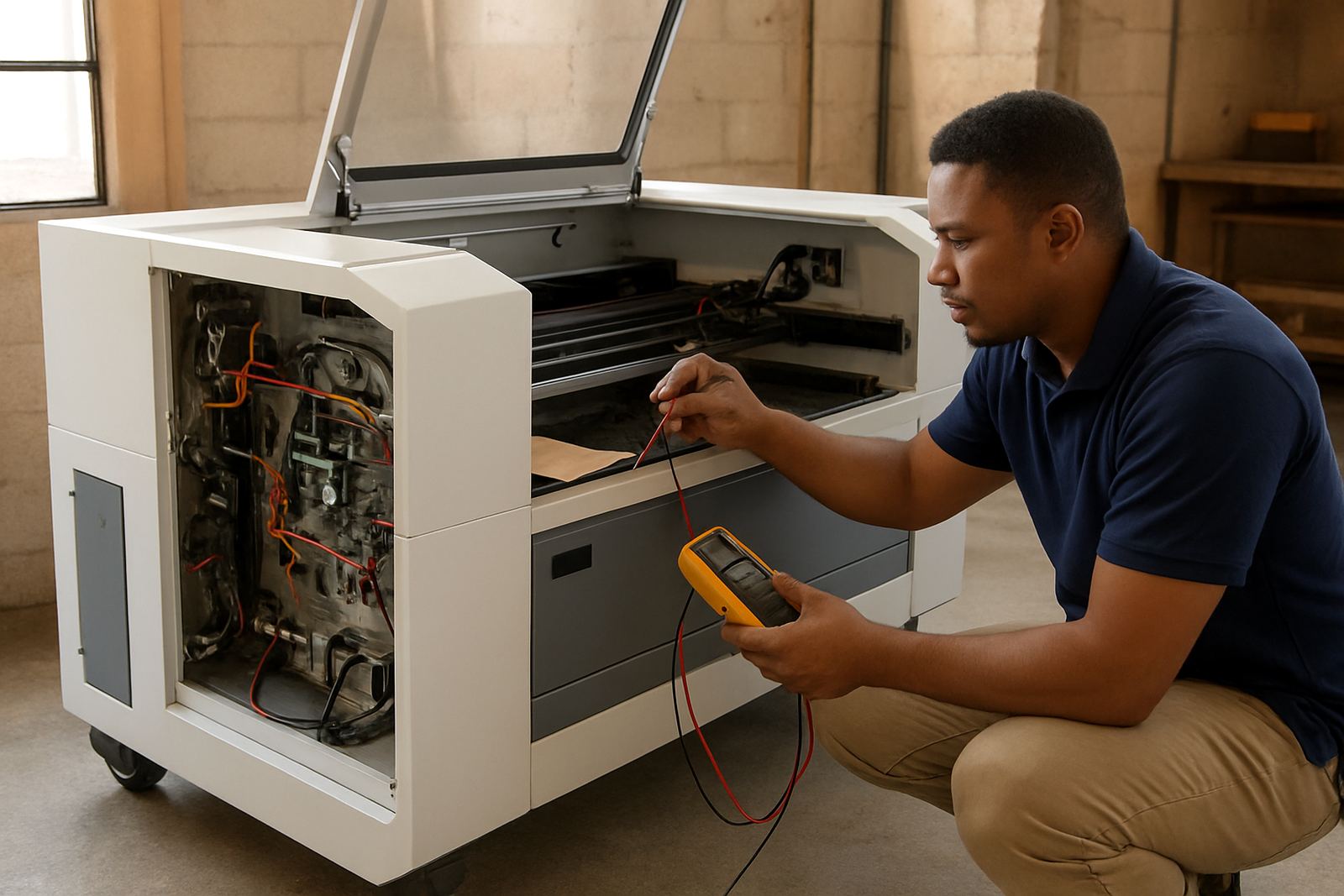
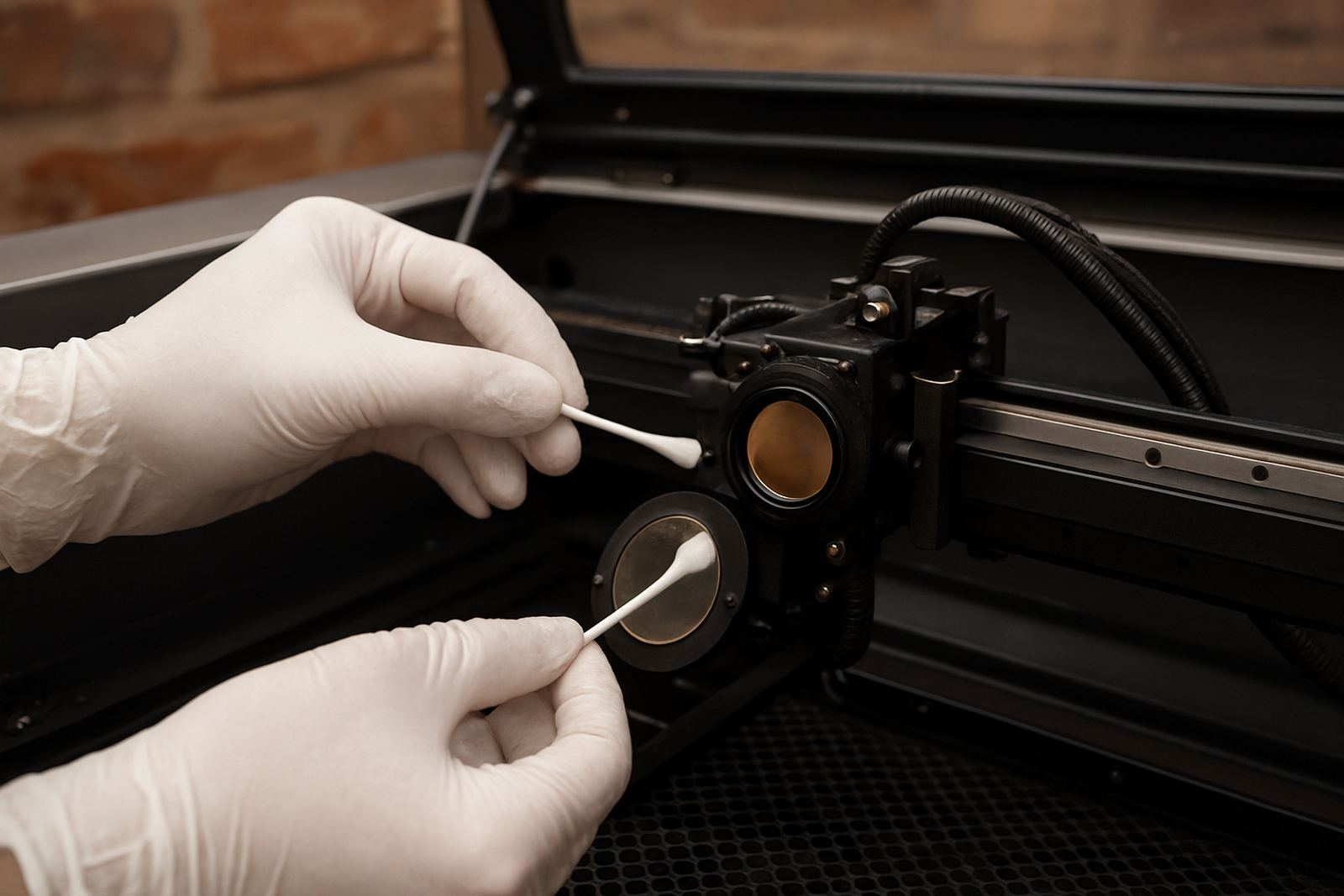
We start with a machine inspection and check the condition of the mirrors, lens holder, seals and nearby housing. The optics are then handled with the correct cleaning method for the surface type, because a quick wipe with the wrong material can scratch a coating and make things worse. We also look for signs of heat stress, residue from poor extraction, or debris that may be coming from the air assist or surrounding cabinet.
After cleaning, we recheck beam stability and confirm that the lens is seated correctly. If needed, we can also advise on related issues such as alignment drift, chiller performance, or extraction settings. The idea is not just to make the glass look clean, but to get the machine back to cutting cleanly and repeatably.
- Initial inspection before any cleaning starts
- Safe removal and cleaning of accessible optics
- Condition check of mounts, seals and holders
- Reassembly and beam verification
- Advice on any wear that needs follow-up
Turnaround For Johannesburg And Nationwide Calls
In the Wynberg, Sandton, Midrand and Pretoria areas, optics cleaning is often arranged as part of planned maintenance or a service visit. If the machine is down due to dirty optics and the issue is straightforward, we work to complete the cleaning with minimal interruption to production. For machines outside Gauteng, the timing depends on route planning, site access and whether the job is linked to a larger install or service call.
Where possible, we schedule work around your production cycle so the machine is not opened mid-run. That matters for shops doing short turnaround jobs, because an unexpected stop can affect delivery times. For clients running backup power during load shedding, we also check that dust and heat have not increased due to longer idle periods followed by sudden restart. A machine that sits warm and unventilated can build residue faster than one in steady use.
Pricing Based On Machine Condition And Access
Pricing is based on the machine size, the number of optical surfaces that need attention, the level of contamination, and whether the job is done as a standalone visit or part of a broader service call. A lightly soiled machine in a controlled workshop is usually quicker to clean than a system that has been running with weak extraction or in a high-dust cutting room.
We quote after a brief assessment, because the real work often depends on access to the beam path, the condition of the holders, and whether follow-up adjustments are needed. If the optics are damaged, badly pitted or showing coating wear, we will flag that before continuing. That keeps the bill fair and avoids cleaning parts that should really be replaced.
- Assessment before pricing is confirmed
- Separate pricing if replacement parts are needed
- Lower cost when combined with maintenance or alignment
- Travel considered for out of area sites
- Clear recommendation if cleaning will not solve the issue
How Often Optics Should Be Cleaned
For active production sites, we normally recommend a check every 1 to 3 months, with cleaning intervals set by workload and site conditions. A craft workshop doing light runs may only need periodic attention, while a busy production room cutting daily in acrylic or MDF can need much more frequent cleaning. Coastal humidity, poor extraction and dusty floors can all shorten the interval.
As a practical guide, many clients use optics cleaning together with preventive maintenance and beam alignment checks. That is especially useful where the machine is used for detailed engraving, small lettering or thin material that shows poor focus very quickly. Repeated cleaning should never be rough or rushed, because a damaged coating can cost more than the original service and lead to more downtime later on.
Need a cleaner beam path and steadier cutting? Send an enquiry through our contact page and we will help plan the right service interval for your machine and workload.
Key facts
| Service type | CO2 laser optics cleaning for mirrors and lenses |
|---|---|
| Materials supported | Acrylic, wood, leather and similar non-metal sheet materials |
| Typical visit scope | Inspection, cleaning, reassembly and beam verification |
| Common sites | Wynberg, Sandton, Midrand, Pretoria, East Rand, West Rand, Durban and Cape Town |
| Recommended interval | Every 1 to 3 months, depending on dust, humidity and usage |
| Access method | By enquiry through the contact page for scheduled service |
| Turnaround | Same visit where possible for local sites, otherwise by route and access |