
Common spares kept for day-to-day upkeep
Our spares supply service covers the parts that usually need attention first on a working CO2 laser. That includes consumables and wear items used during routine upkeep, plus components that help restore cut quality after a fault or a slow decline in performance. We work with machines used by sign shops, makers, schools, furniture shops and production teams that need clean edges and consistent output.
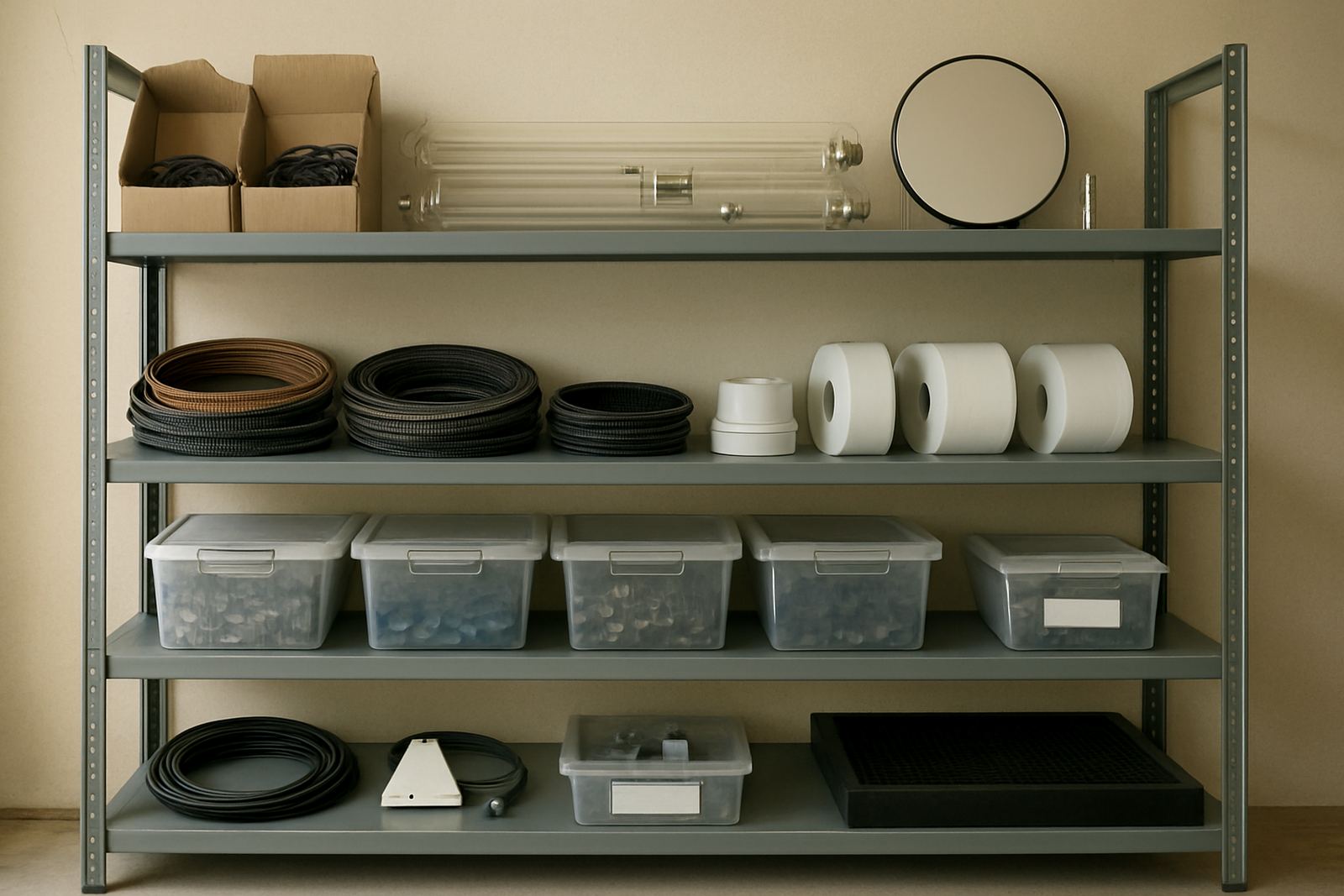
Typical parts supplied include laser tubes, mirrors, lenses, belts, gantry rollers, limit switches, power supplies, water flow switches, cooling hoses, extraction fittings and high-voltage cables. For machines running in dusty workshops or near the coast, we also help with optics covers, sealing strips and airflow related parts that reduce contamination and heat stress.
- Laser tubes matched to machine wattage and physical size
- Focus lenses for common focal lengths and material thicknesses
- Mirror sets, belts, rollers and switchgear
- Cooling and extraction parts for regular servicing
How we match the right part to your machine
CO2 laser machines are not all wired or dimensioned the same, so the right spares must be checked before anything is sent out. We confirm the machine model, bed size, tube length, power rating, controller type and the fault description before recommending a part. If your machine is older, modified or imported without local paperwork, we can still work from photos, measurements and the serial plate where available.
For accurate matching, have the following ready when you submit the enquiry form on our contact page:
- Machine make and model, or clear photos of the full machine and control panel
- Tube length in millimetres, wattage and mounting style
- Part description, for example cutting issue, no ignition, poor beam, or cooling alarm
- Any recent service work, relocation, or electrical interruption
This saves time and avoids sending the wrong item to a site in Sandton, Pretoria, Midrand or further afield.
Turnaround for stock items and special orders
Stock items are generally turned around quickly, subject to stock on hand and destination. Smaller consumables and standard wear parts are usually the fastest to move because they are kept in regular circulation for our service work and demo units. Larger items such as tubes, power supplies and certain optics may need additional checking before release.
Where a special order is needed, we will confirm the expected lead time after the machine details are verified. Coastal deliveries may take a little longer because of packing and courier routing, and parts headed to remote sites should be ordered before the machine gets to full failure. If you are planning scheduled maintenance, it is better to order spares ahead of time rather than wait until a tube or lens fails completely.
- Fast dispatch for common stock items
- Lead time confirmed on special order parts
- Local collection can be arranged where suitable
Pricing approach that keeps repairs practical
Our pricing is based on the exact part required, the machine specification and the supply route. We do not give broad price bands for parts that vary by wattage or size because the wrong fit can cost more in downtime and installation work. Instead, we quote on the actual item after we have checked your machine and the fault.
For larger spares, we will also advise whether replacement is the right choice or whether cleaning, alignment or a smaller repair will solve the issue first. This is especially useful on older machines where a single worn component can mimic a much bigger failure. We keep the process direct so you know what you are paying for and why.
- Quoted per part, based on machine specification
- Labour can be added where fitting is required on site
- Invoice details are set out clearly before dispatch
Maintenance intervals that protect your spares budget
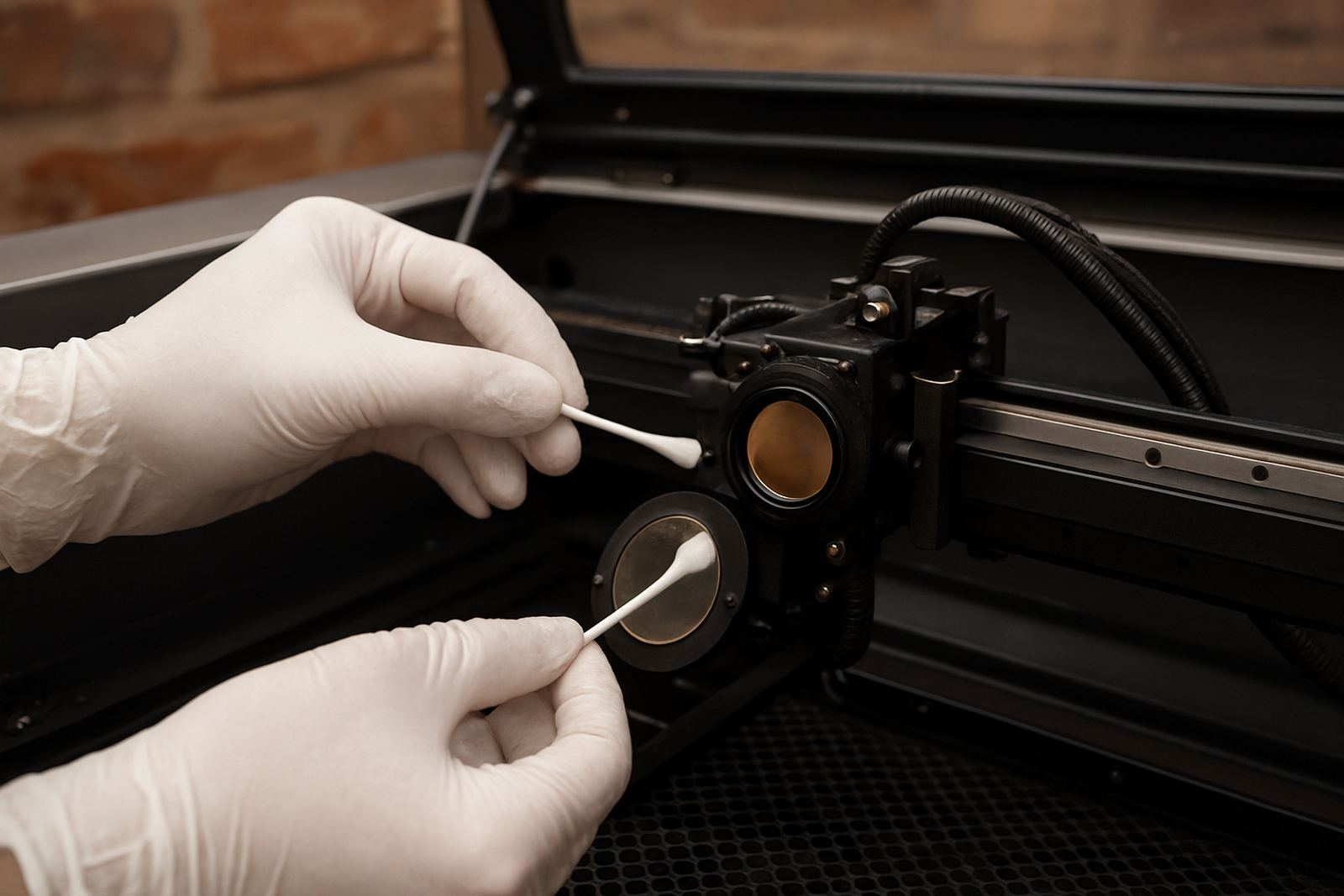
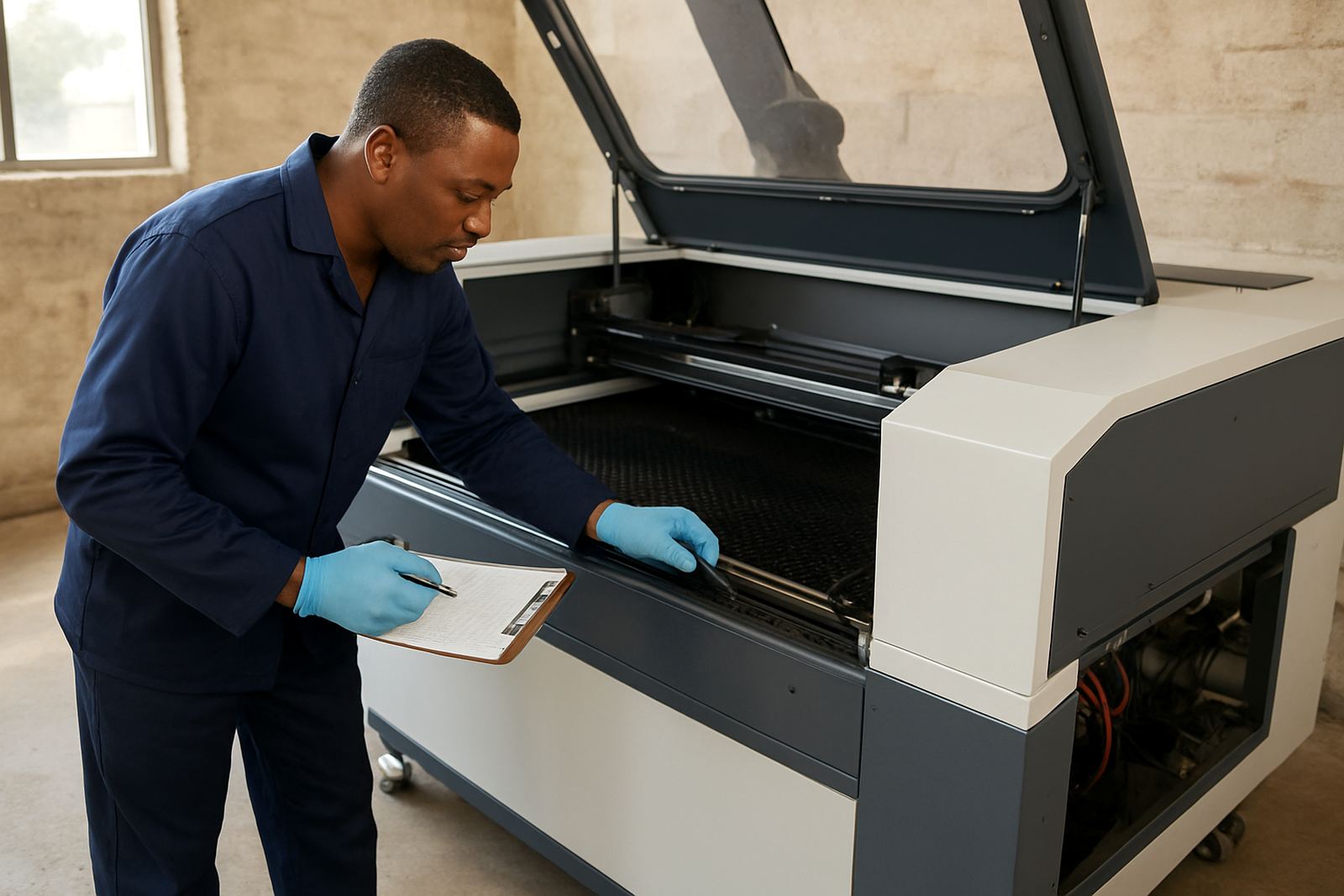
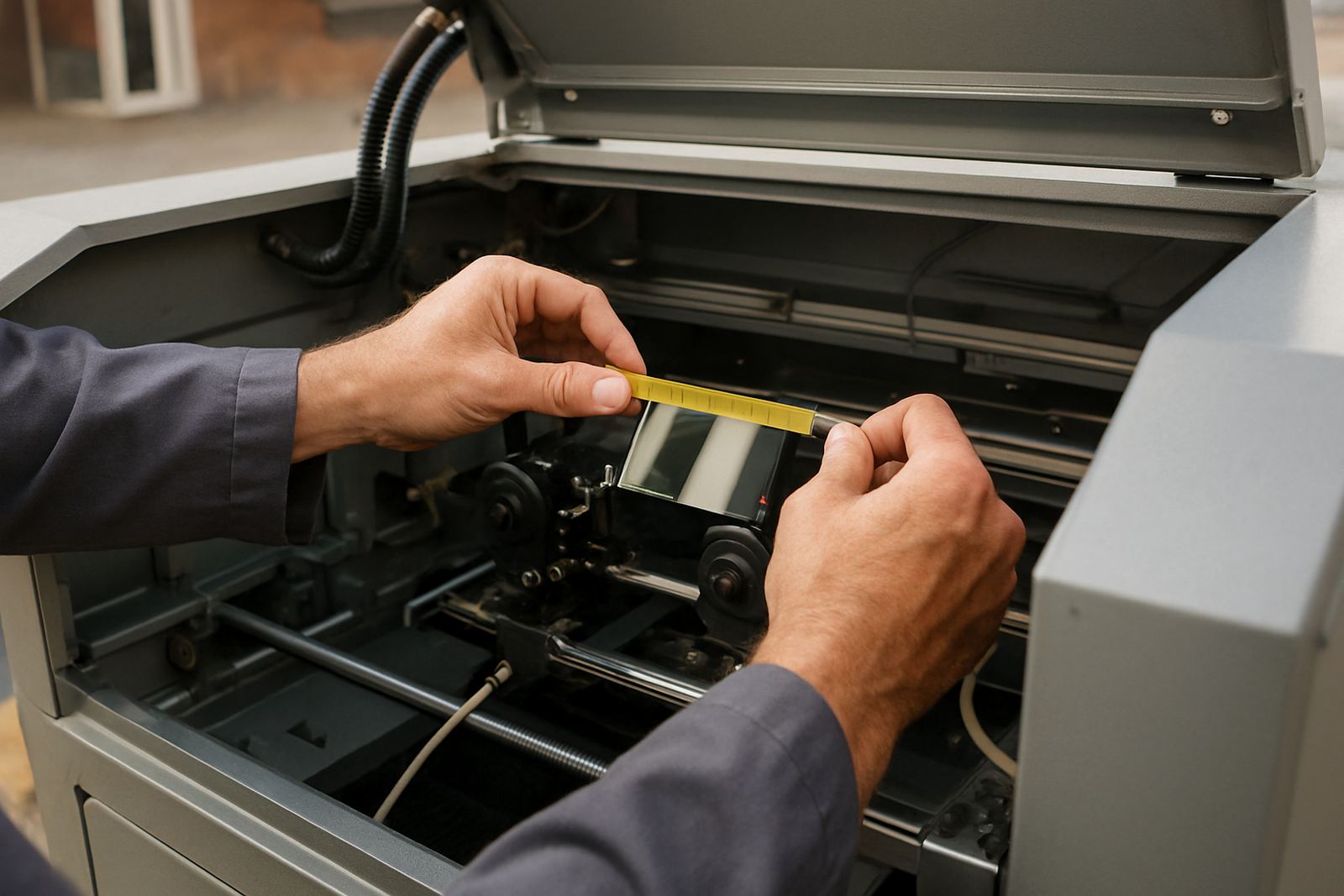
Good spare planning starts with regular maintenance. On most CO2 laser machines, optics should be checked every month in busy production, with cooling and extraction checks done weekly. Belts, rollers and motion parts should be inspected during scheduled service visits, while tubes and power supply components are monitored for output drop, arcing or intermittent starting.
In dusty areas, humid coastal sites or workshops that run long shifts, parts wear faster and cleaning intervals should be shorter. Load-shedding can also affect cooling systems, so water flow, reservoir condition and restart behaviour need attention after every interruption. If the machine is used daily, we recommend keeping a small spares pack on hand so a worn lens or switch does not stop production for days.
- Weekly: cooling, extraction and basic visual checks
- Monthly: optics, belts, rollers and beam path inspection
- Quarterly or biannual: deeper servicing and replacement of worn items
Supply process from enquiry to dispatch
The process starts with a simple enquiry form submission. Once we receive it, we review the machine details and the fault or maintenance need, then confirm the correct part or request more information if the fit is unclear. After that we issue the quote, arrange supply and keep you updated until the item is ready for collection or courier.
If the spares are linked to a breakdown, we can often combine supply with breakdown response, remote support or on site fitting. For clients in Wynberg, Sandton, Pretoria, Midrand, the East Rand, the West Rand, Durban and Cape Town, this makes it easier to keep a machine moving without long delays. We also assist with relocation related spares when a machine is being moved and needs fresh consumables or re-commissioning parts.
- Step 1: send the enquiry form with machine details
- Step 2: we verify the part and confirm the quote
- Step 3: dispatch, collect or fit depending on the job
Planned spares for uninterrupted laser cutting
A spare tube, spare lens or replacement switch may look like a small purchase, but it often protects a full day of cutting and finishing work. For businesses cutting acrylic signage, timber components or leather pieces, a short delay can affect customer delivery dates and workshop scheduling. Keeping key parts on hand also reduces pressure on operators when the machine is under load and the job queue is full.
We recommend building a simple spare kit around the parts most likely to wear on your specific machine. That can include optics, belts, rollers, a basic cooling item and one or two electrical components that are known to fail with age. If you are unsure what to keep, our team can help you set a sensible parts list for the machine you already run rather than pushing extras you do not need.
Key facts
| Service area | Wynberg, Johannesburg base with nationwide support |
|---|---|
| Typical parts | Laser tubes, lenses, mirrors, belts, switches, power supplies |
| Materials supported | Acrylic, wood, leather and similar non-metal sheets |
| Matching info needed | Machine model, wattage, tube size, fault details |
| Supply timing | Fast for stock items, confirmed lead time for special orders |
| Best use case | Routine upkeep, repair work and planned maintenance |