What to send with your sample cut request
The clearer your brief, the better the test cuts. Tell us what material you are using, the thickness in millimetres, the finish you want and where the part will be used. If you are working with cast acrylic, MDF, plywood, solid timber or leather, say so upfront because each material behaves differently under a CO2 laser.
For best results, include the size of the sample, whether you want straight cuts or detailed artwork, and how many test pieces you need. If you already know the machine settings you have been using, send those too. Even a small change in speed or power can affect edge colour, charring and surface marks.
- Material type and thickness
- Size of the sample or finished part
- Artwork, drawing or cut file if available
- Purpose of the part, such as display, fitment or production
- Any concerns about burn marks, smoke staining or tight tolerances
How we handle request sample cuts in Wynberg
Our Wynberg, Johannesburg base handles sample cut requests from across South Africa. Once your enquiry comes through, we review the job and confirm whether the material is suitable for CO2 laser cutting. If something needs checking first, we will tell you before any cutting starts. That saves time and avoids waste.
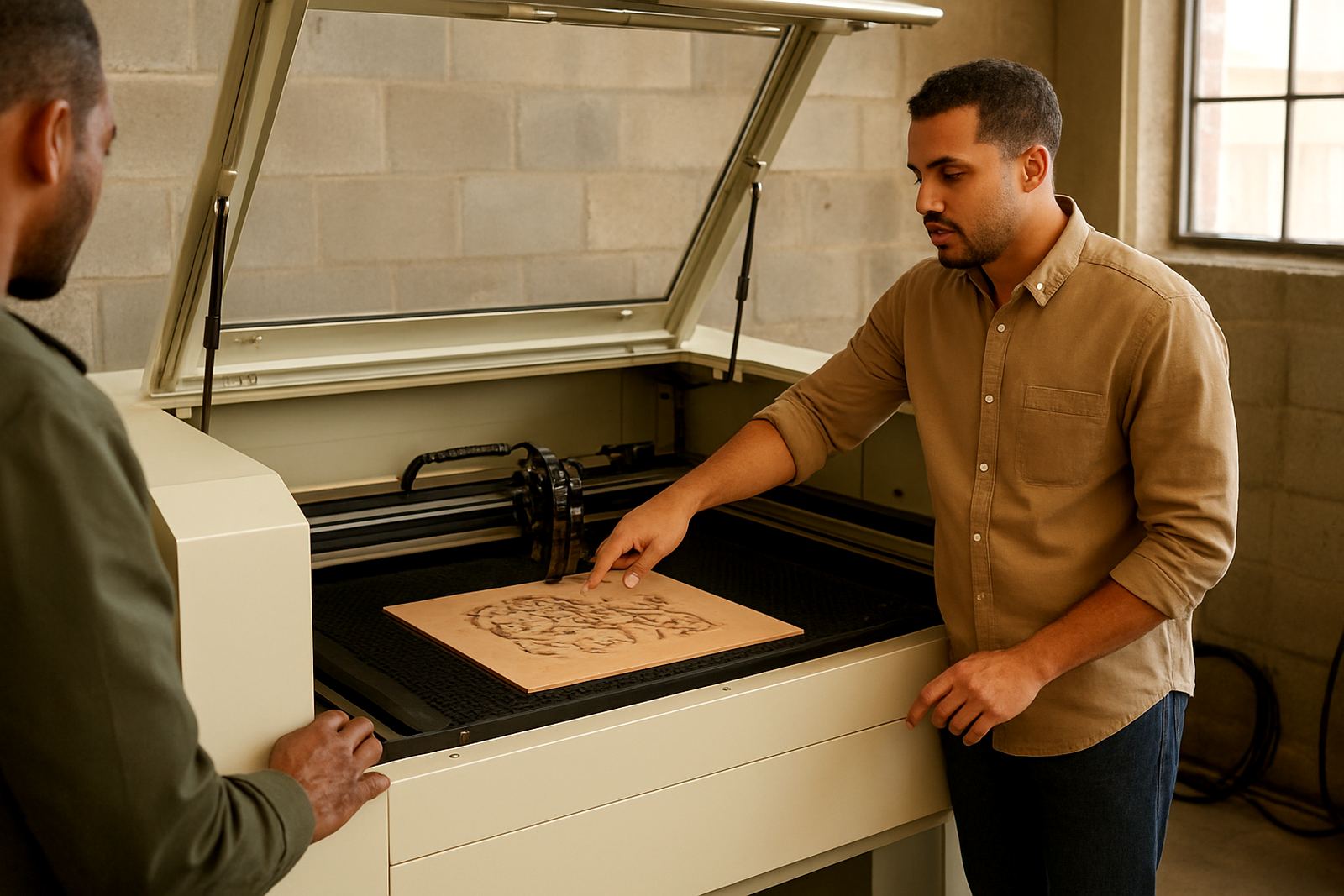
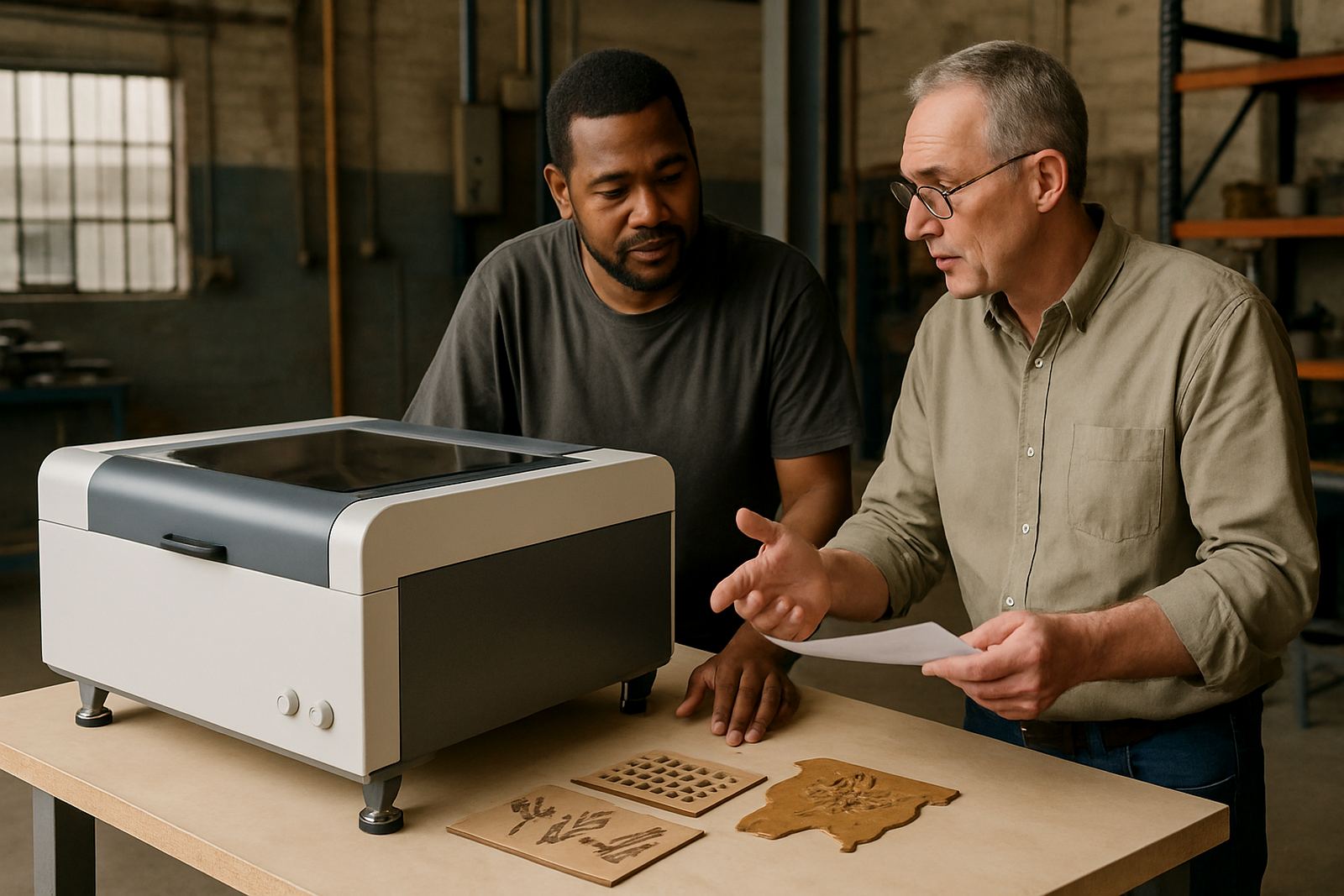
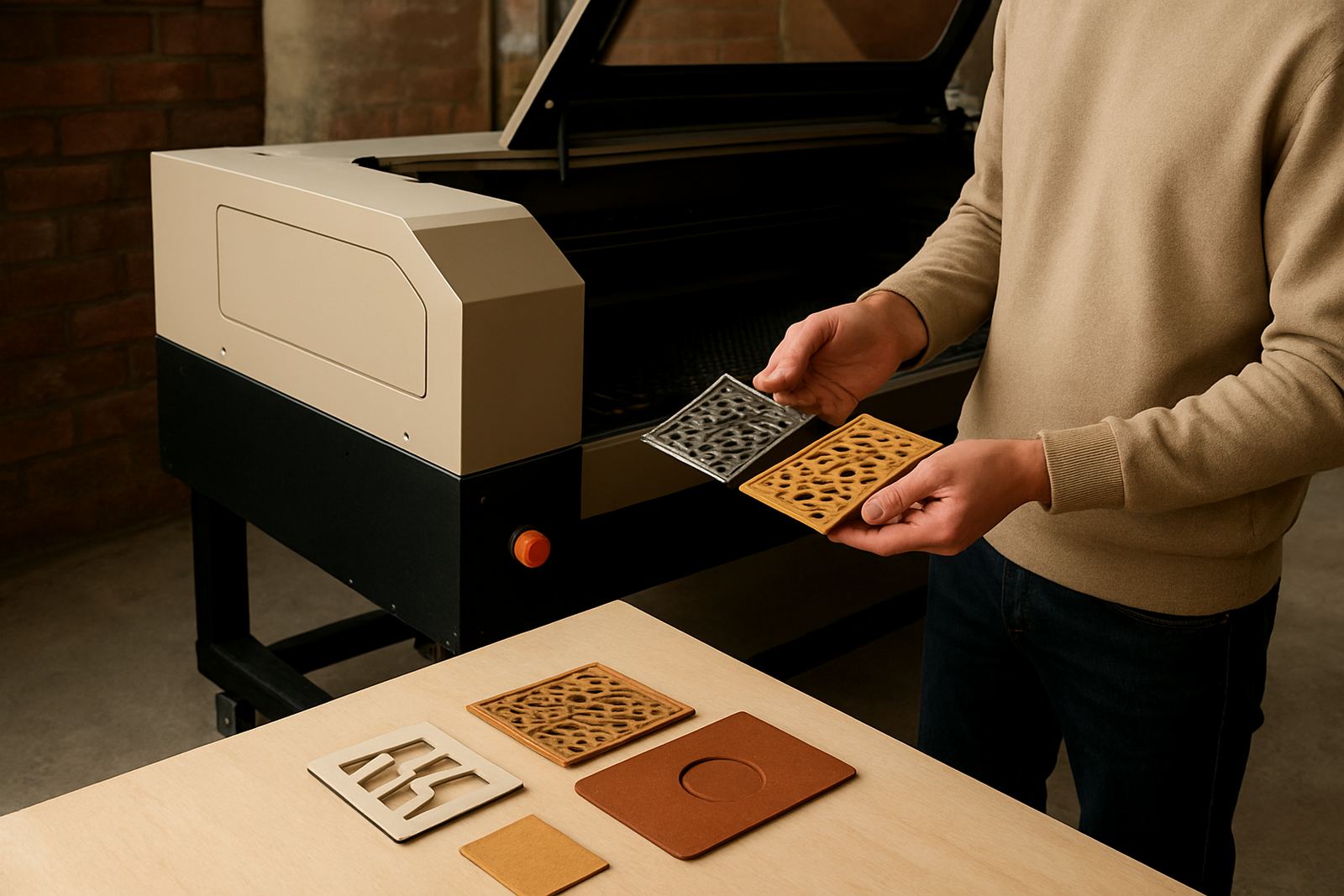
When your sample is approved, we run the test cut, inspect the edge quality and give you practical feedback on the result. If the cut needs a tweak, we can suggest changes to power, speed or assist settings. For some materials, especially thicker wood or dense leather, a second pass or a cleaner fixture may be needed. The point is to help you get a proper outcome, not just a quick cut.
- Initial review of your enquiry and material details
- Confirmation of suitability for laser cutting
- Test cut on your chosen sample size
- Feedback on edge finish, fit and repeatability
- Advice for production cuts if the sample passes
Preparing your material for clean test results
Good sample results start with well prepared material. Acrylic should be flat and protected from scratches. Wood should be dry and free of warps, knots and glue pockets where possible. Leather should be consistent in thickness and free of oily patches or loose grain. If the sheet is uneven, the beam focus can shift and the cut quality will suffer.
Also think about protective films, paper liners and adhesives. Some are fine to leave on, while others can affect smoke, edge finish or cleanup. If you are not sure, ask us before dropping off or sending material. It is better to check than to lose a sheet because of a bad assumption. In coastal areas like Durban humidity can affect storage, while in Gauteng dust and heat can also change how materials sit before cutting.
- Keep sheets flat and properly packed
- Mark the face side if grain direction matters
- Use dry, stable material wherever possible
- Send extra offcuts if you want more than one setting tested
- Tell us about any film, glue or backing layer
What our feedback covers after the test cut
We do not only hand over a sample and leave it there. You get useful feedback on how the material behaved, whether the edge is clean enough for your application and whether the design can be repeated at scale. If the part is for retail display, signage, crafts or a production run, we will point out where the line work may need adjustment.
Depending on the sample, we may also comment on extraction, cooling and beam alignment if those factors are affecting the cut. For example, a smoky edge on wood may point to airflow issues, while inconsistent depth on acrylic can suggest focus or alignment checks. That kind of practical advice can save a lot of time later on.
When to book a demo cut instead of a simple sample
Some requests need more than a basic test piece. If you are comparing materials, planning a new product line or thinking about a machine for your workshop, a demo cut is usually the better option. It gives you a live view of cut speed, detail level, edge quality and the sound and size of the machine in use.
We offer demo cuts and installs from Johannesburg and support clients nationwide, including Pretoria, Midrand, Sandton, the East Rand, the West Rand, Durban and Cape Town. If you need operator training, relocation help or a full service plan after your sample is approved, we can arrange that too.
- New product development
- Comparing acrylic, wood or leather finishes
- Checking if production output meets your target
- Planning for installation or operator training
- Testing before a larger order or workshop rollout
What happens after your sample is approved
Once you are happy with the sample, we can help you move from testing to regular production. That may include a machine install, operator training, preventive maintenance or a service visit to keep output steady. If your site has load-shedding, we can also talk through power stability, extraction and cooling so your setup is ready for the day to day work.
If you are based in a noisy industrial area, near the coast, or running from a smaller workshop, the support requirements can change quite a bit. We take that into account when giving advice, because a machine that works well in one premises may need different care in another. The goal is steady cutting, fewer breakdowns and cleaner results over time.